Royal Academy Summer Show

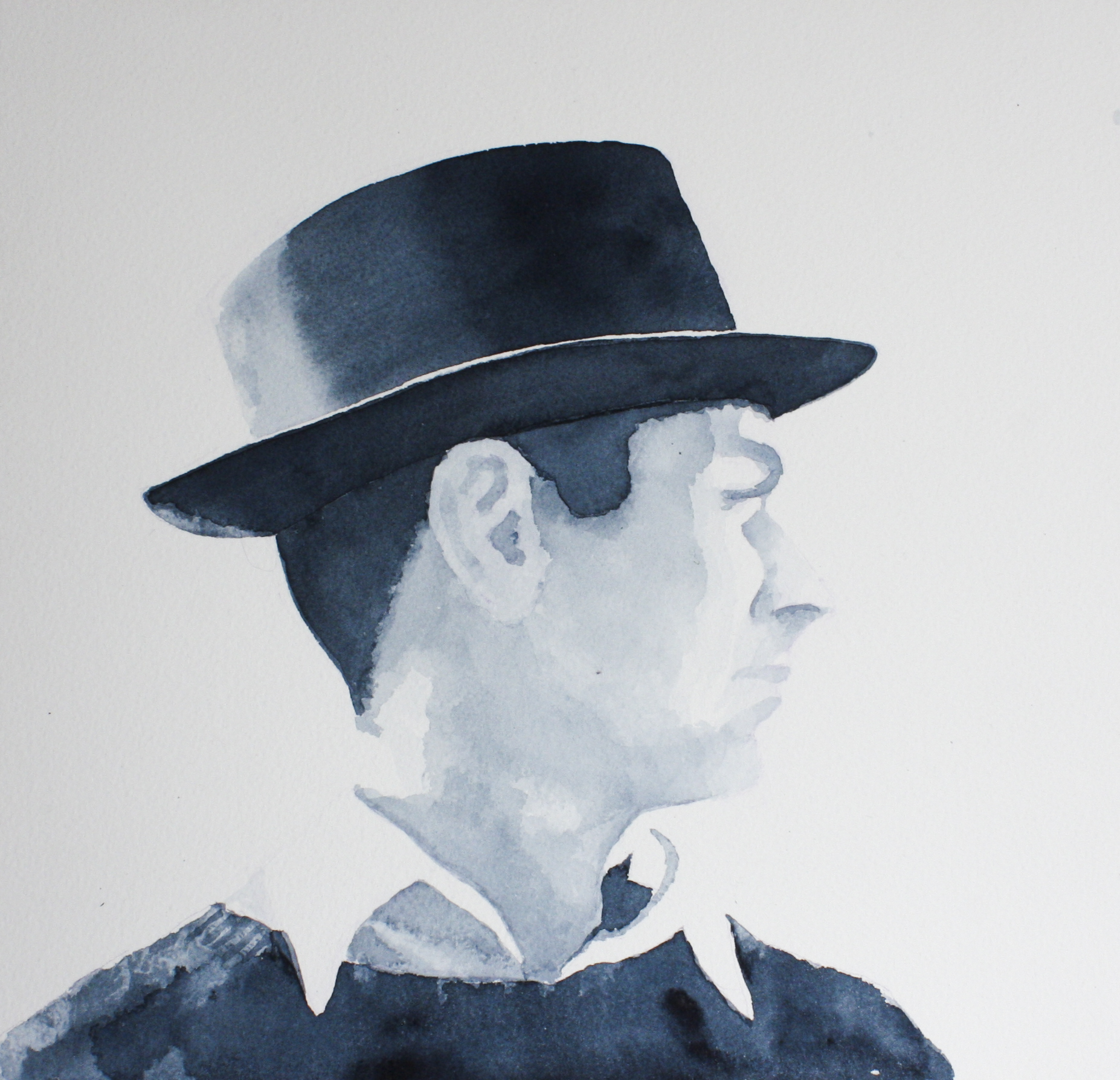
This is the second painting I submitted for the Summer show at the RA, the first being the portrait of of my uncle Peter.

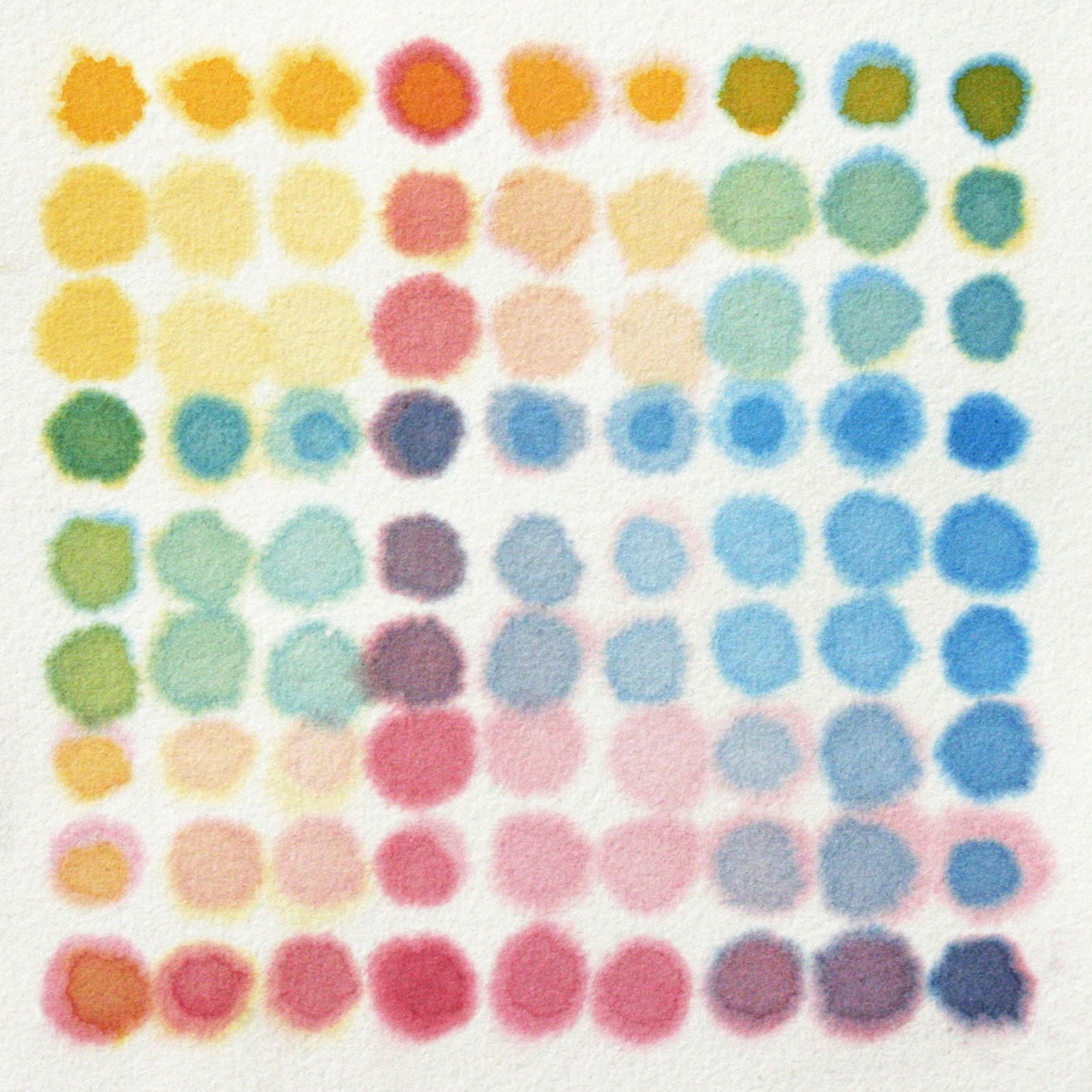
A completely different kind of painting altogether, I wanted to explore pure colour, to find the clearest, strongest ways to show its true nature and behaviour in watercolour medium. Only three colours are used, cyan, magenta and yellow, employing juxtaposition, overlay and tone as well as wet and dry paper and re-wetting techniques. Each colour is laid on individually, not mixed.

As a jeweller my work is very much about control, my designs are geometric and ordered, serendipity is a rare and welcome component, usually appearing whilst pushing the limits of the material. This process follows through in the “Dots” series of paintings. I begin from a precise positioned grid of marks, working on wet and/or dry paper, overlaying in several passes following a strict order whilst allowing accidental or material based irregularities to occur. Colours are applied with droppers or with broad washes laid over dried dots, allowing the colours to soften and run at will. Langford - watercolour painting
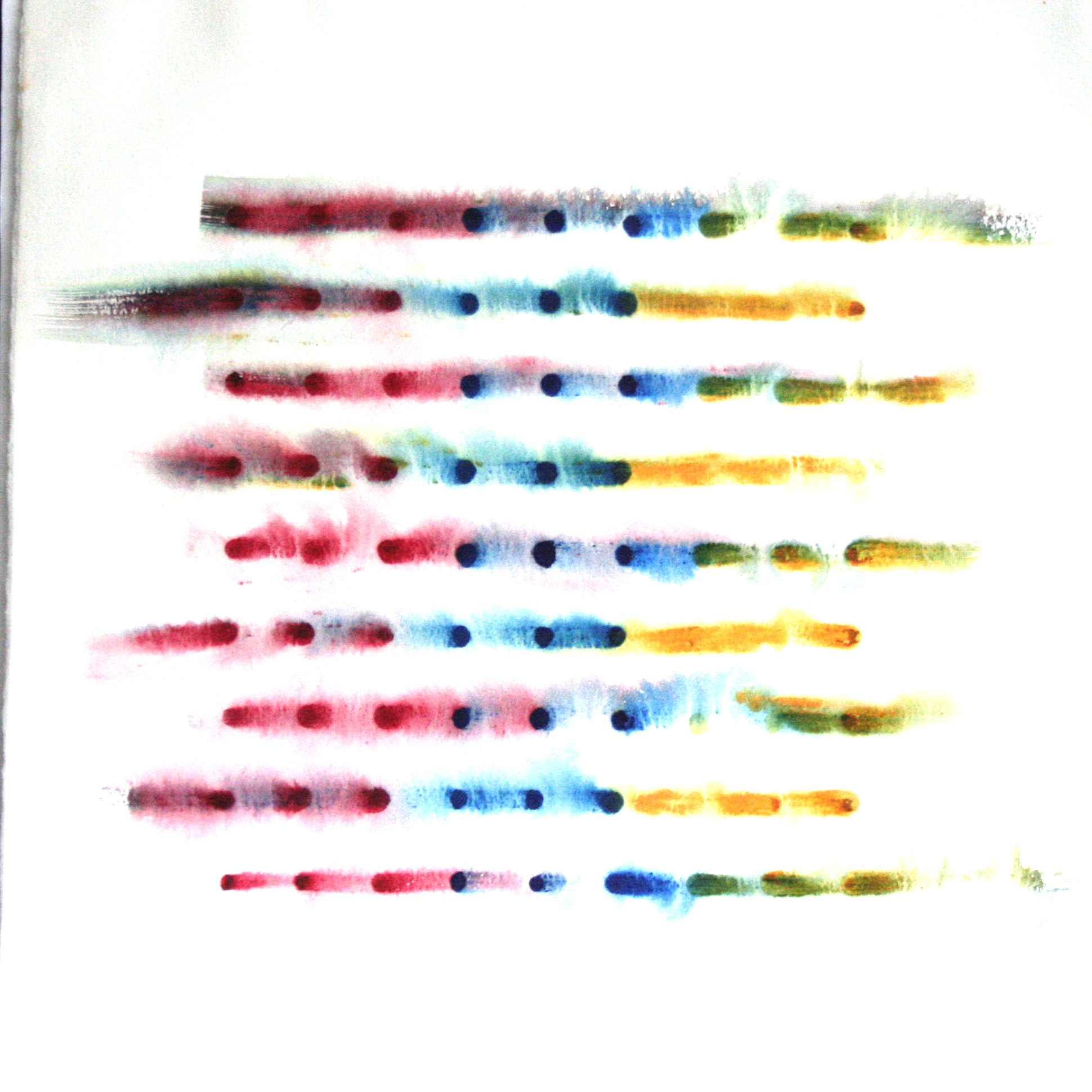
This following painting uses another technique, I laid down intense drops of colour on dry paper and allowed them to dry out completely before brushing over them with clear water  and a large brush, spreading the colour and making the colours run.
maurice

Portraits of Peter

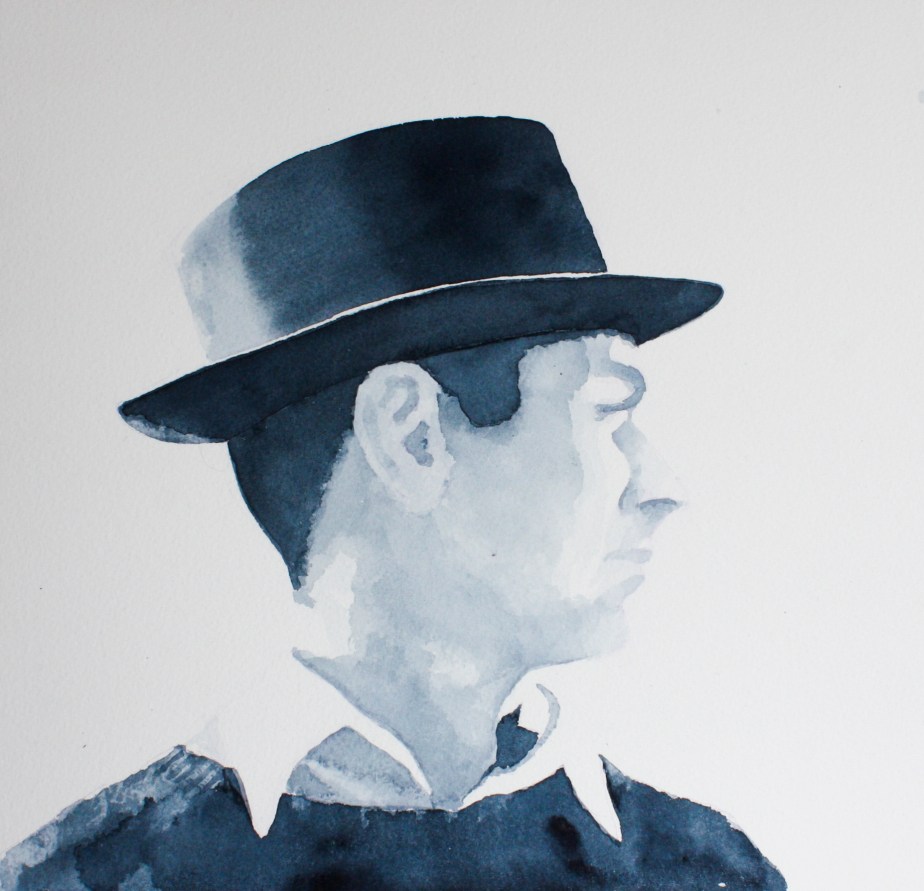
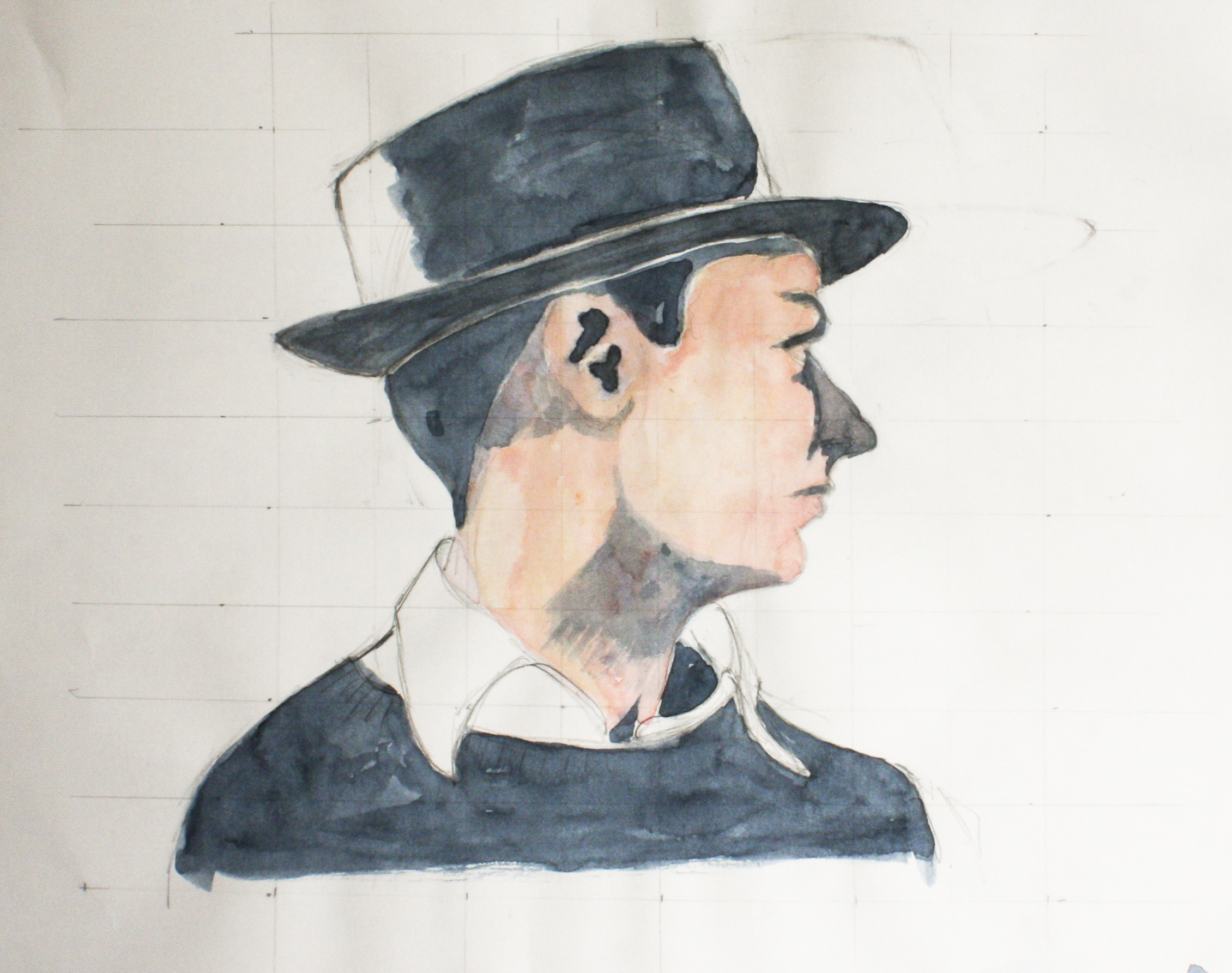
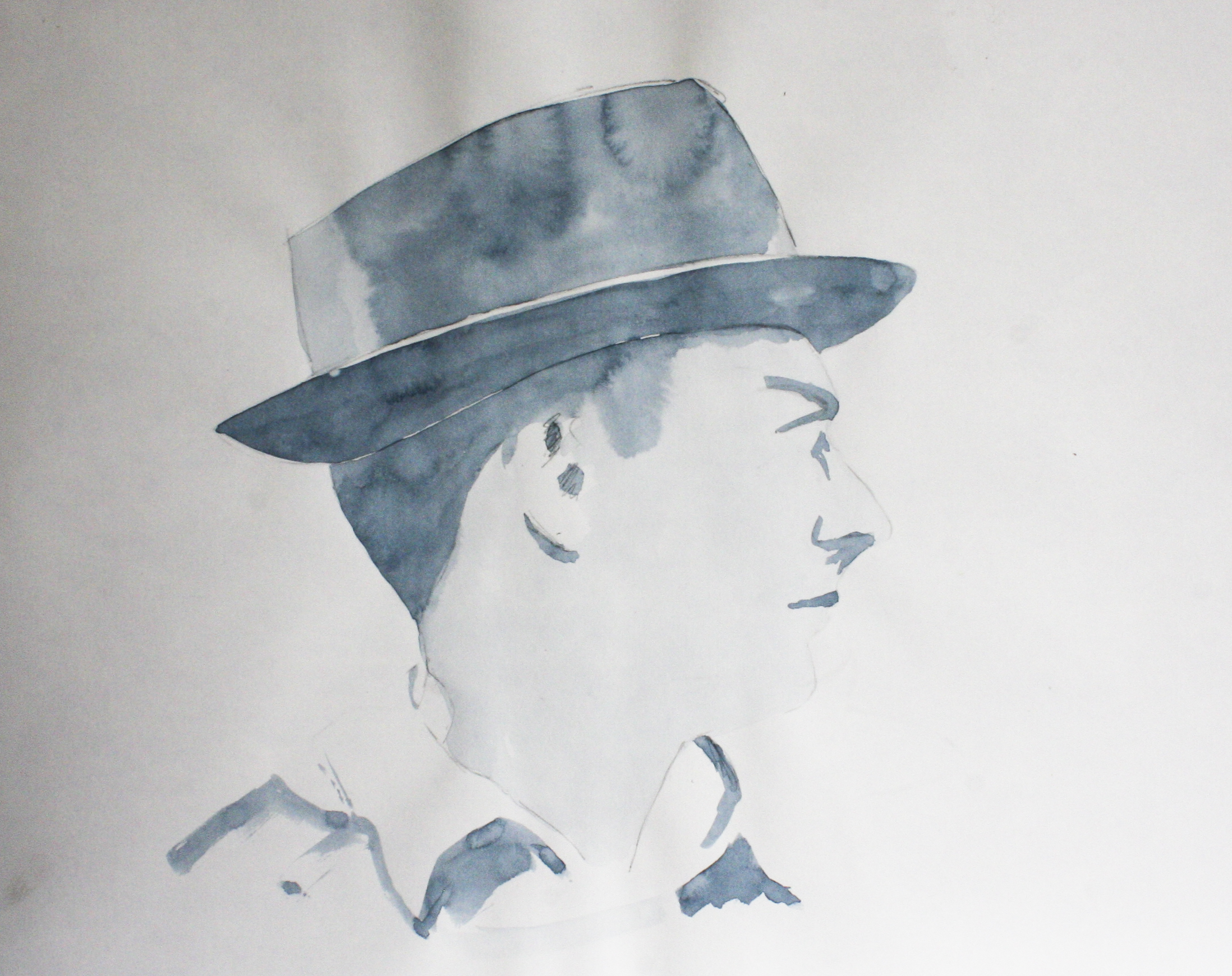
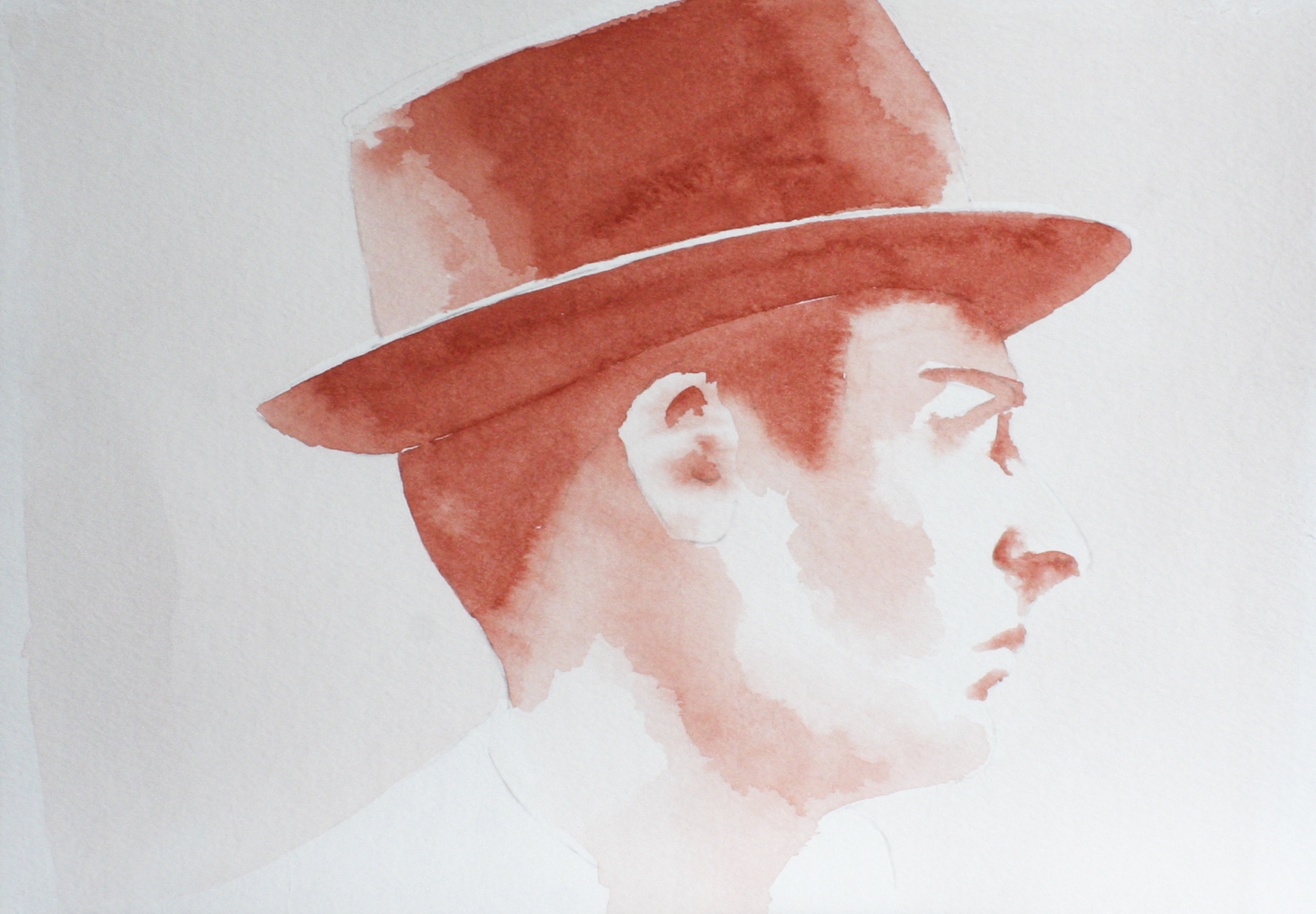
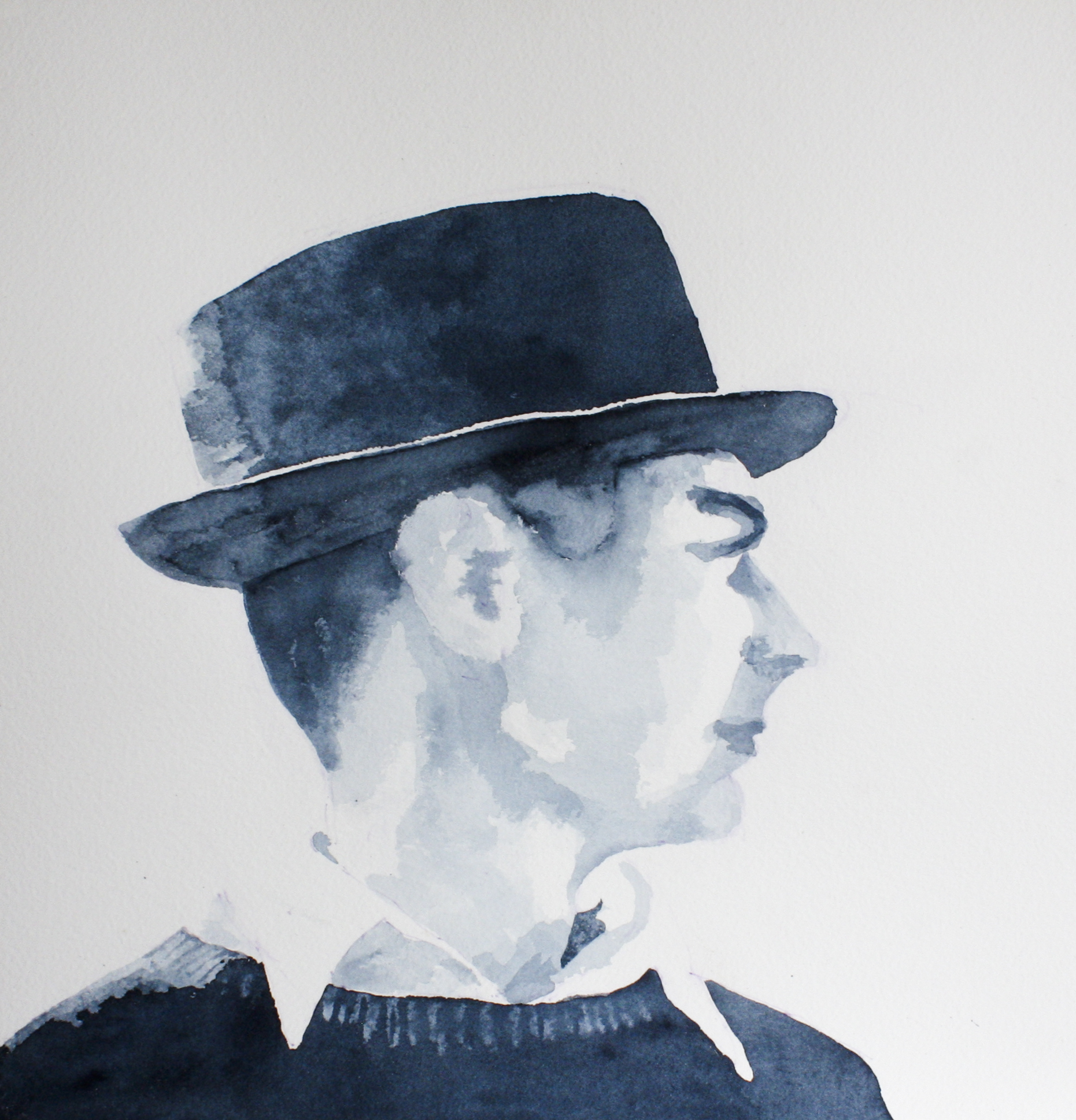
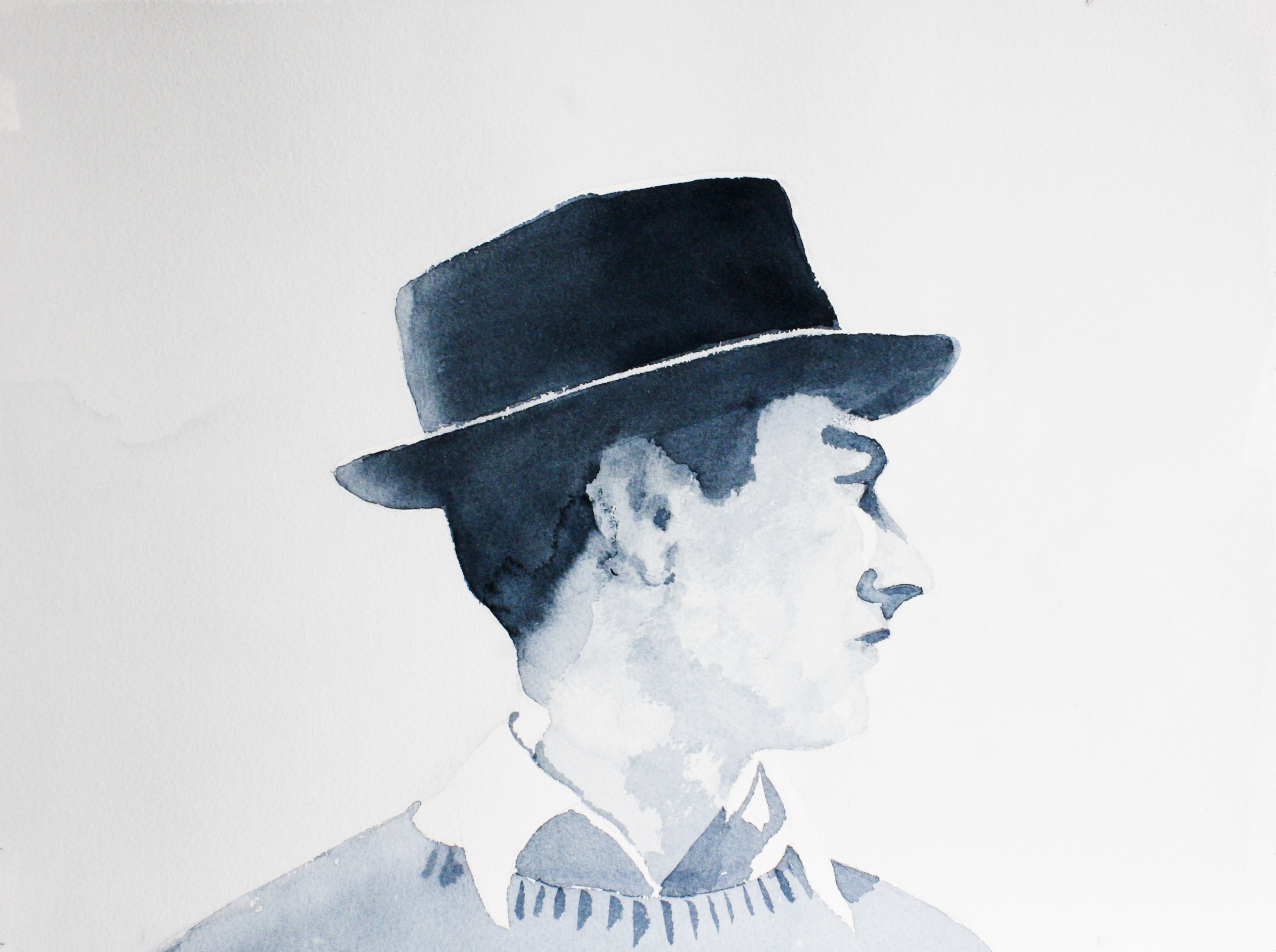
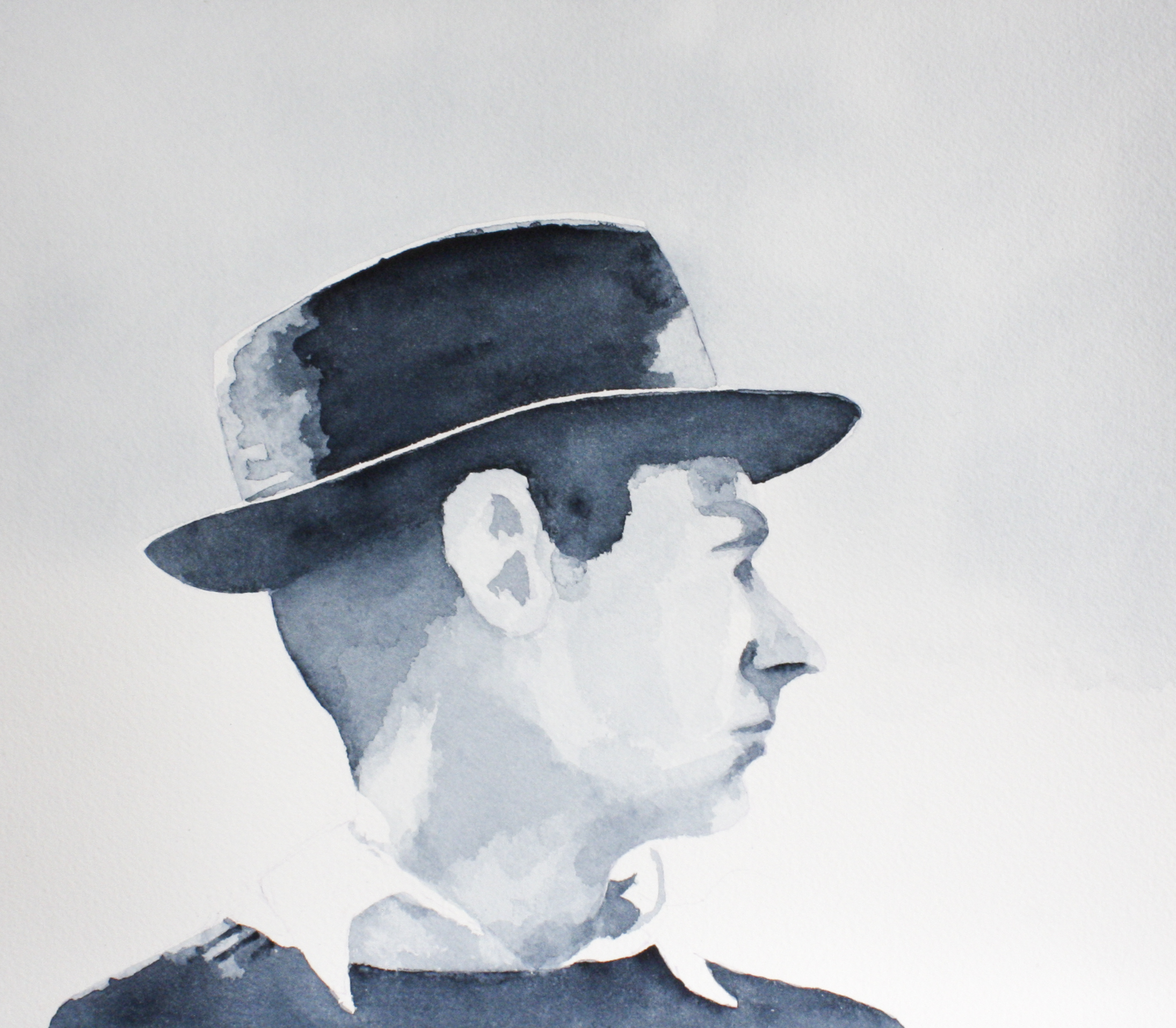
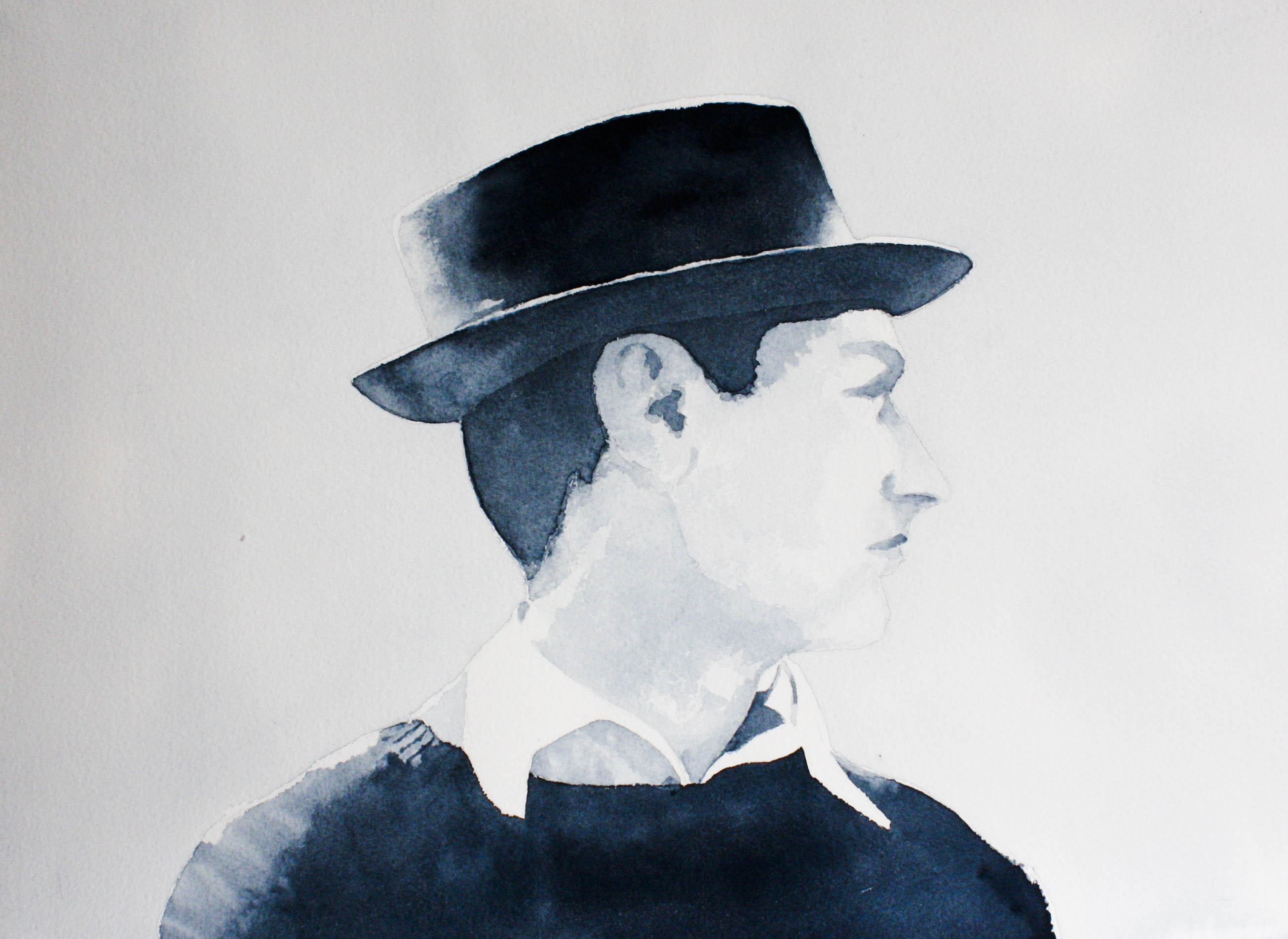
I have been looking through all the versions I have made of this watercolour painting, of course I wasn’t organised enough to date them as I made them but they are roughly in the correct order below.

There is one more day left to either frame this most recent one or paint yet another version before I deliver it for a competition.

The first four are mere practice versions, testing out technique, paper quality and colours. The nose looks very frostbitten in the first one.

I think on balance the most recent one has in it that I am happy with than any of the others, it feels like I made a big leap forward in the last two or three versions, I felt I knew the contours and how to handle the paint the way I wanted. I tried a faint wash over all the background in  No. 8 but decided I preferred the cream paper left alone in No. 9, although I have lost the bright edge to show the sunlight falling on the top of the hat. I think I might just add a little more shading to the lower lip and try to define the tip of the nose better.

I have enjoyed doing these paintings so much, I don’t think I will mind  when I receive my inevitable letter of rejection! It’s all about the doing not the winning. . .
Peter1
Peter2Peter3 Peter4 Peter5 peter6 Peter7 Peter8 Peter9

BP Portrait Award 2013

Selected, rejected, dejected – the latter two apply to me, not too dejected though. Over 1900 artists submitted portraits for the exhibition, only 55 were selected. The rest of us must dejectedly collect our rejected works very soon. Congratulations to the respected 55, looking forward to seeing your paintings.

Cast Shadows

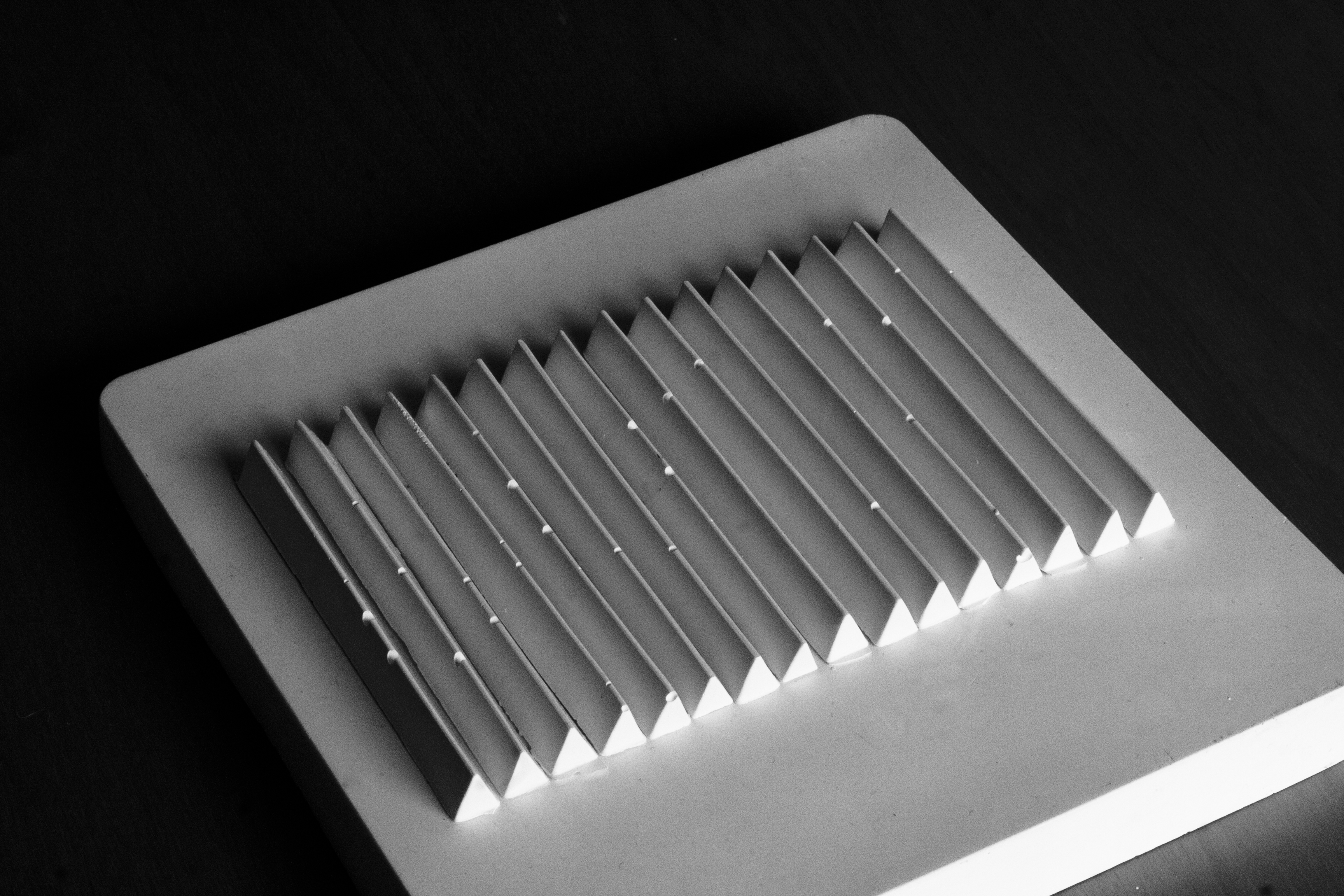
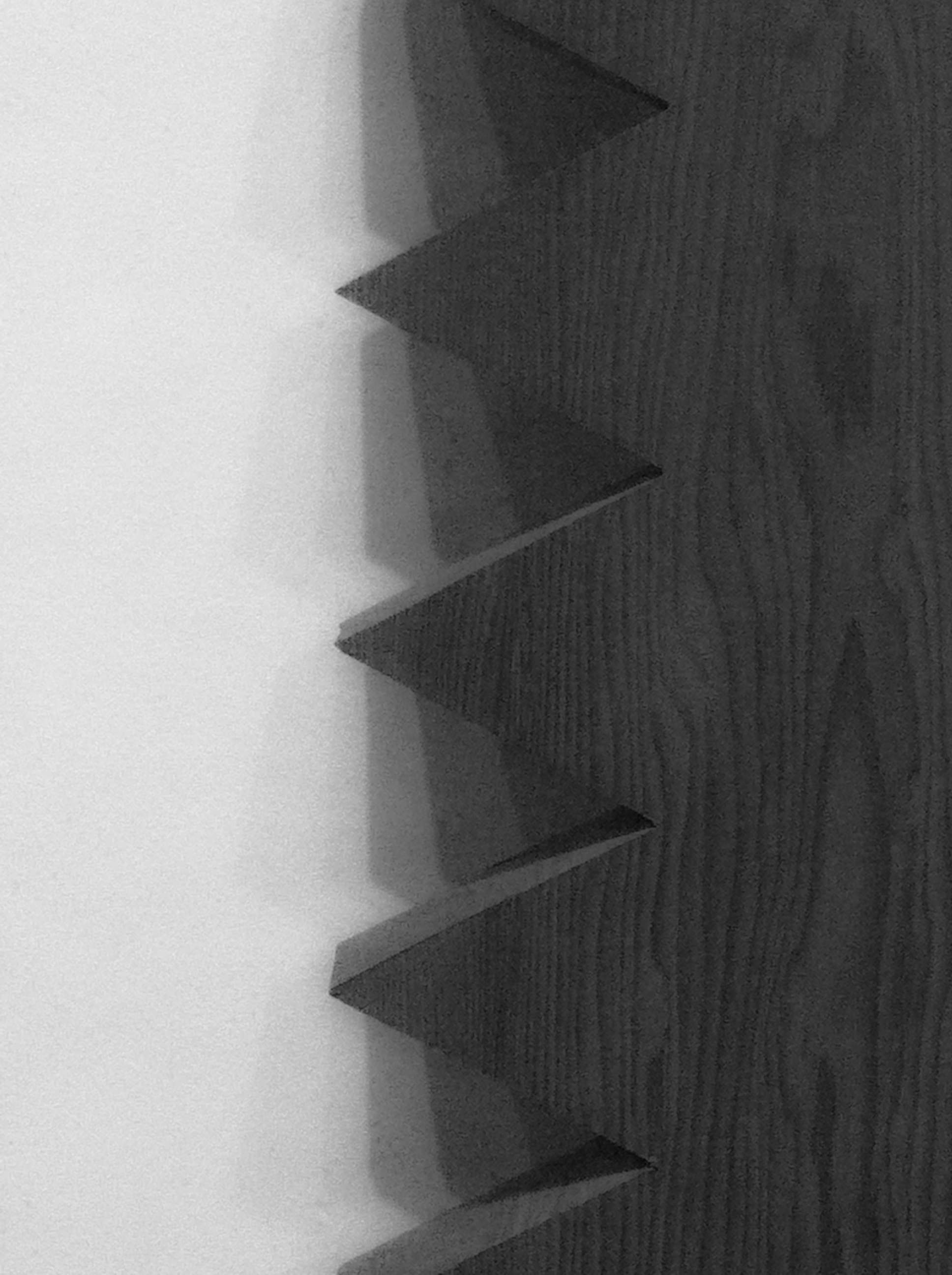
I have been casting plaster into ice cube trays, these long sticks, triangular in section, make for interesting shadows. I made them in two sessions, the first set were marred (or so I thought) by air bubbles interrupting the ridge but having now been looking at them for some time, I like the randomness of the negative spaces. The second set were almost perfect though some have lost their corners. It was only after having photographed them that I saw the similarity to an large work in wood by Susumu Koshimizu 1971 – ‘From Surface to Surface’ that I had seen at the Tate Gallery.  From the label – ‘Koshimizu investigates the substance of wood by sawing planks into different shapes, exposing their surface qualities through different kinds of repetitive cuts. The geometric lines produced by an industrial saw contrast with the slit irregularities resulting from missing chips, slips of the saw, and rough surface of certain edges. Koshimizu was part of Mono Ha (School of Things), which reacted against the embrace of technology and trickery in mid 1960s Japanese art. They sought to understand ‘The world as it is’ by exploring the essential properties of materials, often combining organic and industrial objects and processes’
Having now reread the information label I am pleased to discover that we had in common, not only looking at repeated regular forms but also of their inconsistencies and flaws.  The particular reason for photographing  this work  was for the shadows that were being cast on the white walls by the multiple spotlights above. I can count 5 in this photo but I think there were more. Lighting my castings with several sources is something I must try.
Triangle Sticks

Triangle Sticks 2

Susumu Koshimimzu