Experiments in casting

Hopefully I have learned enough from the last two experiments to make a good casting this time.

I set up the wok again with Plasticine walls and a slightly larger saucepan lid and made up a much larger batch of plaster hoping to cast the whole thing in one go.

I poured the plaster into the wok and started swirling it genlty, hoping to make it stick to each part of the surface – impeded somewhat by the thick layer of petroleum jelly. During the next 10 minutes the plaster gradually thickened and began to build a smooth layer over the whole surface area. As I swirled the liquid it behaved like a tidal wave coming around and around in a regular sweep but as it began to set it grew thicker and was in danger of leaving a literal tide mark in an unsuitable way. I set the wok down to rest and watched as the excess plaster solidified in an almost even spare-tyre kind of shape  in the centre.

I decided this time not to try to manipulate the surface in any way and I am pleased to say that it is smooth and even, though somewhat thicker towards the centre with a discernable swelling about 2 cms from the pan lid,  it looks pink here but it dries white.

second casting

I suspect that the outer/upper edges are fairly thin and that I will need to make another pouring.
Experiments in casting

I wanted to make a “stone” version of a form I have made often as jewellery, the Reuleaux Triangle – the original form developed by the mechanical engineer Franz Reuleaux  in the late 19th century.

This slideshow requires JavaScript.

  • I needed to mark out my new wok – I couldn’t  find a set of dividers large enough – 25cms, so I made a very simple one from strips of wood. I borrowed a wing nut, bolt and nut from something else, cut two pices of 30cms and one 18cm long, drilled some holes at roughly .5cm intervals on the short piece and used two nails to fit them together, added some points just with sellotape.
  • I marked the wok roughly in blue felt-tip pen and then found the centre-point using the dividers, drew a circle, divided that into six. I drilled a small indent at three of those points and used those as the centres to draw the three arcs.
  • I made Plasticene walls along the scored lines and set a  saucepan lid at the centre to form the central hole. I hoped that brushing the whole thing with petroleum jelly would make it easy to remove when set.
  • Using Cassini’s plaster from Maragon,  I mixed up a test bacth that was enough  to coat only about half  of the mould, I added progressively both by making more mixture but also by scraping the surfcae and using that to infill gaps. Not a good idea as it turned out.
  • The plaster becomes very hard and waterproof after maximum of 5 days but is workable to varying degrees for 2-3 days, at 15 minutes it seemed a bit like cheese, almost rubbery and not easily spread out or carved, though i did try to scrape the surface smnooth with a swan-necked cabinet scraper and what is charmingly called an Alabaster Knife from Tiranti, sculpture suppliers in London
  • 24 hours later it was dry enough to slip clear of the wok, petroleum jelly works but the uneven inside surface was terribly difficult to work on, dimpled, rough and flawed and the outer surface was marked with poorly patched areas, badly mixed plaster (small inclusions of plaster dust), rust and ink stains as well as bubbles!
  • So – it had to go in the bin . . .


Colour – Green

Green is everywhere but its good to find something other than just the green of grass or leaves, the “green” of the golf course apart.

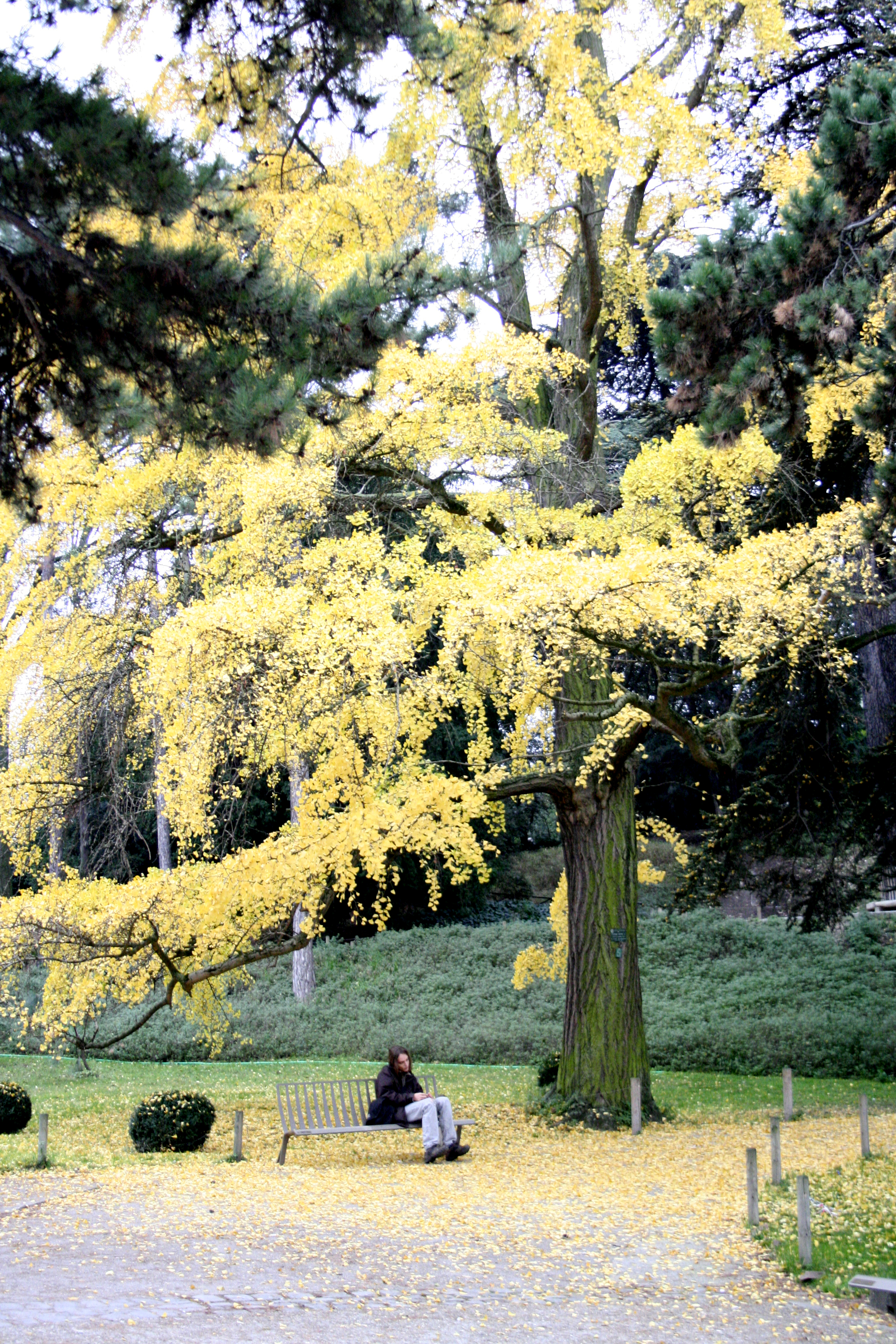
I visited the Jardin des Plantes botanical gardens in Paris in November, the leaves turning to a luminous yellow set against the dark green pines and vivid green moss on the tree trunk all caught my eye but what centres the image the pensive young man, his feet flexed in concentration. And the green plastic hose running along the edge of the lawn.Jardin des Plantes, Paris

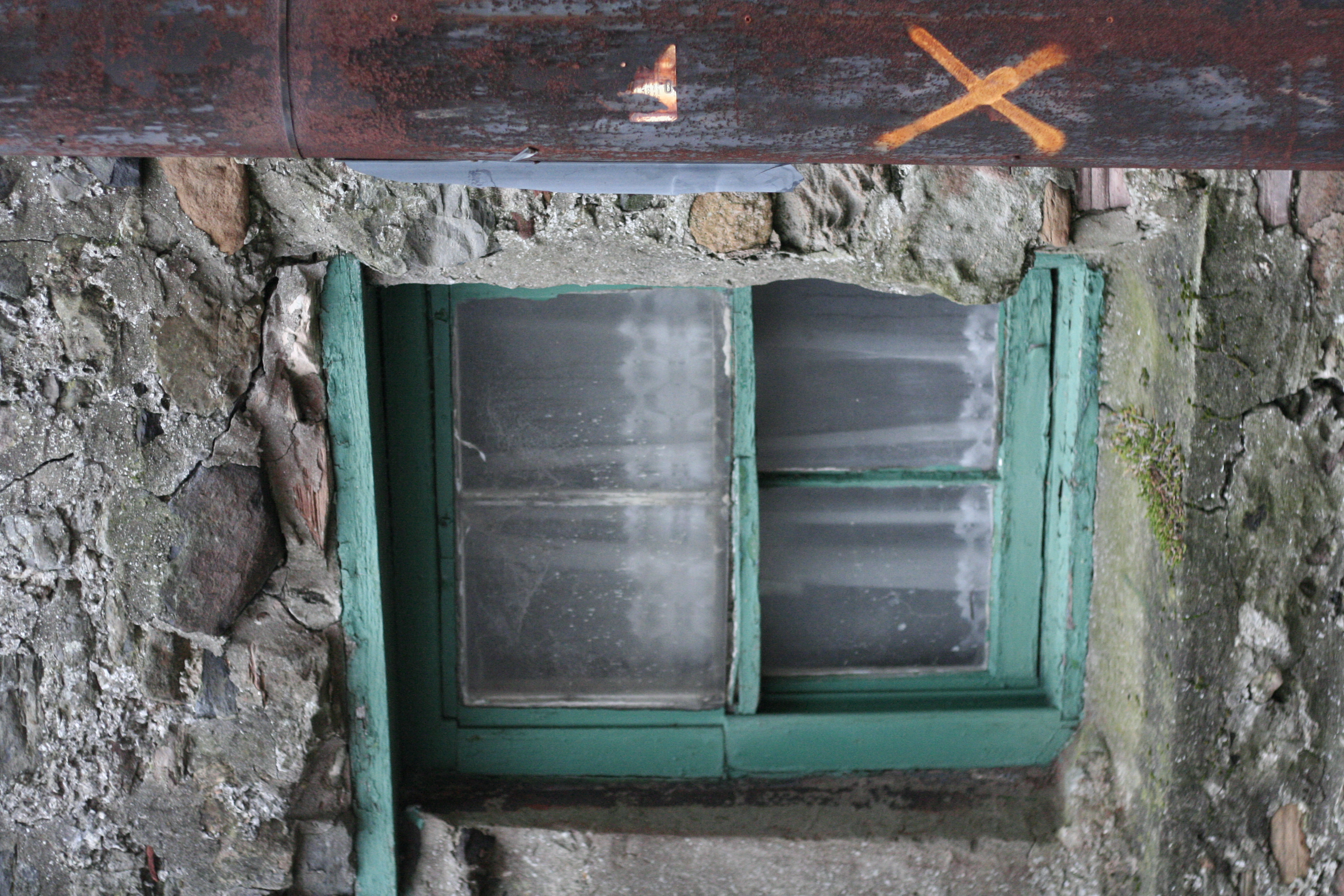
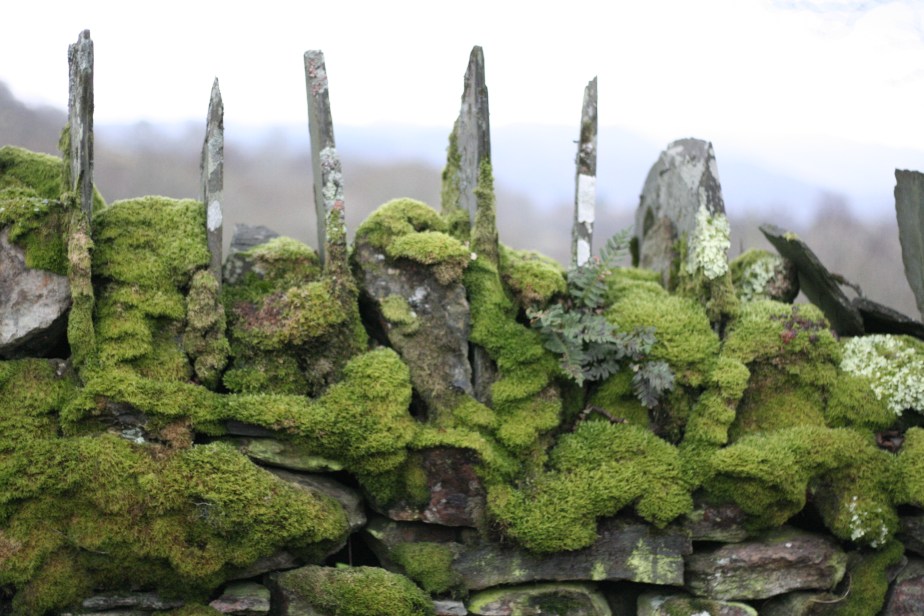
Green-painted window on Holy IslandThe golf course at Alnmouth in DecemberMoss on a very old wall in Ffestiniog, Wales

The train to Bristol

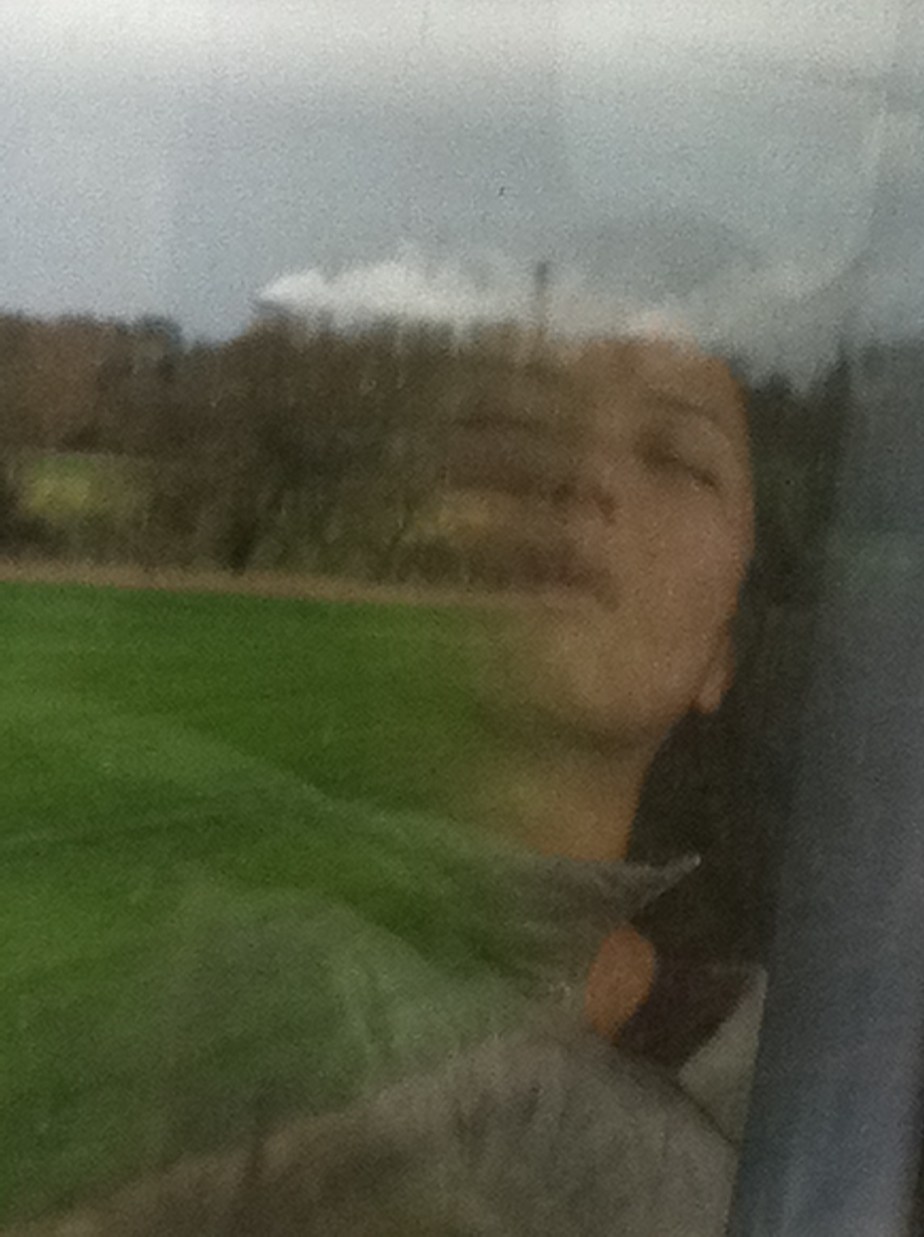
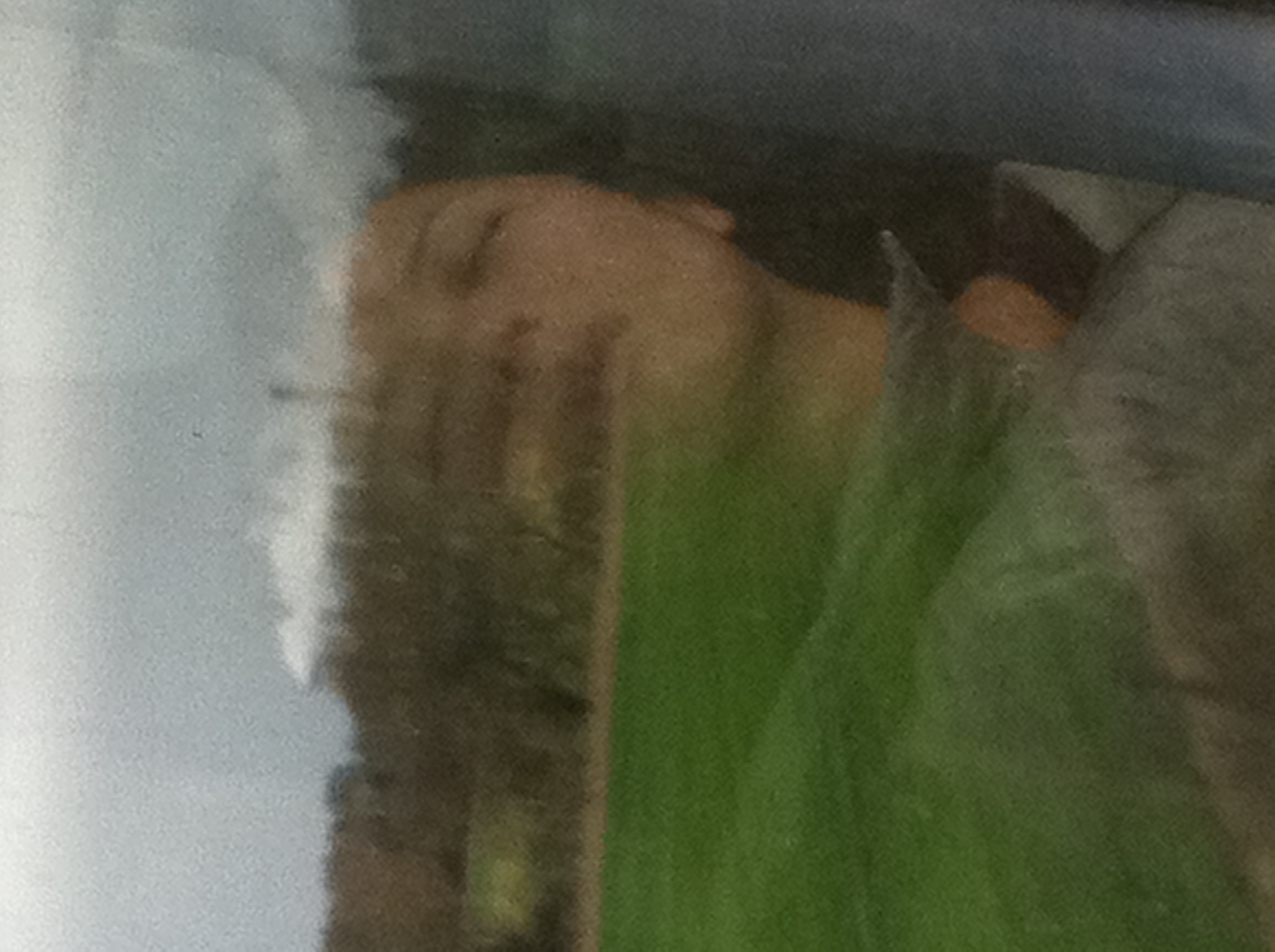
Today I went by train to Bristol and couldn’t resist covertly photographing this beautiful Japanese woman as she slept, seen through the reflection of passing smoke, trees and fields seemingly to be gently enveloping her.

Sleeping on a Train

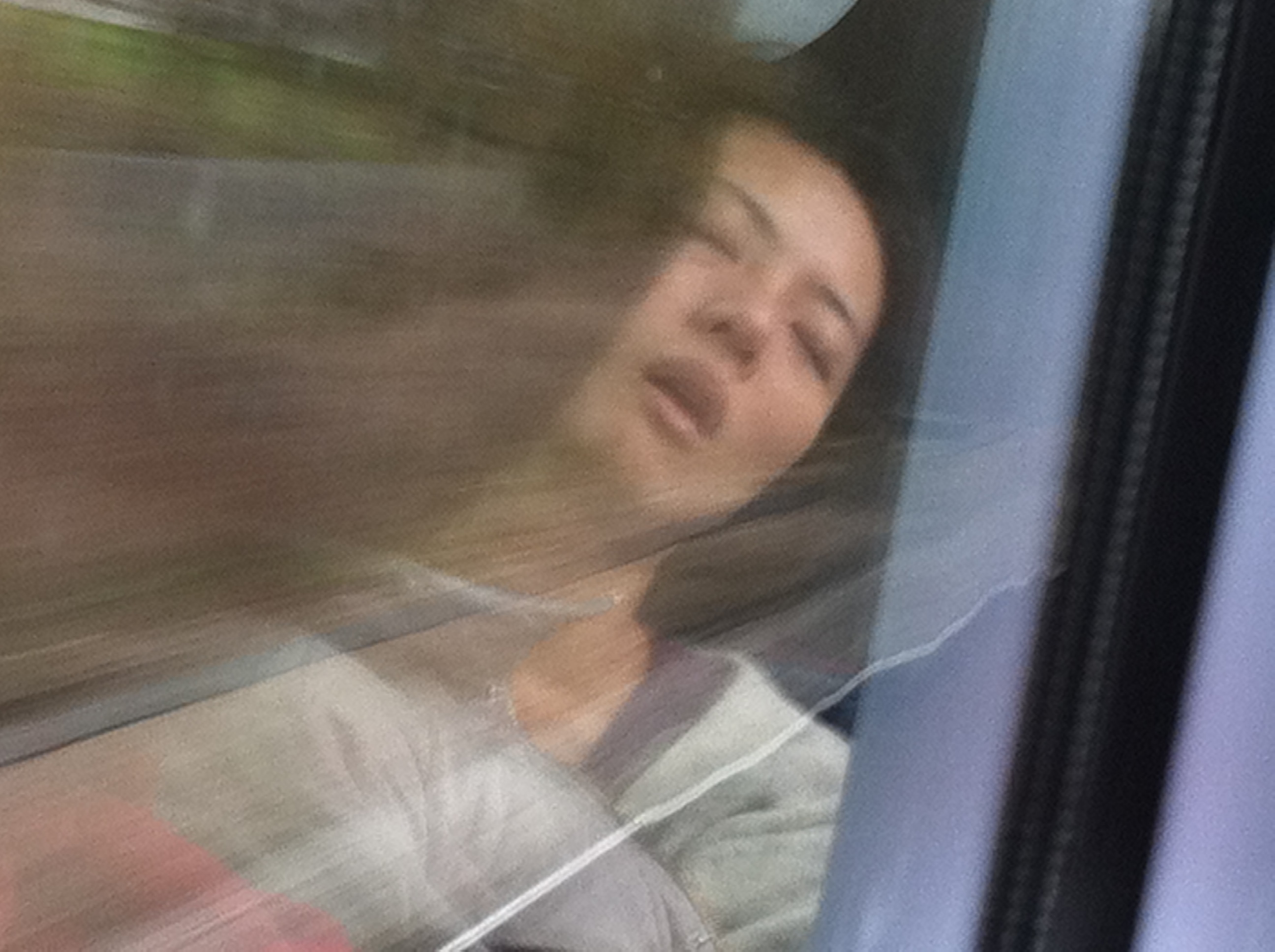
A dark shape appears to be rolling her head and making her gasp – seen through a fine white gauze-like stream.

Sleeping on a Train 2

Geo tagging with my phone tells me exactly where I took this photo – on the traintrack just after it crosses the A338 north of Wantage – simultaneously both fascinating and useless information.

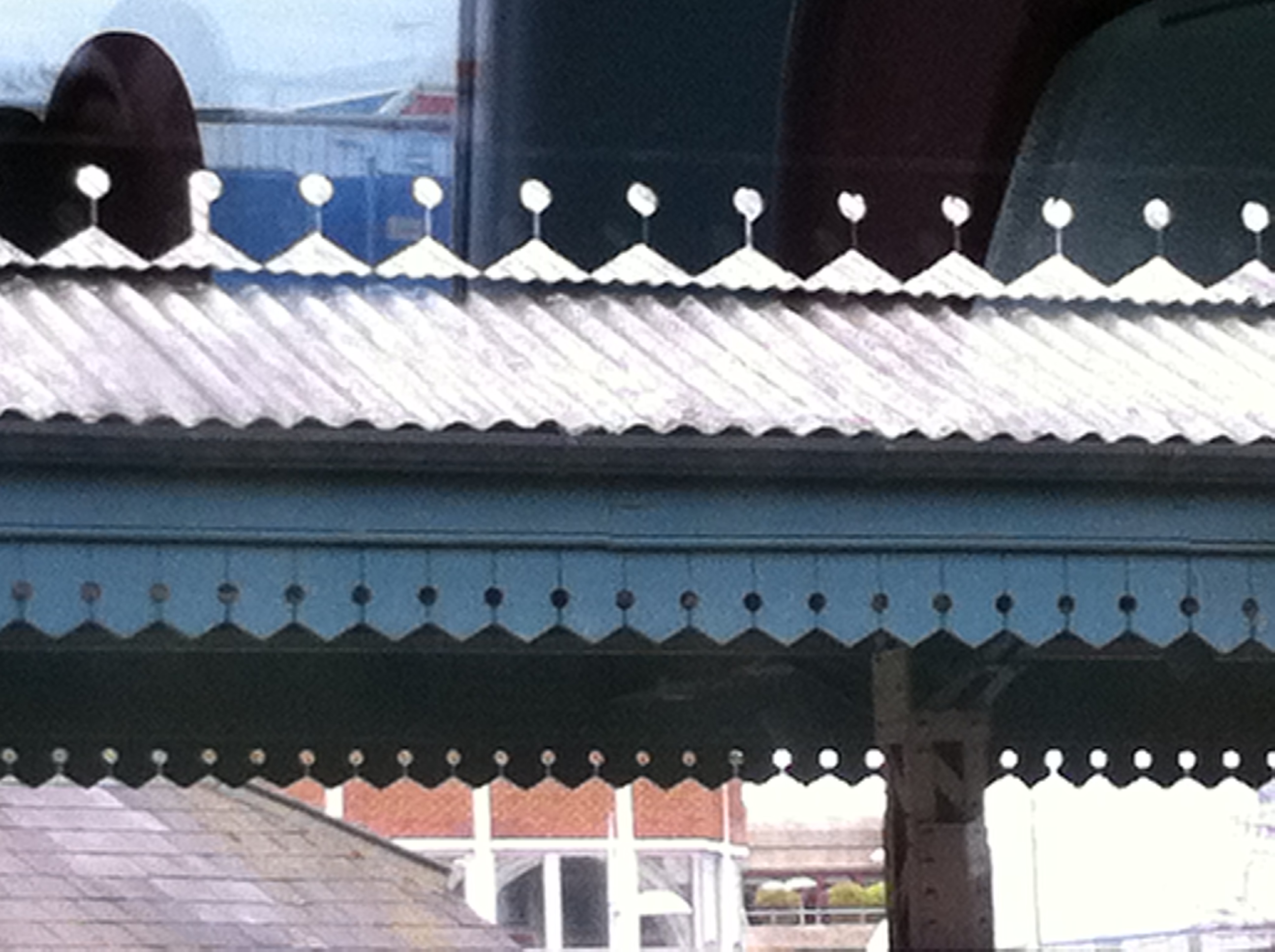
Below is a photo of Reading station – repeating patterns in such close proximity. The cut out shapes are the same but seen in silhouette, then blue and above, apparently reversed – the same shapes made from corrugated roofing – confused by reflections in the train window.

patterns in victorian stations

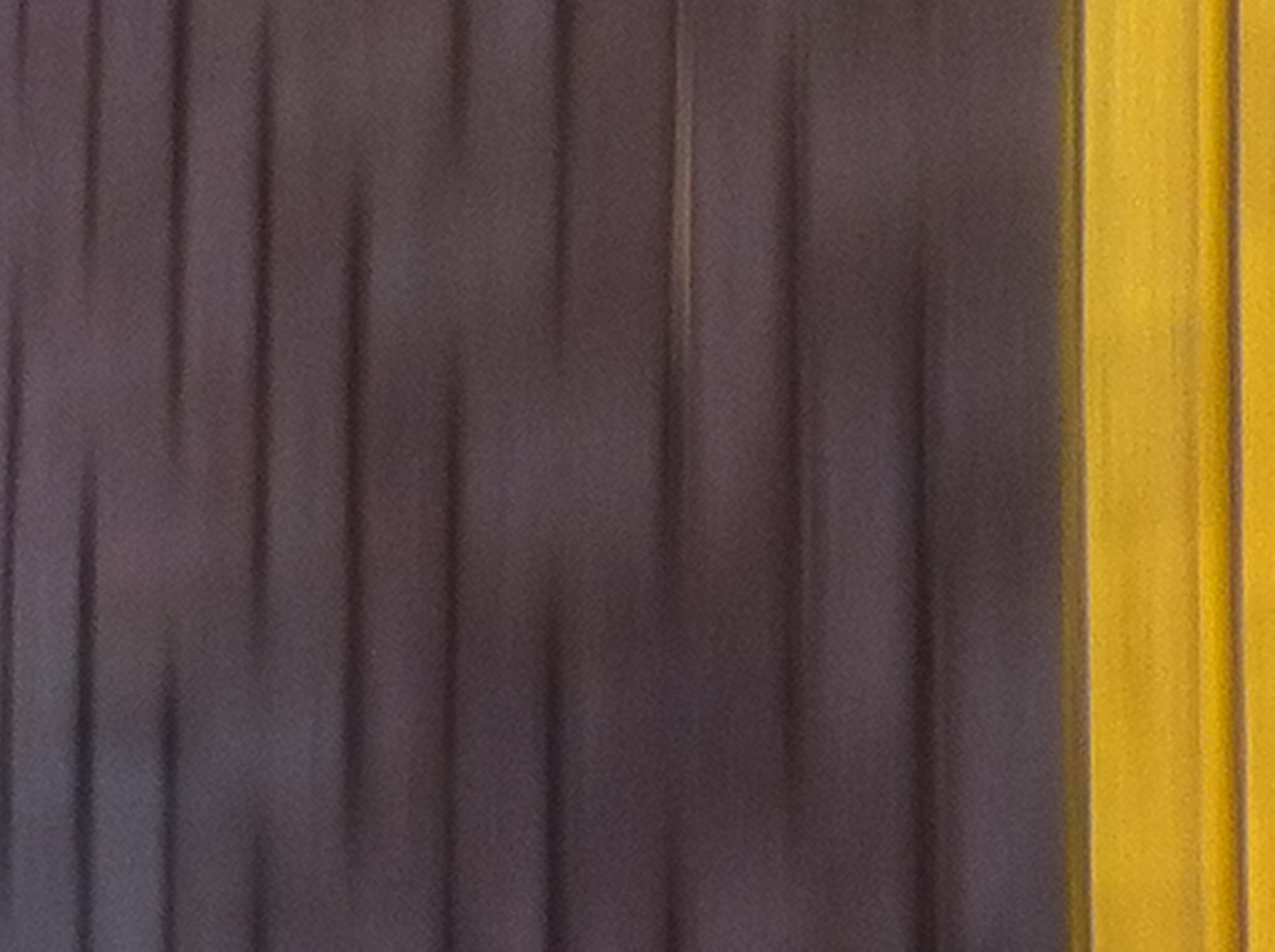
I tried photographing the concrete-paved platform as the train was slowly pulling out of the station, the yellow warning strip of the edge of the platform makes a pleasing border.

concrete platform

Decorative plasterwork on the ceiling of a public house dating back to 1746, the Llandoger Trow in Bristol centre.

plasterwork ceiling

Experiments in casting

I have never tried casting anything in plaster until now, using the large nylon salad bowl my mother gave me 20 years ago as my modelling form.
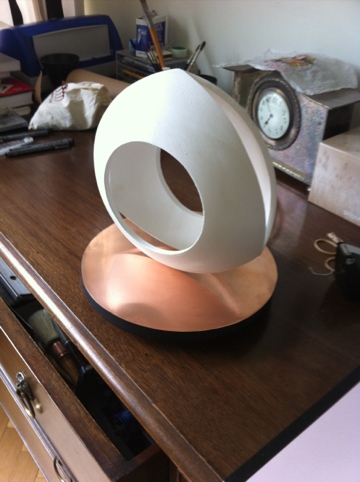
Playdough walls to define the shape and everything covered liberally with Vaseline. I poured the plaster and allowed it to thicken and spooned out the excess. I made two castings and after finishing them to a smooth polished surface, I glued them together.

Geometric Sculpture - Relueaux Triangle on a copper rotating base
As I failed to realise how fragile it was, ordinary Plaster of Paris without an armature, it broke . . .
Now I am starting again but bigger and better. I have acquired a large wok and a bag of terracotta coloured sculpture plaster which not only is very tough but also has iron inclusions which will gradually rust on the surface.