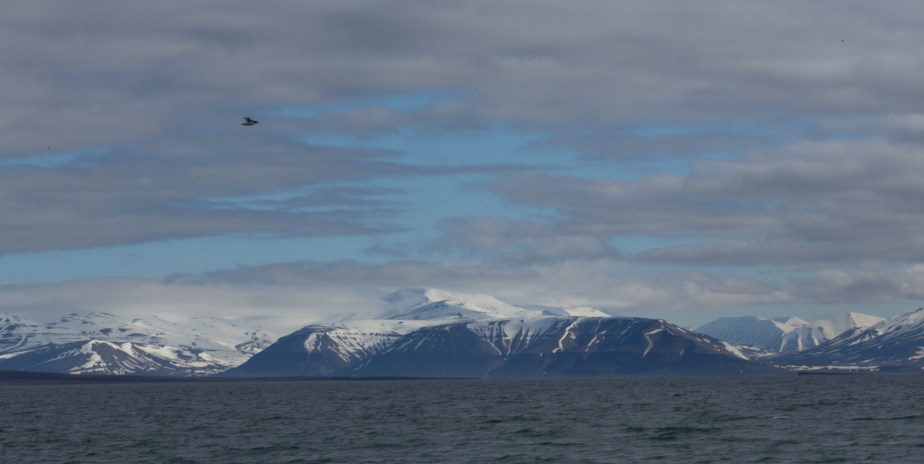
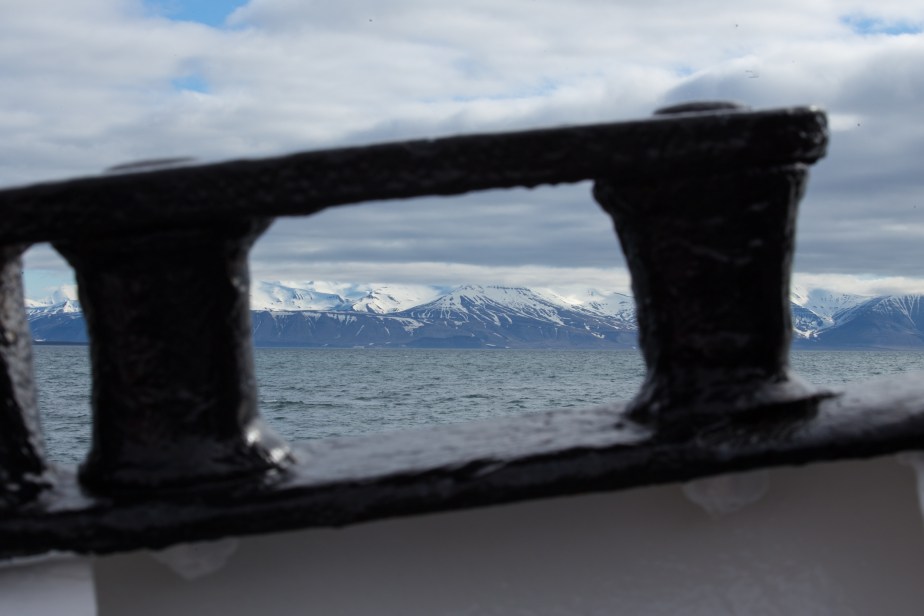
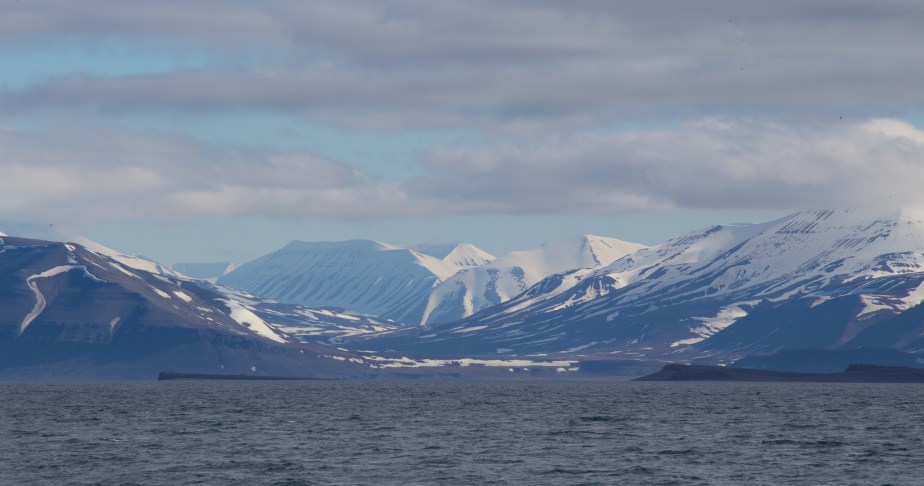
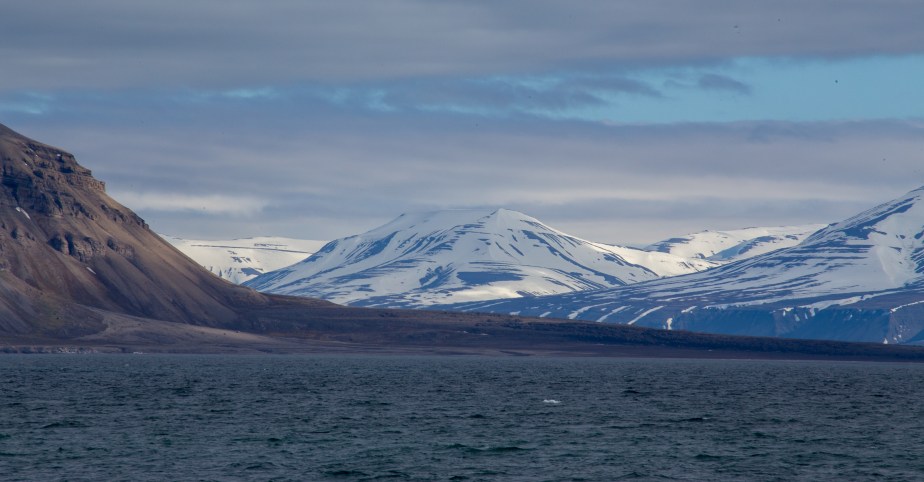
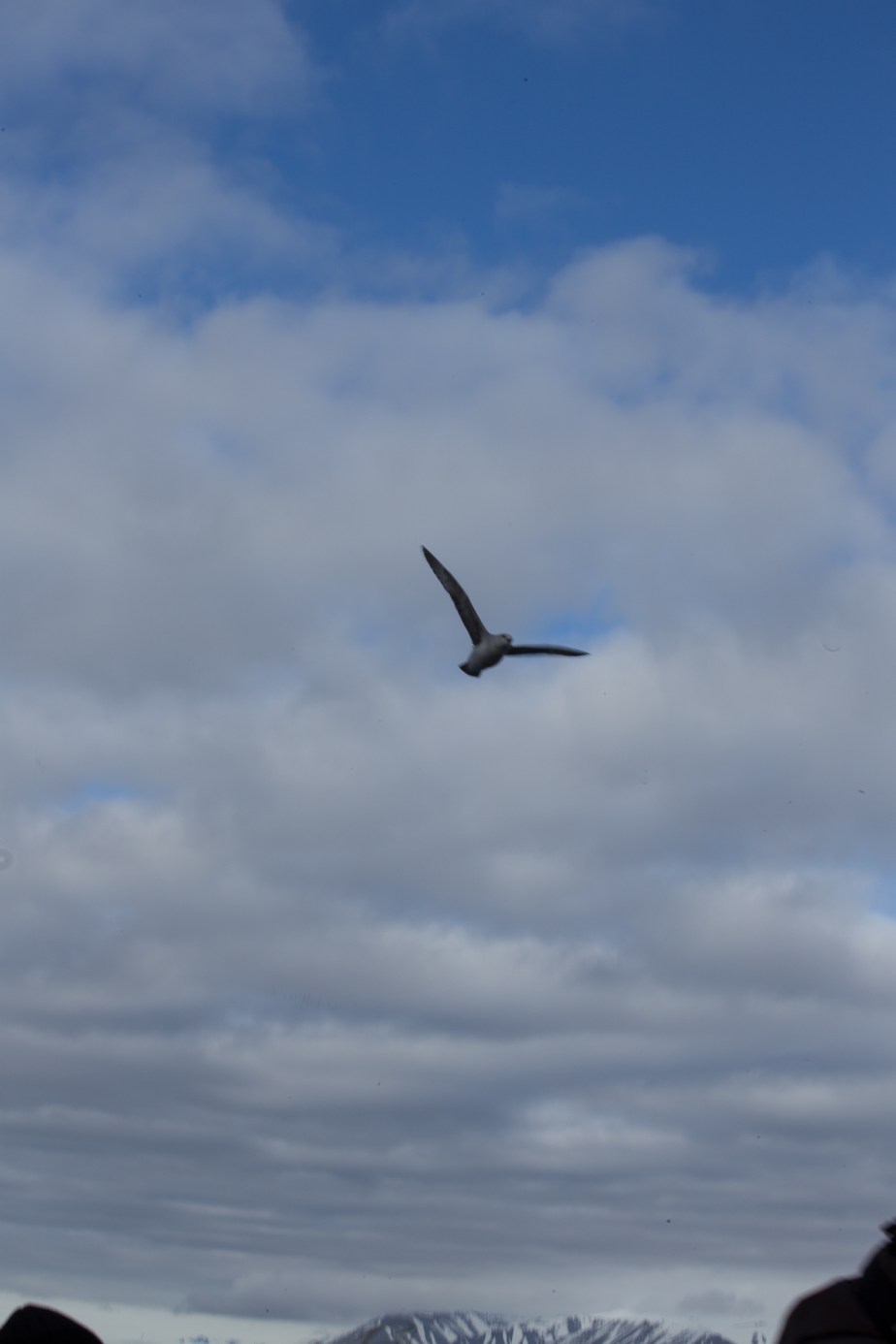
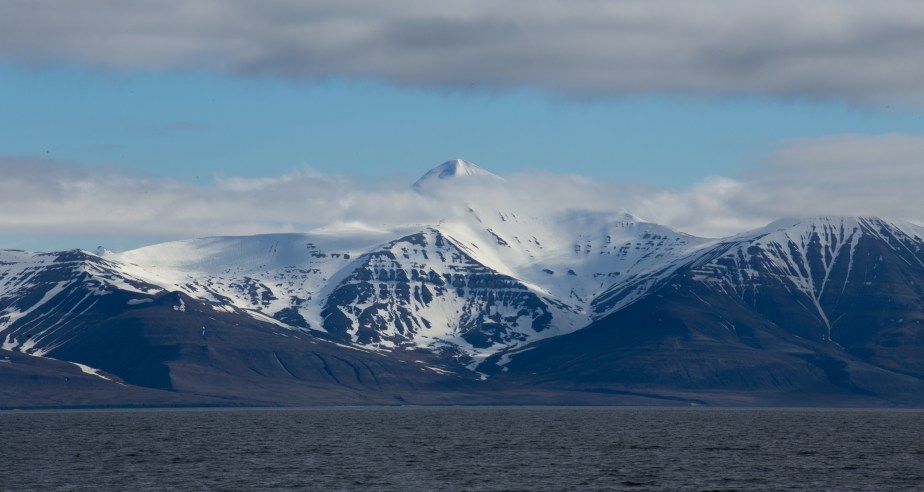
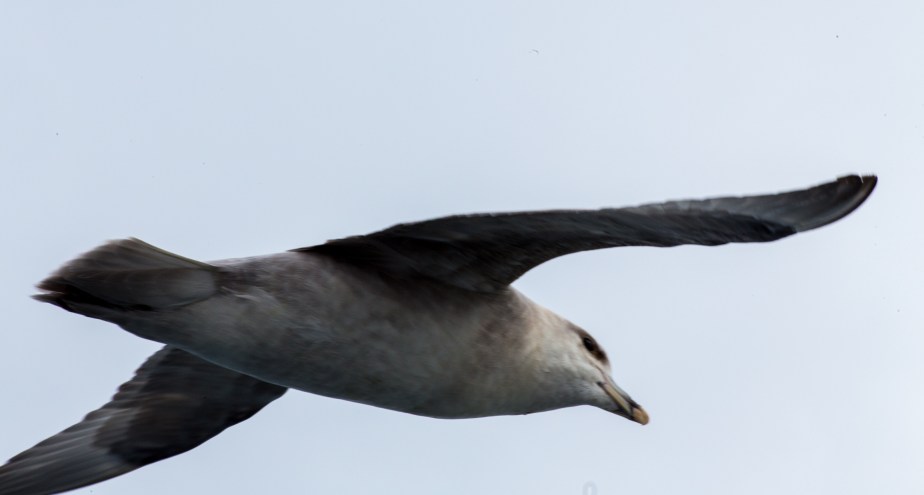
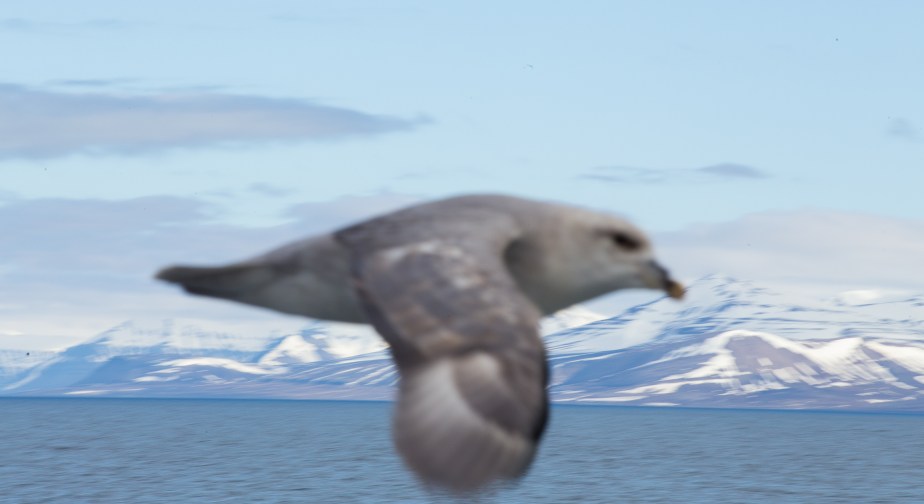
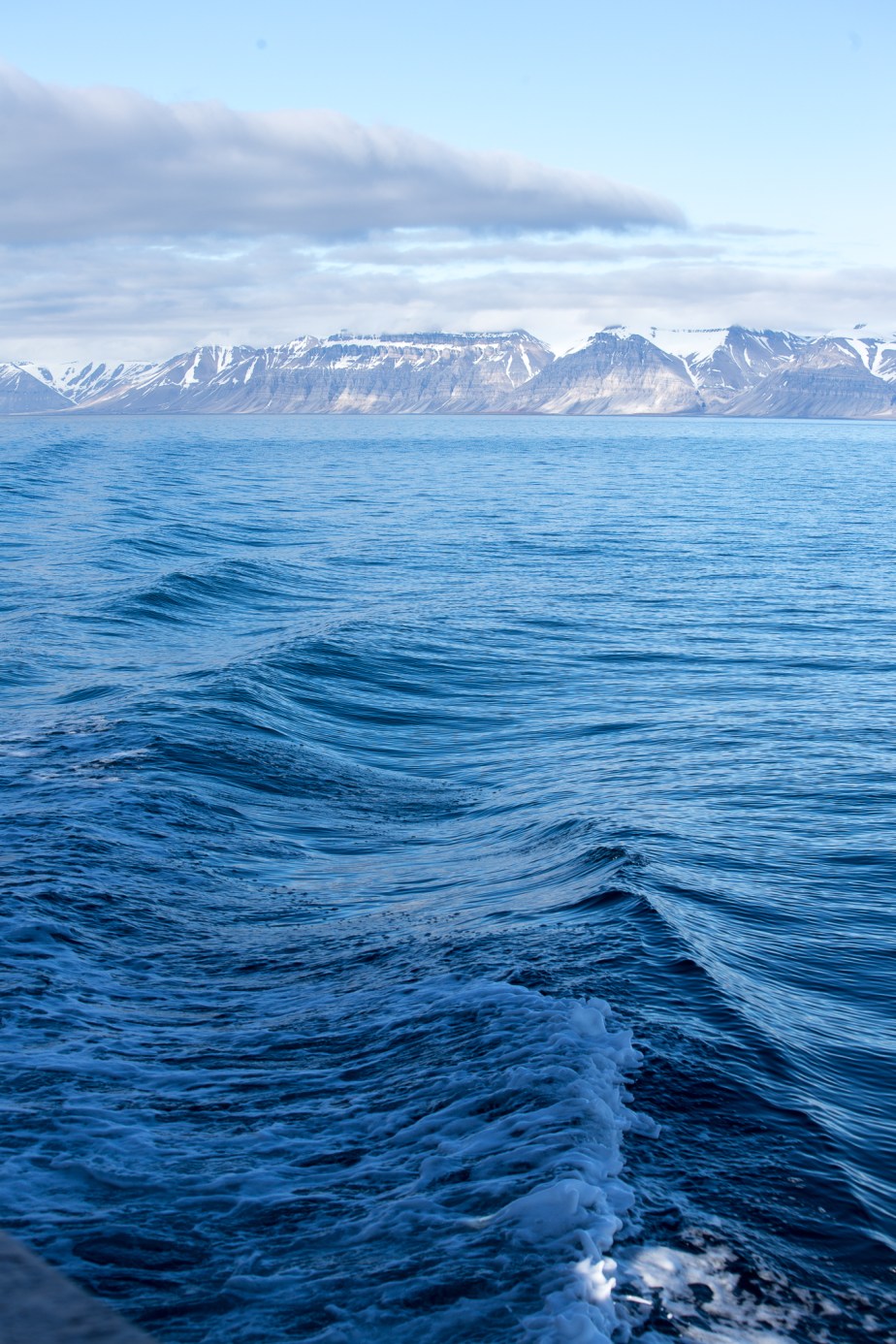
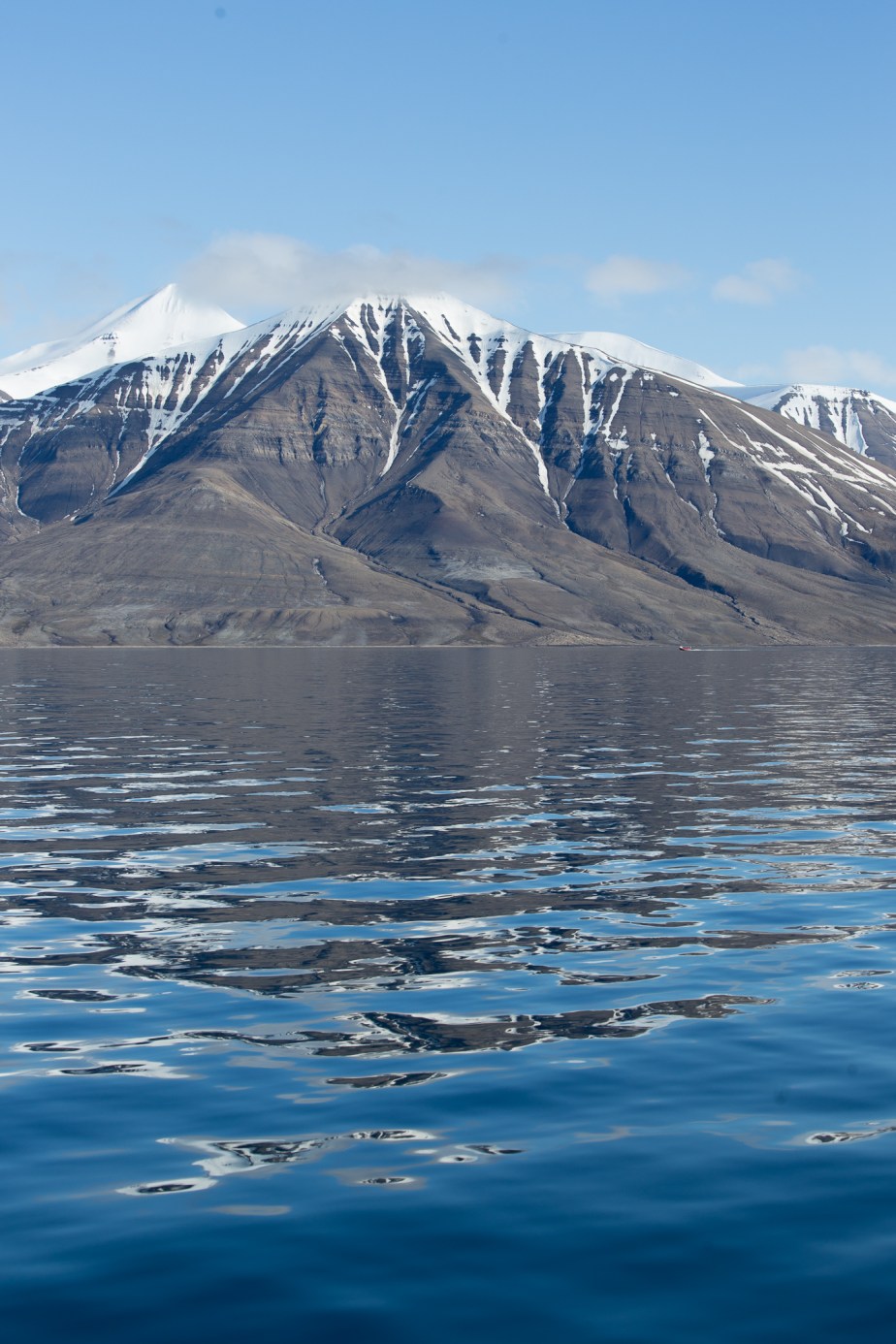
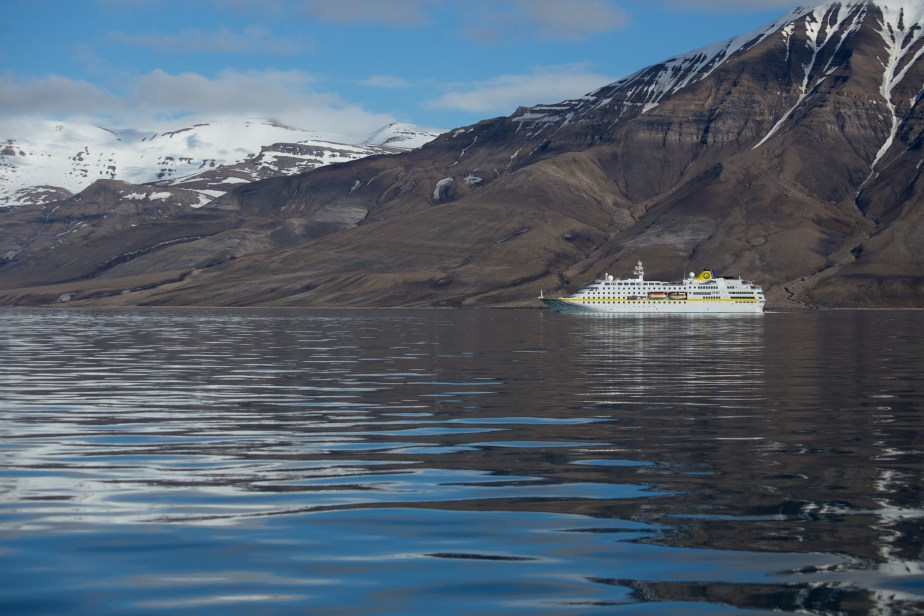
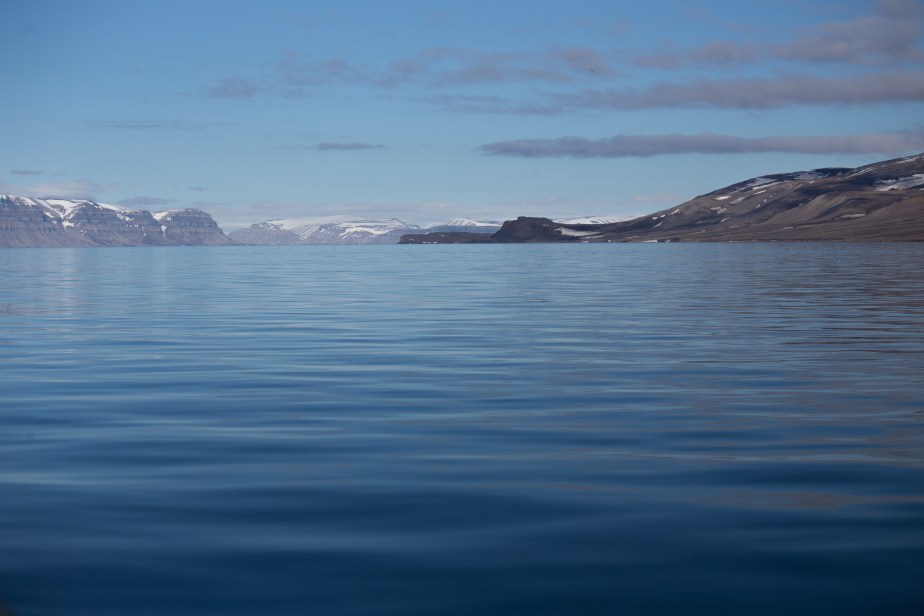
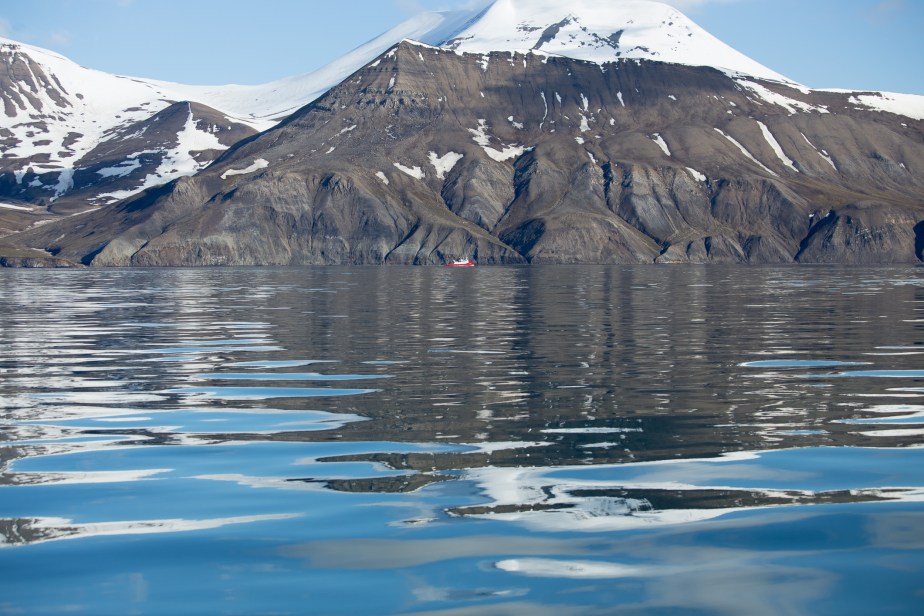
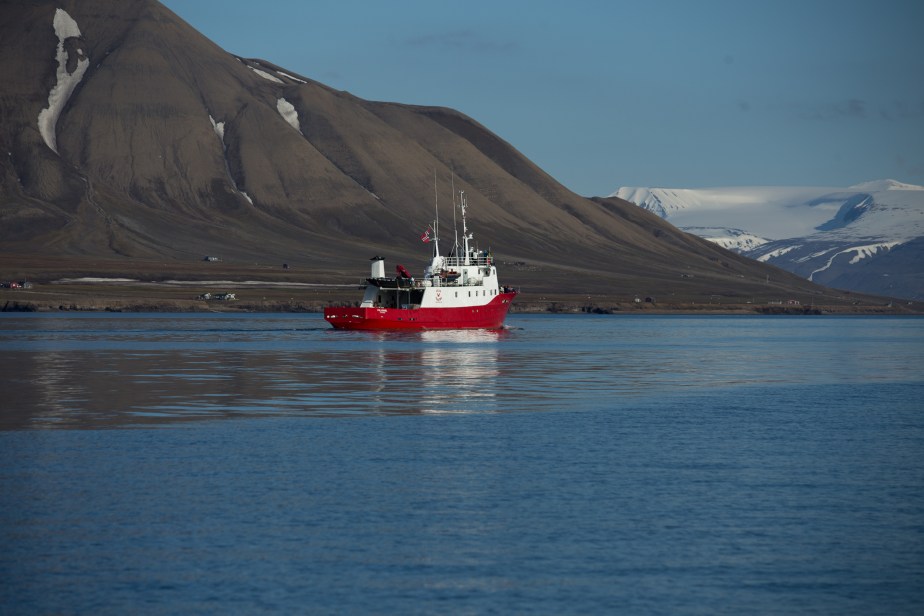
Our boat trip lasted about 12 hours and during that time the sky was pretty much clouded over but during our trip back to Longyearbyen harbour the sun finally appeared. The sky turned blue and so of course did the water. The ocean was calm and smooth as silk, I’ve heard that expression before but this time it really moved like silk and was very reflective. I tried to focus on the birds following above us but it seemed impossible, as an amateur, to get the focus right as the birds flew unexpectedly close.
I’m pretty sure the generous shots of whisky provided by our delightful guide Stein only helped my technique. He was kind enough to say that our trip was the most convivial he had guided this year.
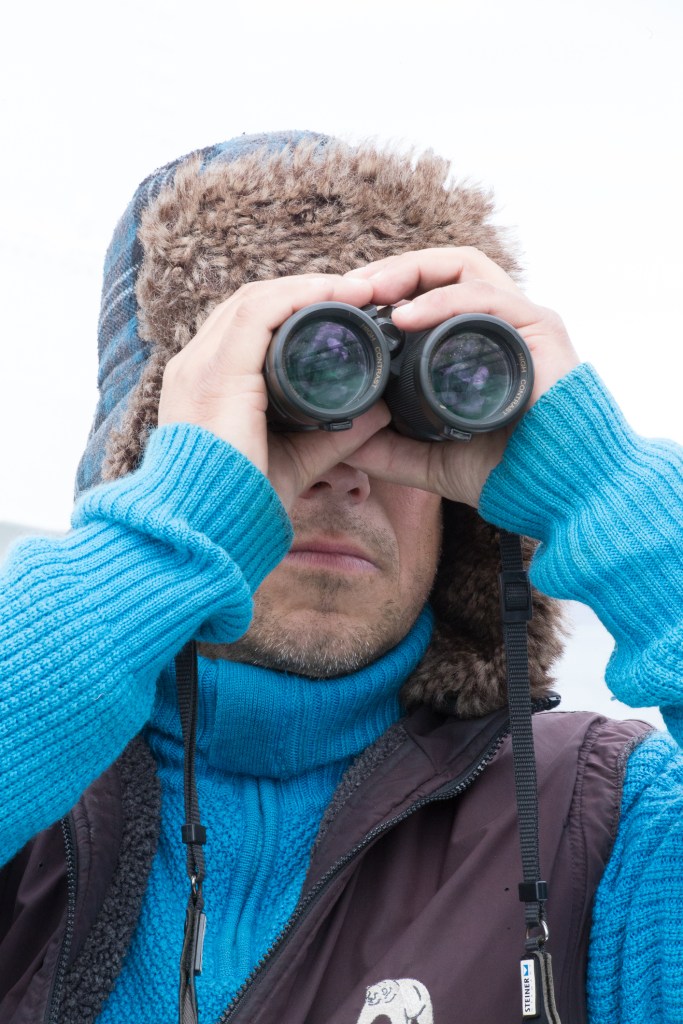
Stein from the MS Langǿysund, watching out for Polar bears, sadly we didn’t get to see one.A bright blue line appeared along the coast, I caught it on camera so it can’t have just been an affect of the whisky.
A Minke whale flashed its white back at us a we sailed past
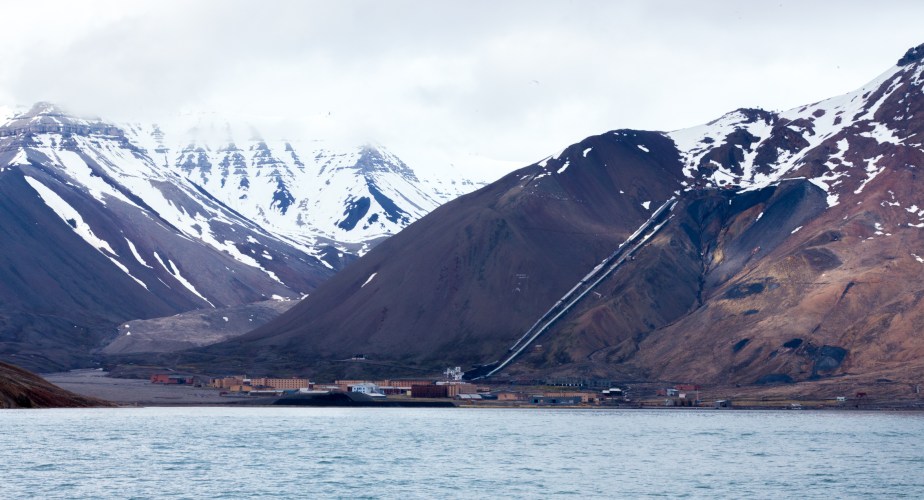
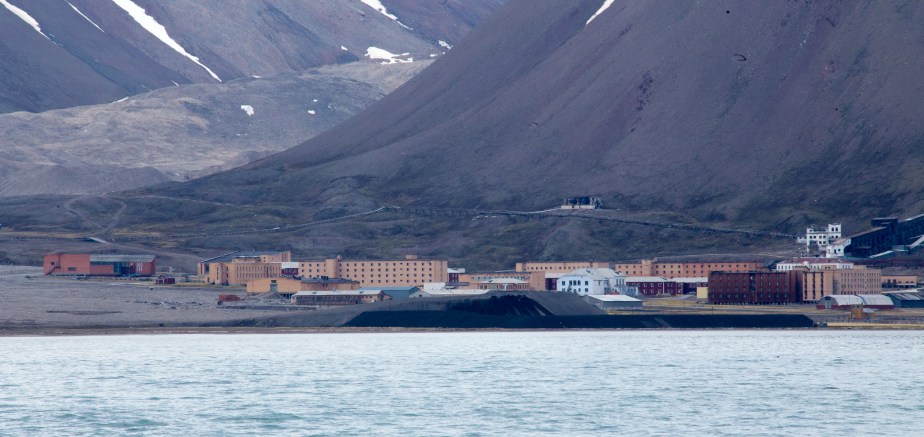
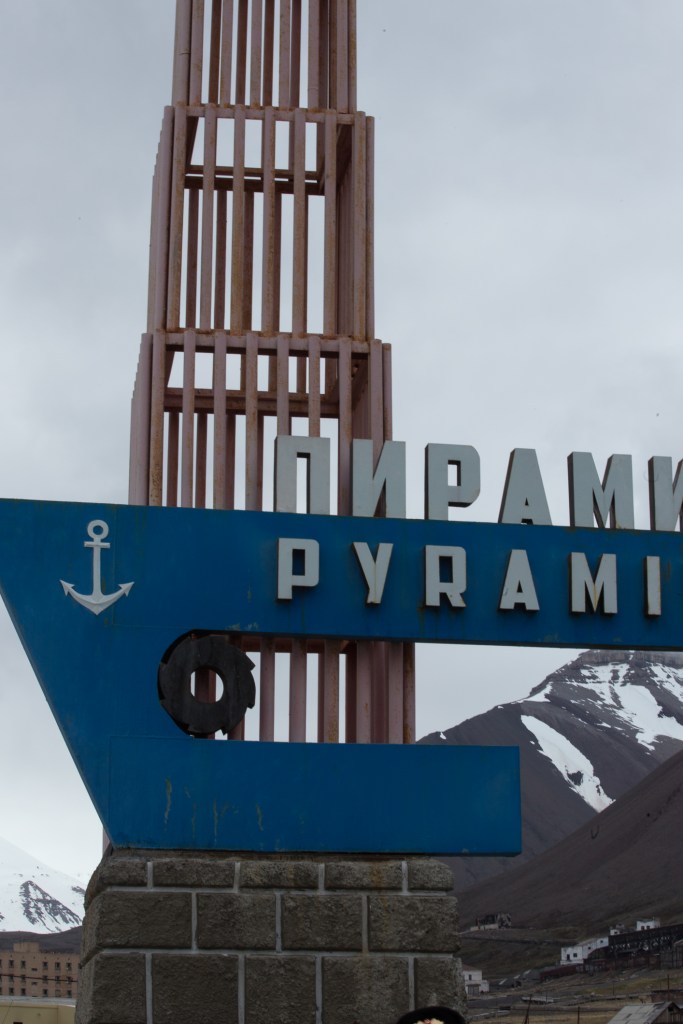
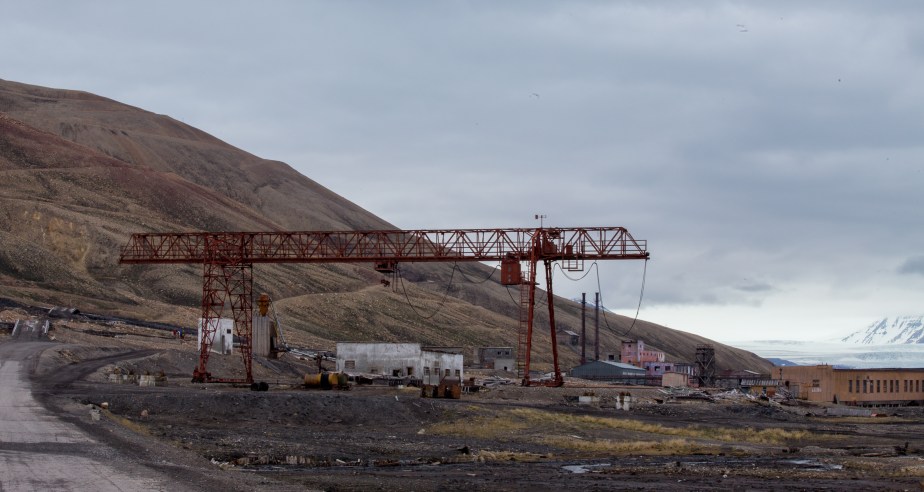
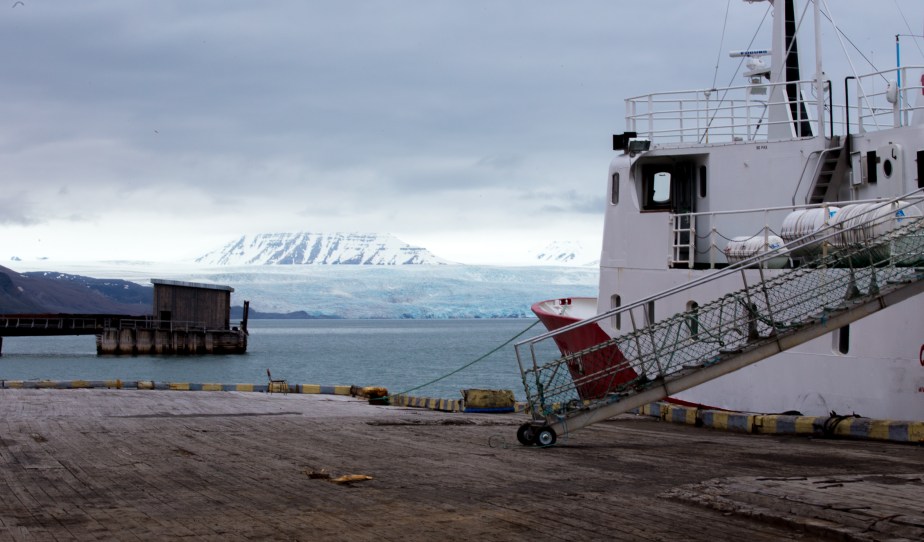
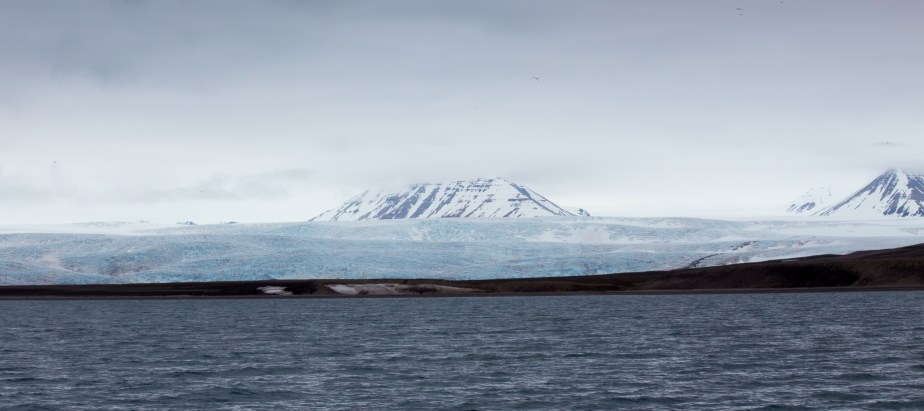
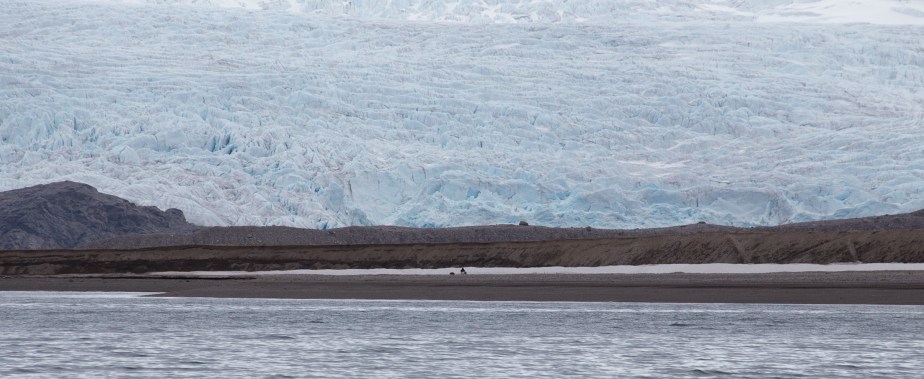
Pyramiden is one of several abandoned Russian coal-mining towns, there is also Barentsburg which seems to have been larger and more complex. We chose to go to Pyramiden because the boat sails past the Nordensköld glacier.
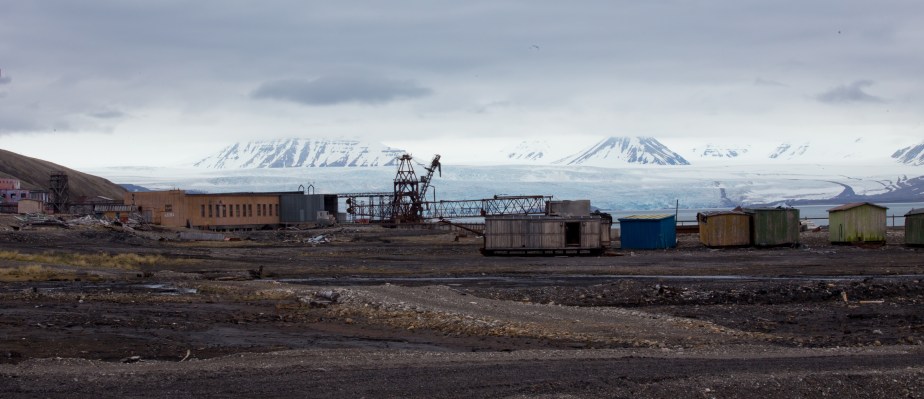
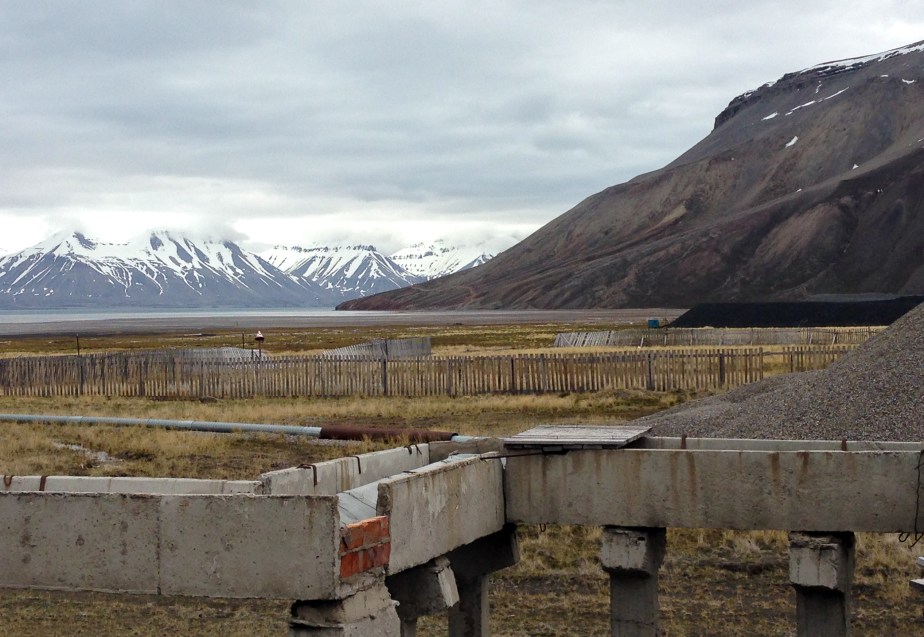
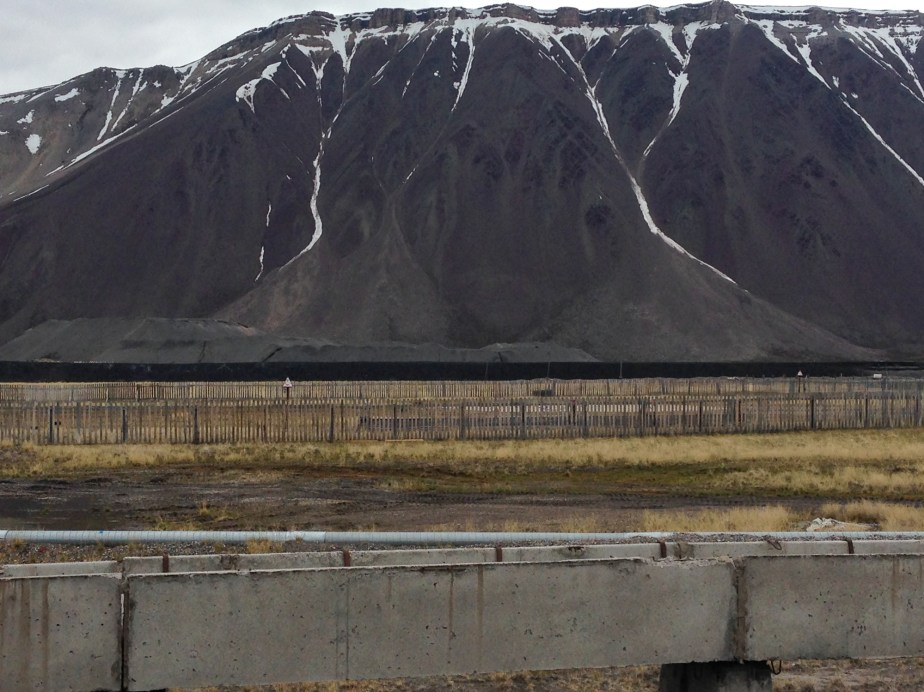
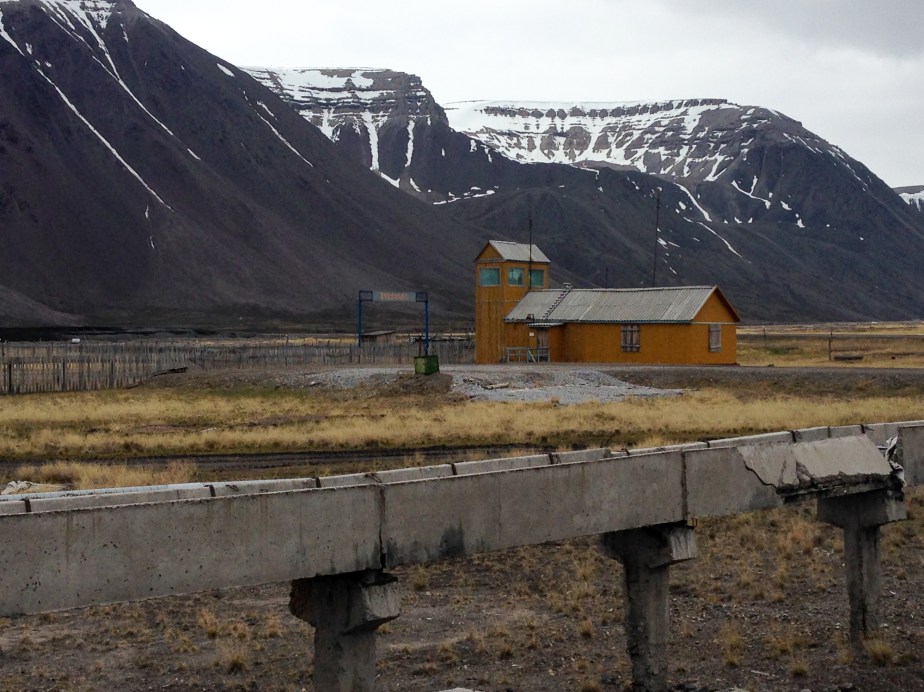
A busy and fully equipped mining town, it was abruptly abandoned at the demise of USSR in 1998. Here is an excellent site giving full details of its history but these photos demonstrate how it looks right now.
Some of these images were taken with a phone camera but most were taken with a borrowed camera. The charming and kind Lisa lent me her camera to use, with my SD card, because my lovely camera had a hissy fit and decided it couldn’t bear the cold wind, the shutter refused to shut or open unless I removed the lens and kept the body of the camera warm for 10 minutes.
Lisa and Severin are half way through a 6 month tour of Scandinavian countries driving and living in an adapted Mercedes van. What a fabulous trip, I would love to do that. Such interesting people doing such a great thing, and so generous with their camera. (thanks )
Approaching Pyramiden by boat
Getting closer in
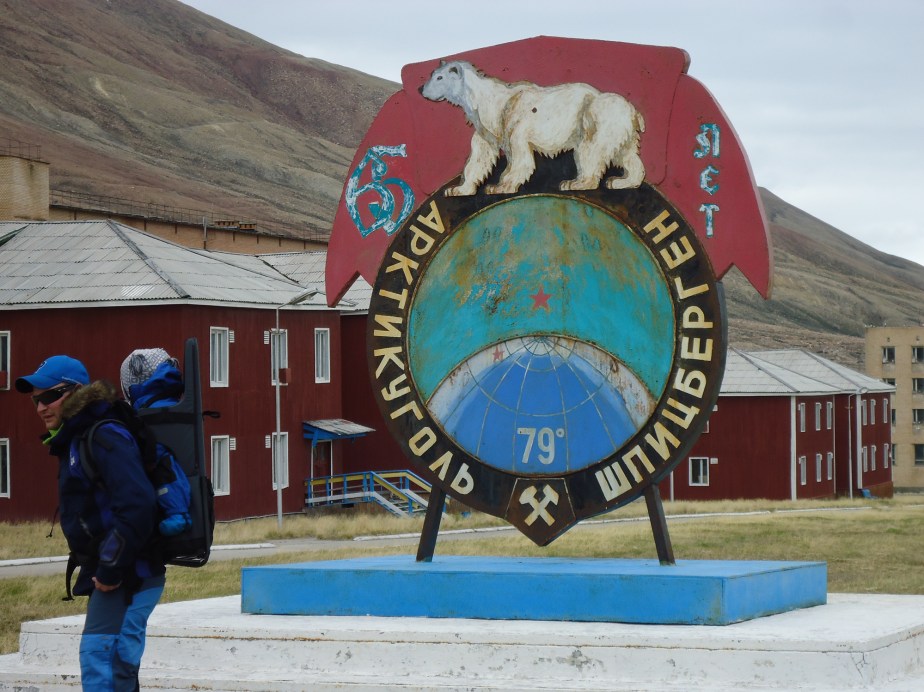
The welcome sign to Pyramiden
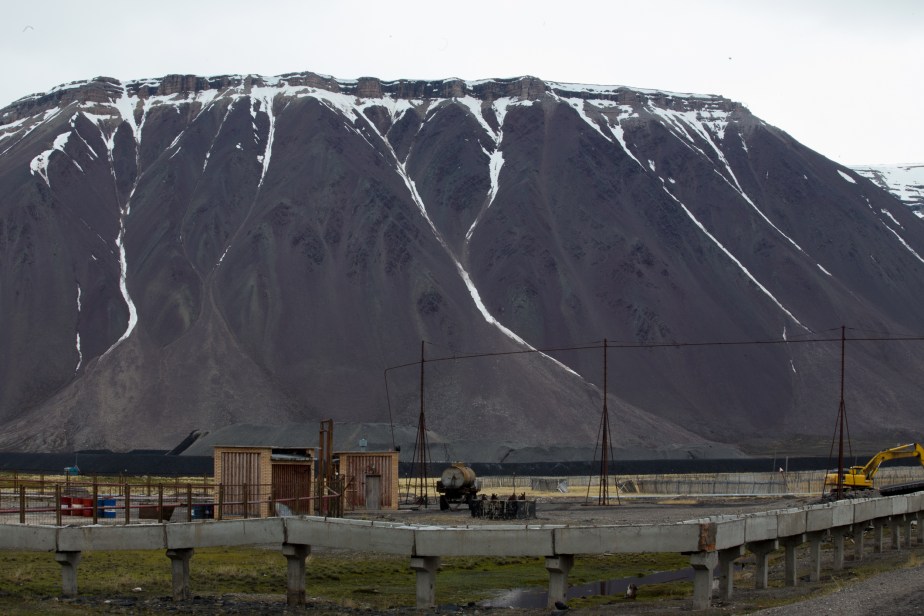
The glacier is seen in the distance
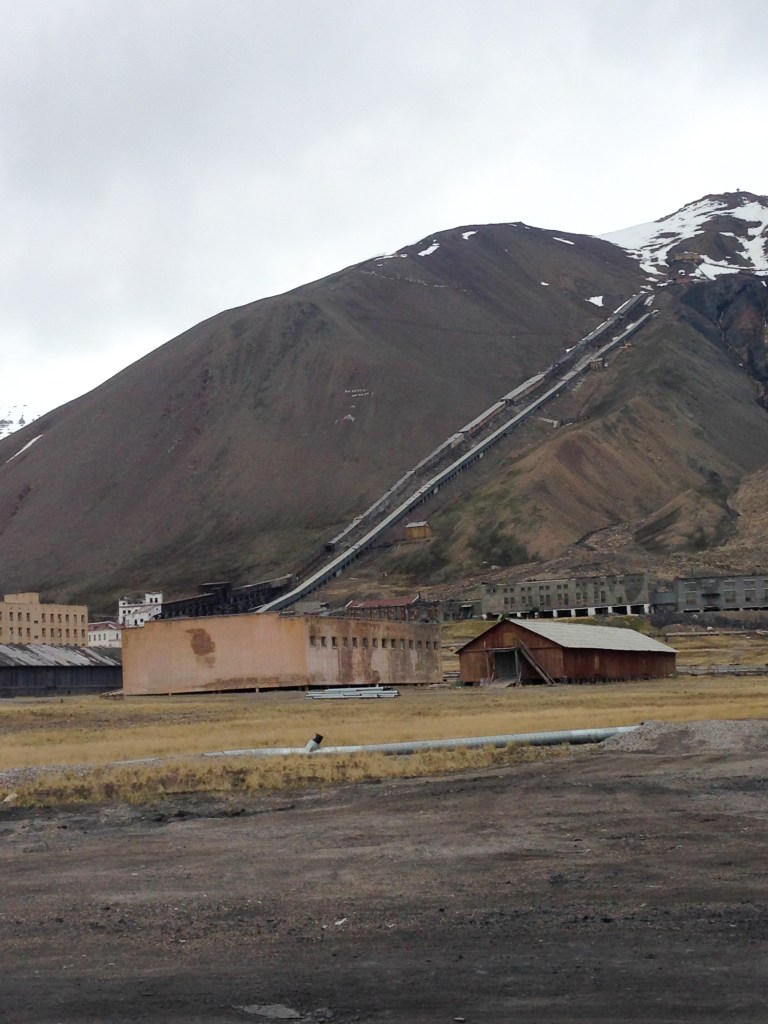
The long railway up to the mine entrance took the miners up and down as well as bringing the coal down
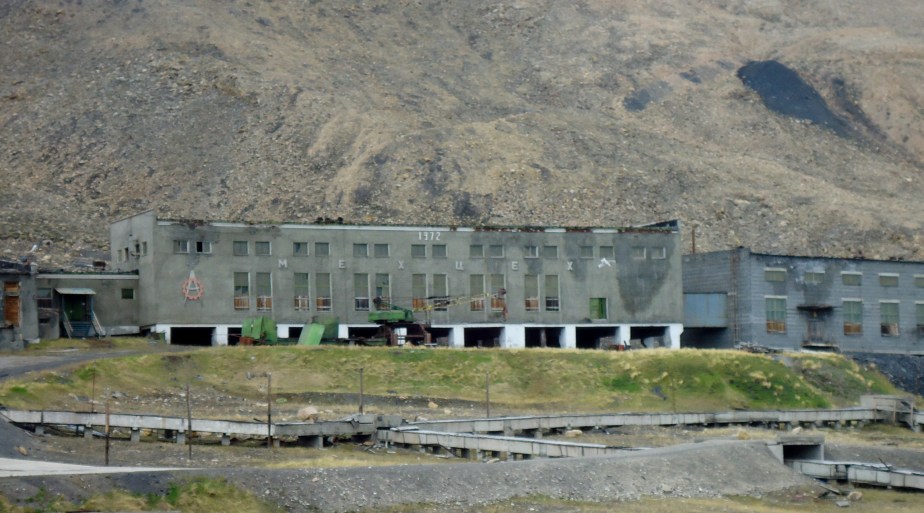
Administrative block
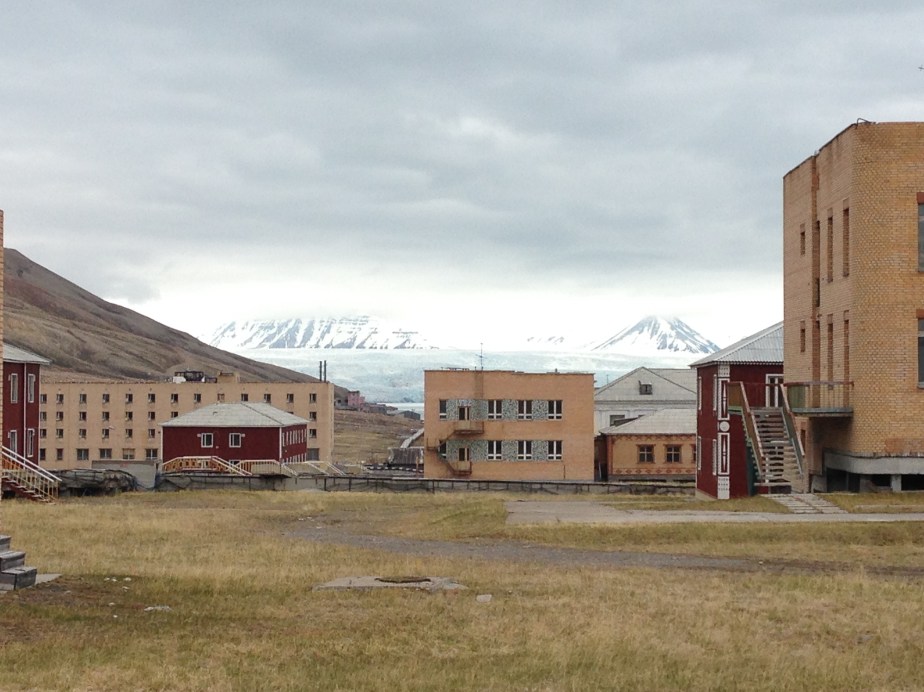
The central grassy square with the glacier in the back ground
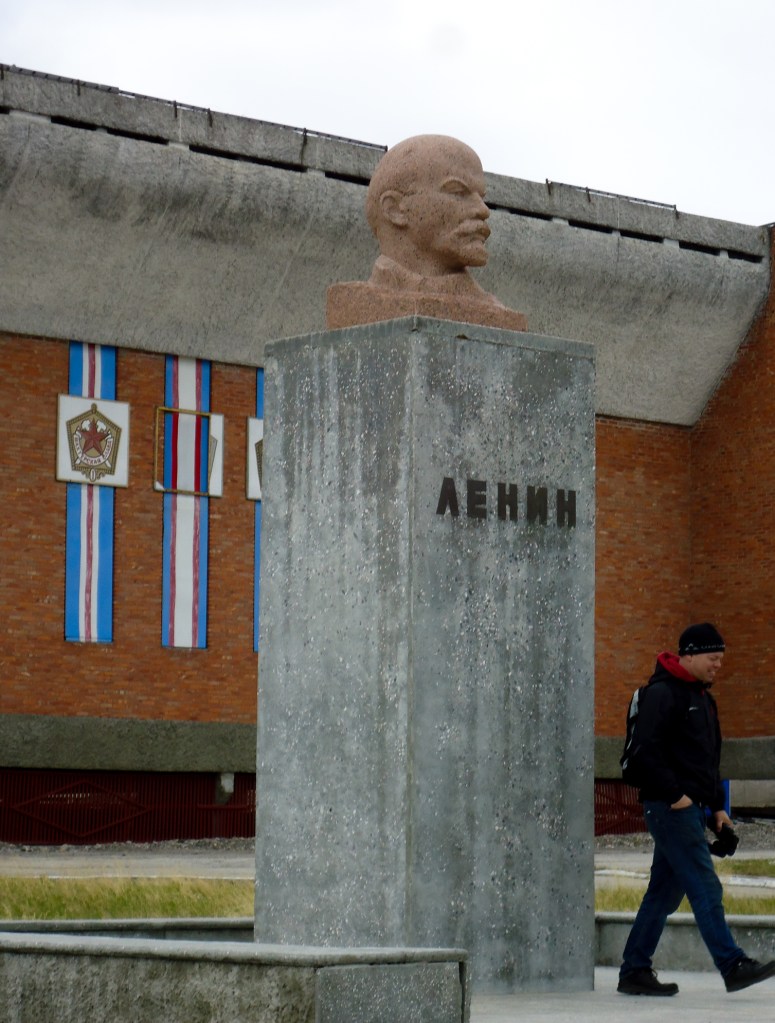
The most northern sculpture of Lenin
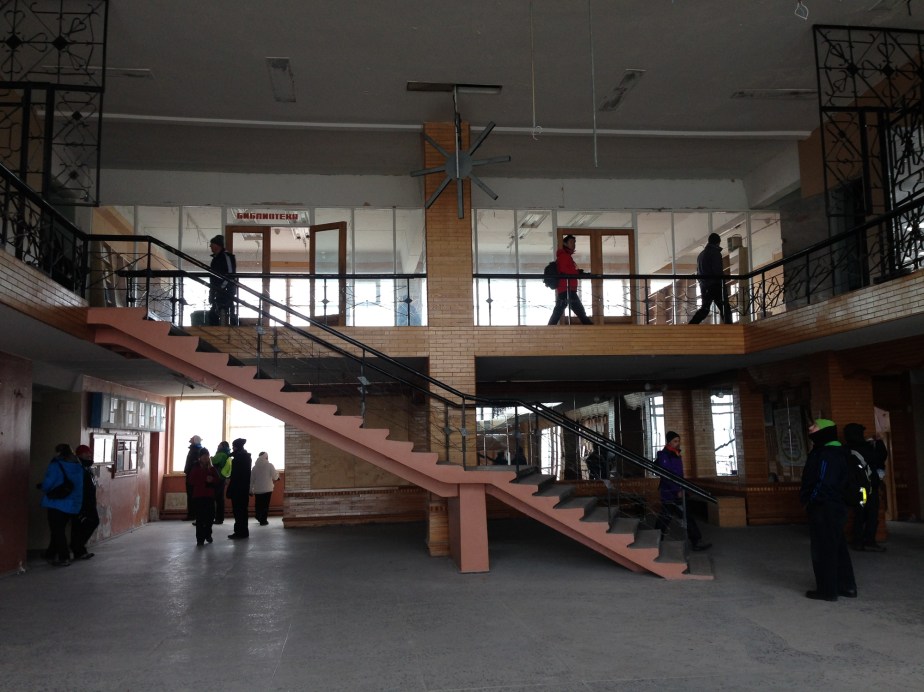
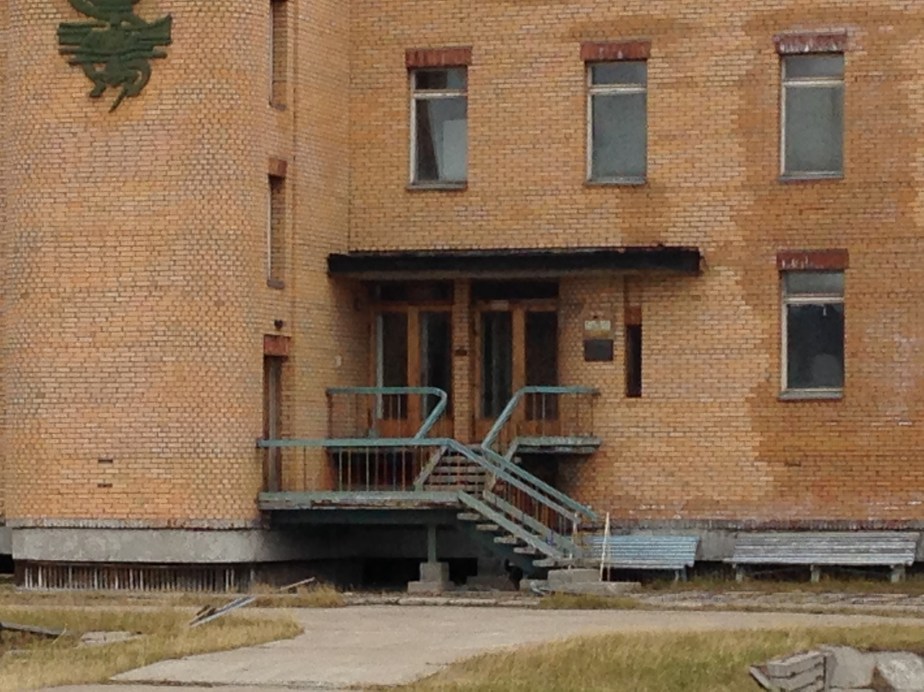
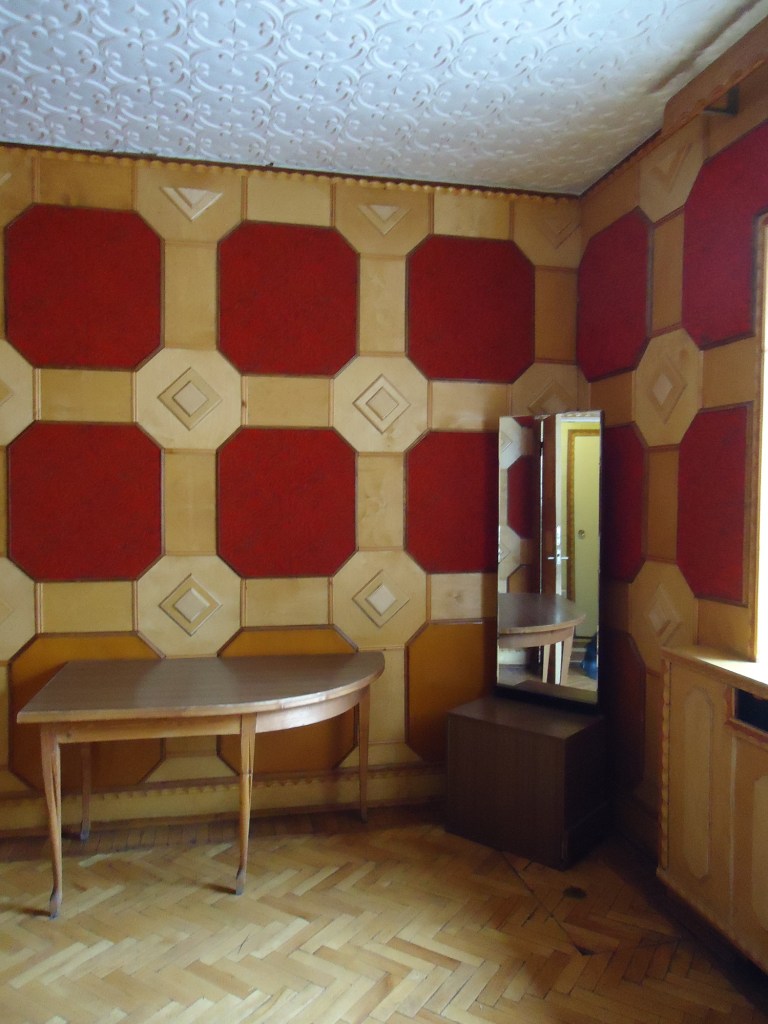
Community centre entrance hall
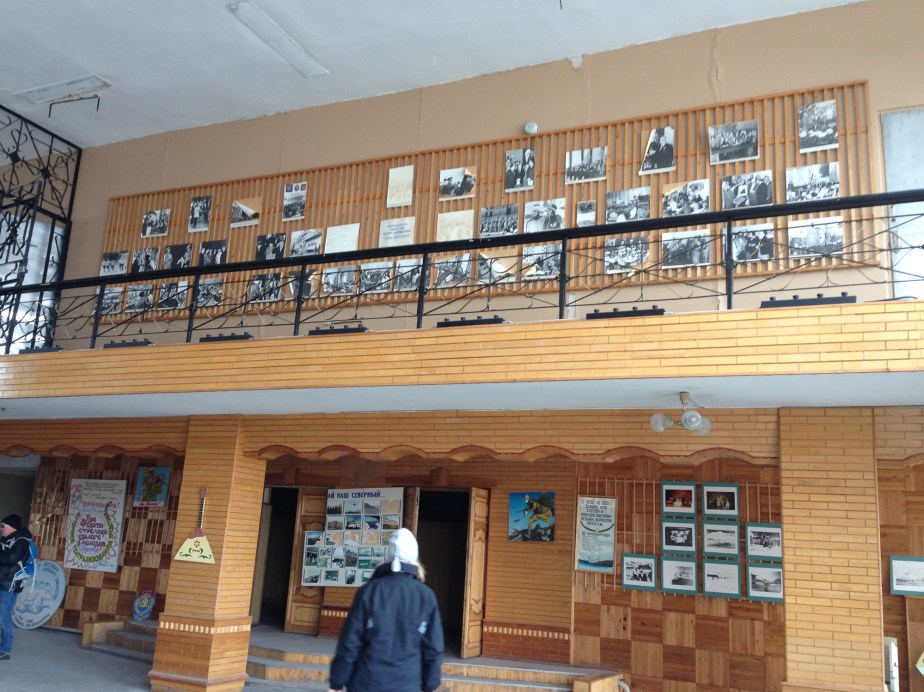
Community centre
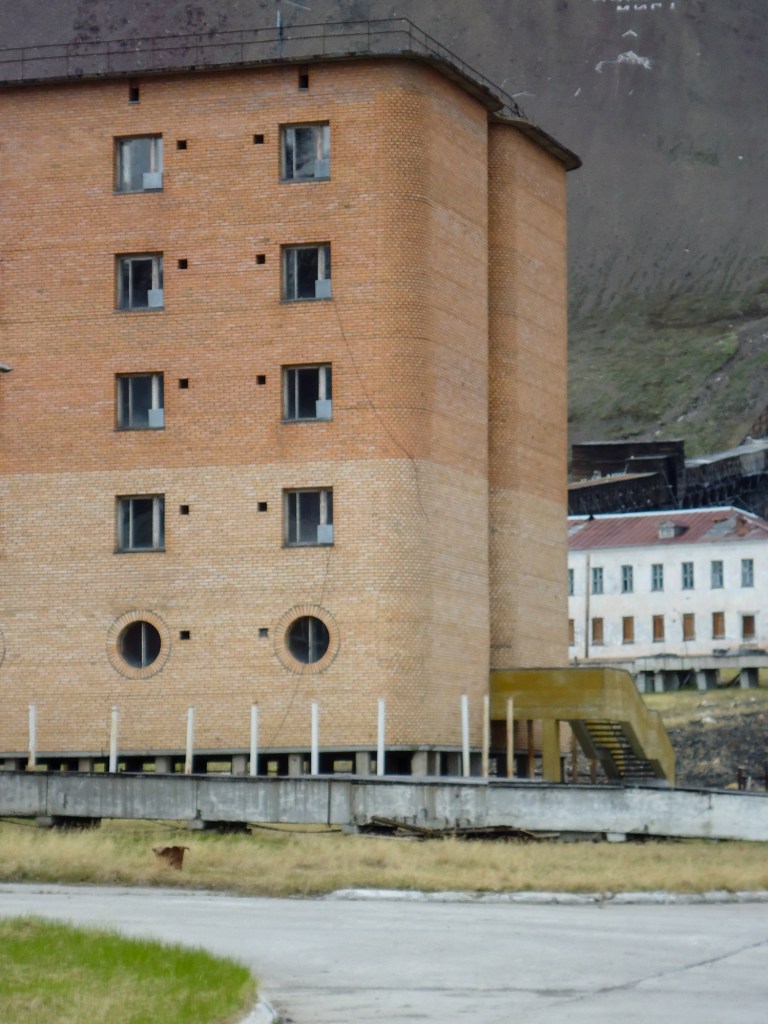
Accommodation block
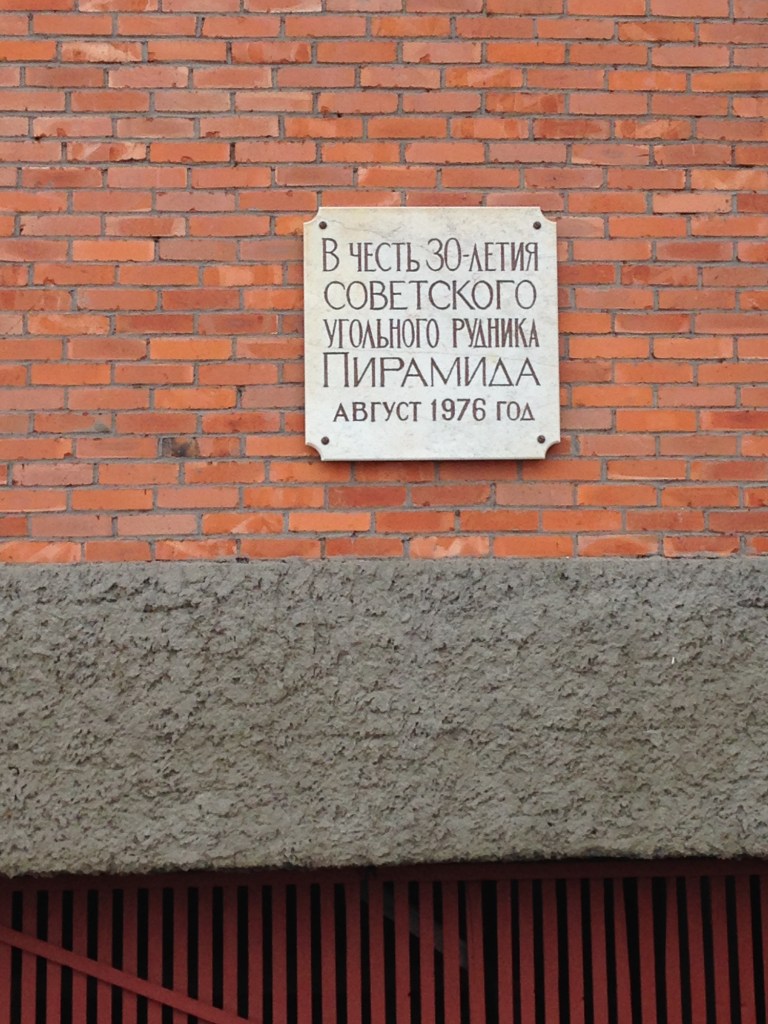
Not sure what this says but I guess its recording the date of the construction
Living quarters were segregated into families, single men and single women (affectionately known as ‘Paris’)
Birds nesting in the window reveals, tucked up close to the original cold boxes.
Interior of the Tulpan hotel, where visitors can still stay, currently the permanent population is around 15 at most, only a few stay all winter.
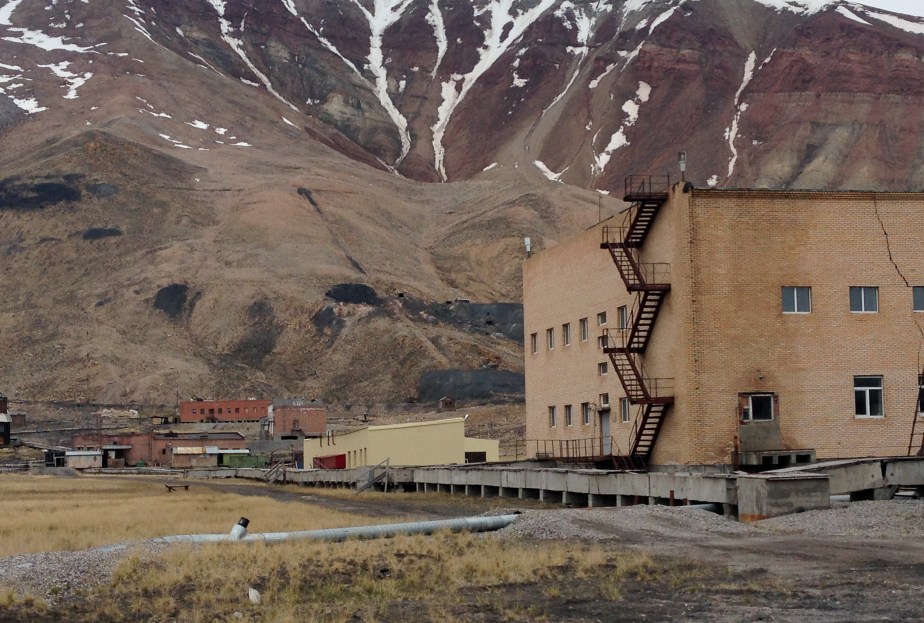
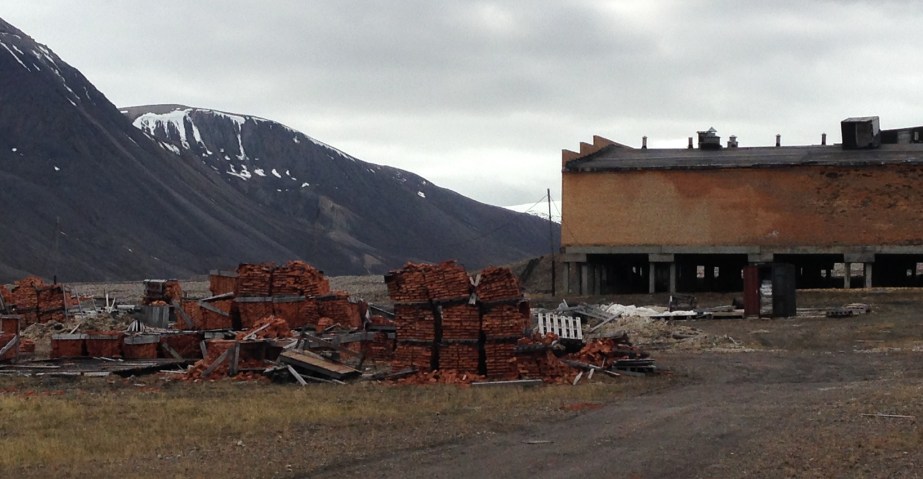
On the opposite side of the valley
Bricks made at Pyramiden, easier to make them than import them.
Taking a boat trip was the probably the best thing we did during our visit to Svalbard.
We sailed on MS Langøysund with our guide Stein (pronounced more like Stain) from Henningsen Transport.
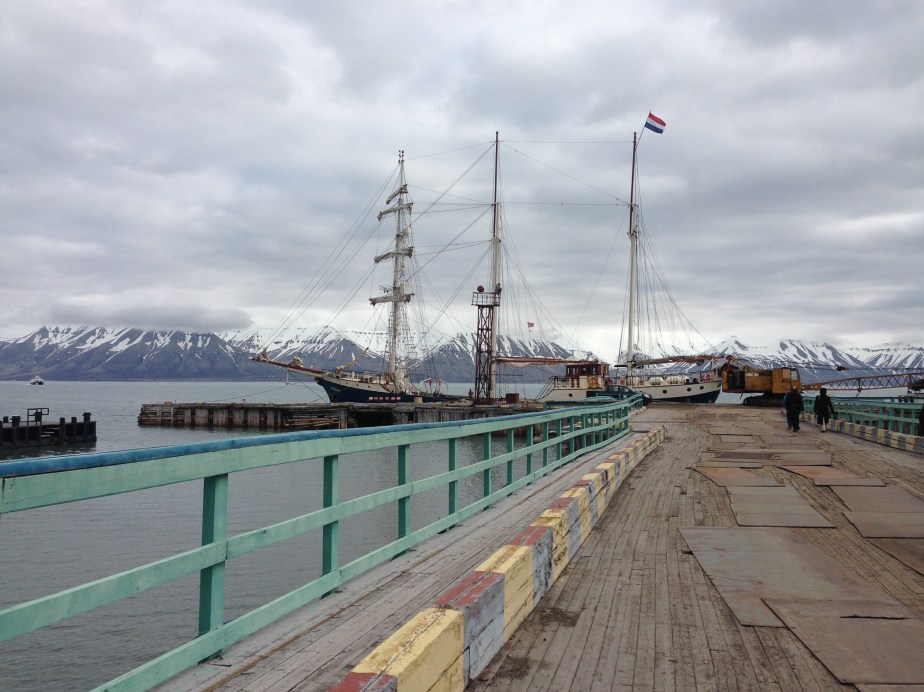
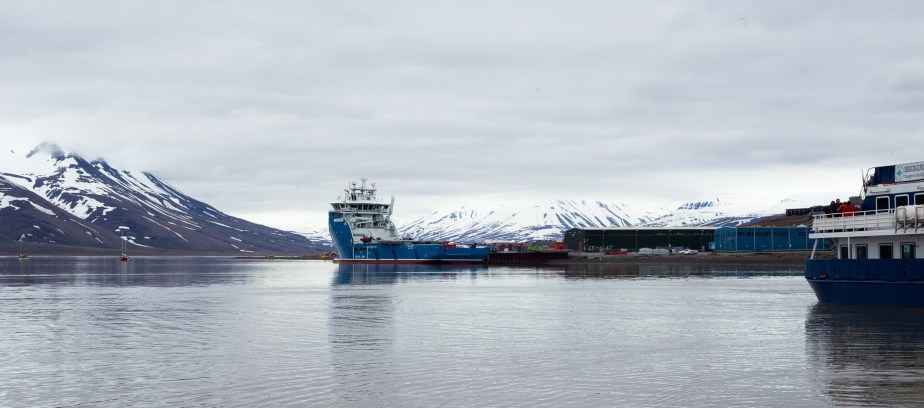
Leaving Longyearbyen harbour
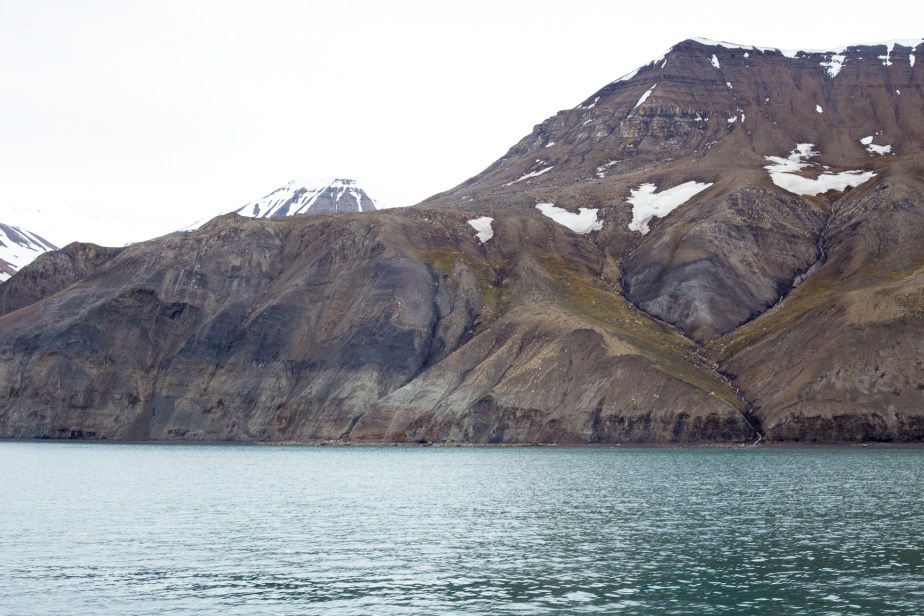
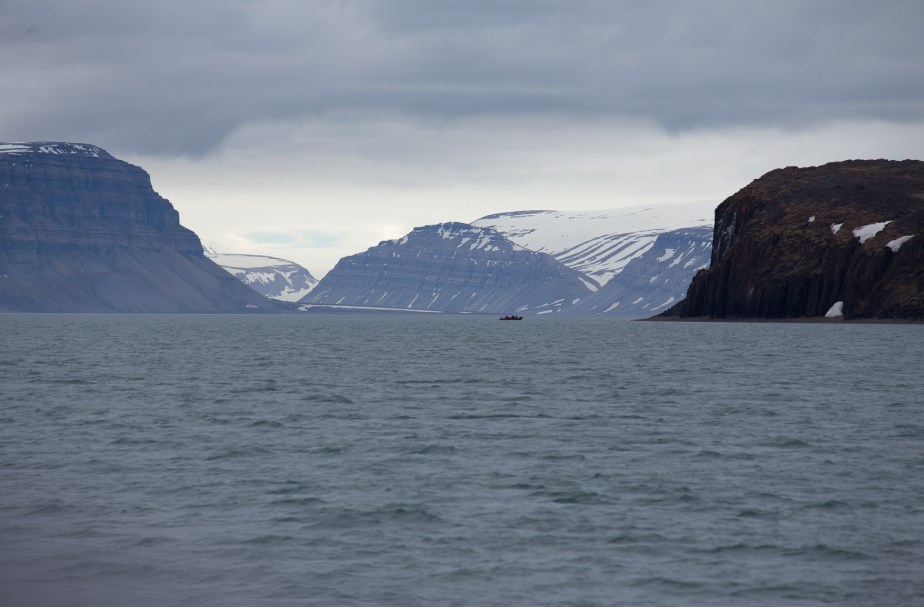
Steaming off around the western tip of the mountain range to the north of the harbour, we saw a few Minke whales as well as lots of different seabirds, even Puffins. The land around seems almost barren with no trees but plenty of grass and moss and in a few weeks there will be colourful shows of wild flowers.
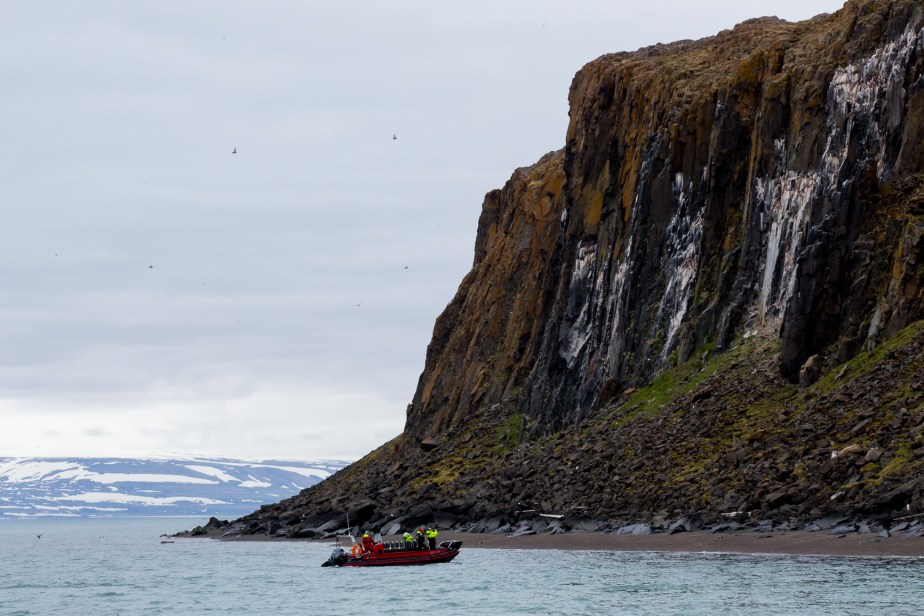
As we passed Bird Rock on the southern side of Sassenfjorden, thousands of birds were swarming, swirling in the skies and screaming into the wind. A sharp-eyed young man shouted out “there’s a fox” we could just make it out as it ran with a white bird in its mouth, seeking his foxhole for some privacy.
Bird Rock, guano not iceNordensköld glacier
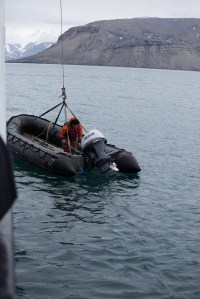
These huts are available for researchers to stay in for a few days.These two people had been photographing sea birds and staying in one of the huts. Our boat will collect them and take them back to Longyearbyen
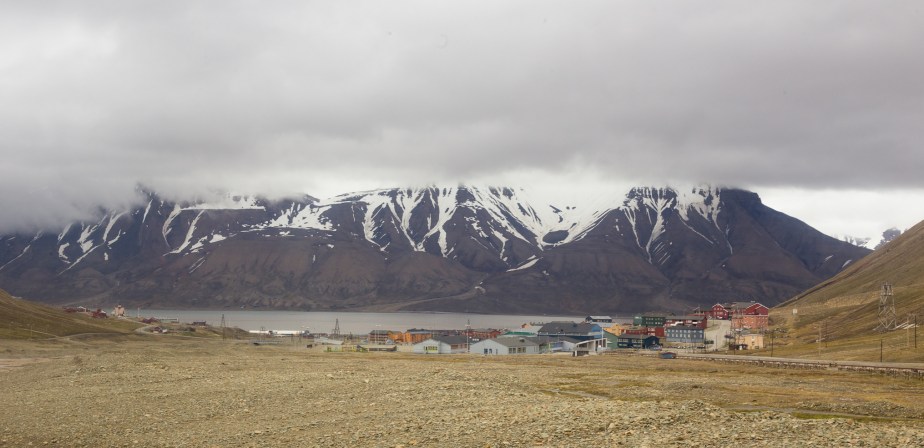
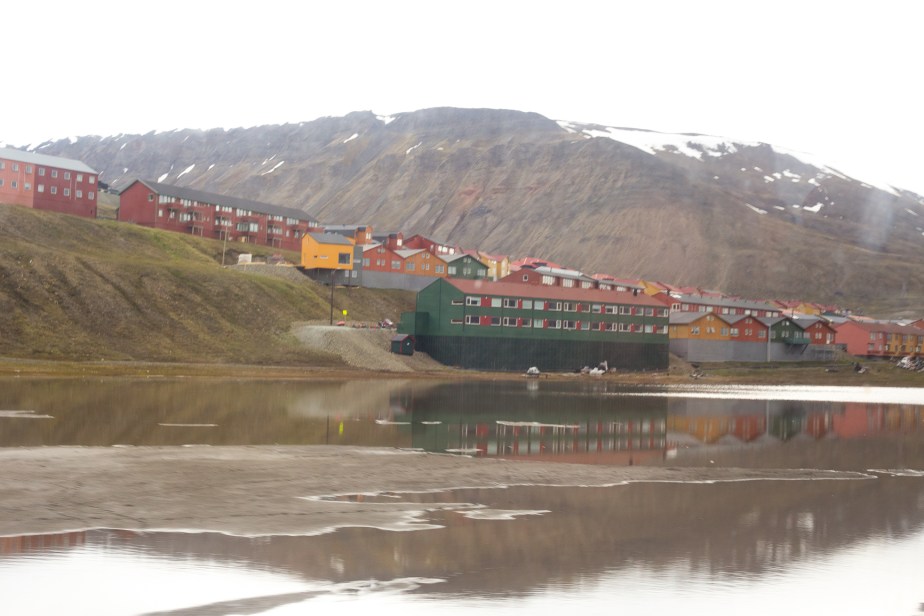
Longyearbyen is the largest permanent settlement of Svalbard, with a population of just over 2000. It is fully dark for 4 months during the winter, the sun never rising above the horizon. In summer the sun stays well above the horizon 24 hours. So dusk and dawn only happen in Spring and Autumn. Northern Lights are happening all the time but they can only be seen when the sky is dark.
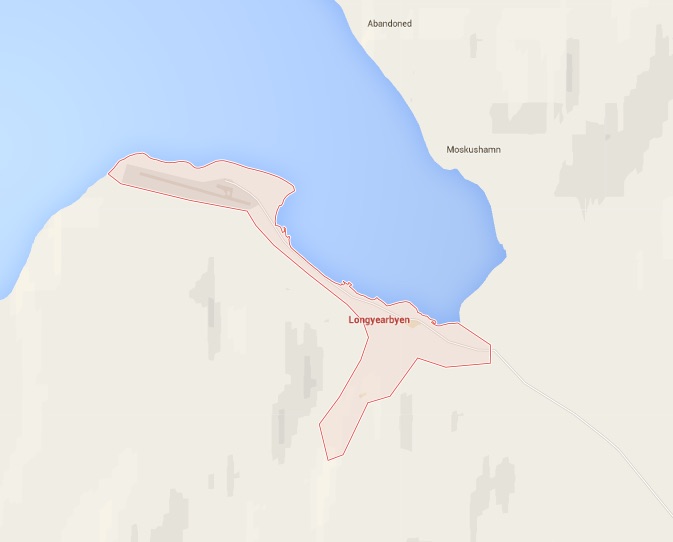
The area outlined in pink is the “safe” area, where polar bears rarely roam.One can only go outside of that whilst accompanied by a trained rifle shooter carrying their rifle.
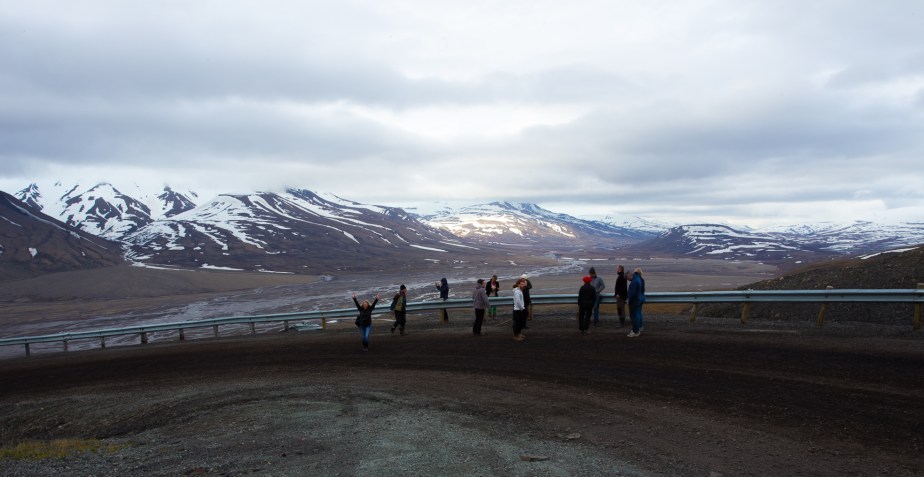
We spent 4 days here, beginning with a bus tour lasting a couple of hours, slowly driving around the outskirts and through the town being shown various points of interest, whilst being served traditional dishes from the area. Lamb that had been dried for 6 months, dried fish and two kinds of smoked or dried pork. All of which were quite chewy but surprisingly tasty, though the fish is definitely an acquired taste.
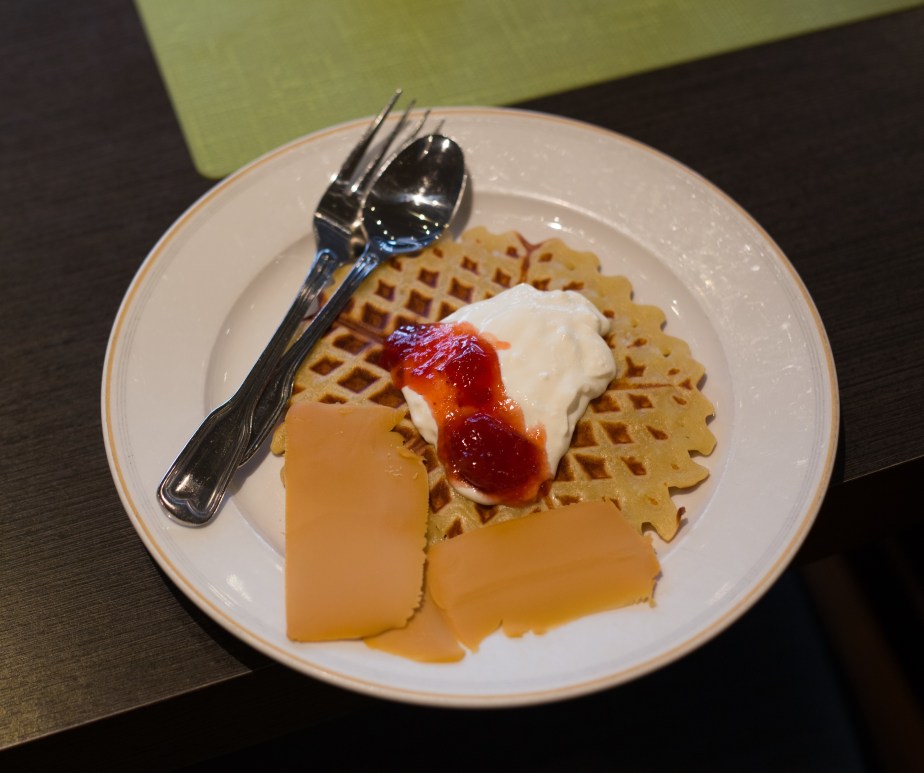
Later we were served with a large plate of delicacies, including reindeer heart, very tender and savoury, three kinds of smoked fish, mashed swede, and cubed beetroot and pickled berries. All delicious – though I didn’t eat the swede, bad memories from school days. Several cheeses were served last of all along with a small pot of cheesecake made with Norwegian “fudge” cheese. Artic Tapas Tour
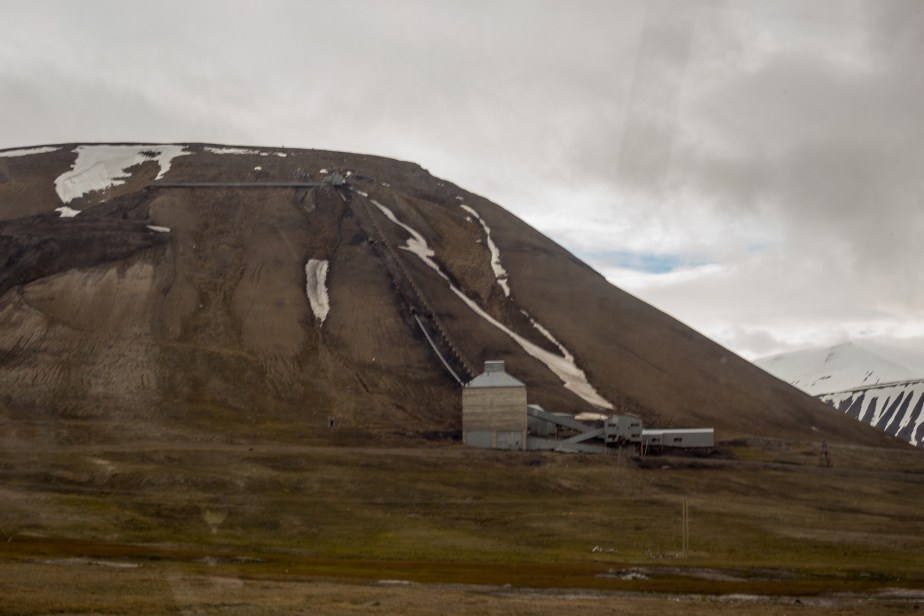
On the road below the last remaining working mine (number 7) in the area, directly East of the town in the Adventalen valley. A shaft of sunlight in an otherwise cloudy few days.
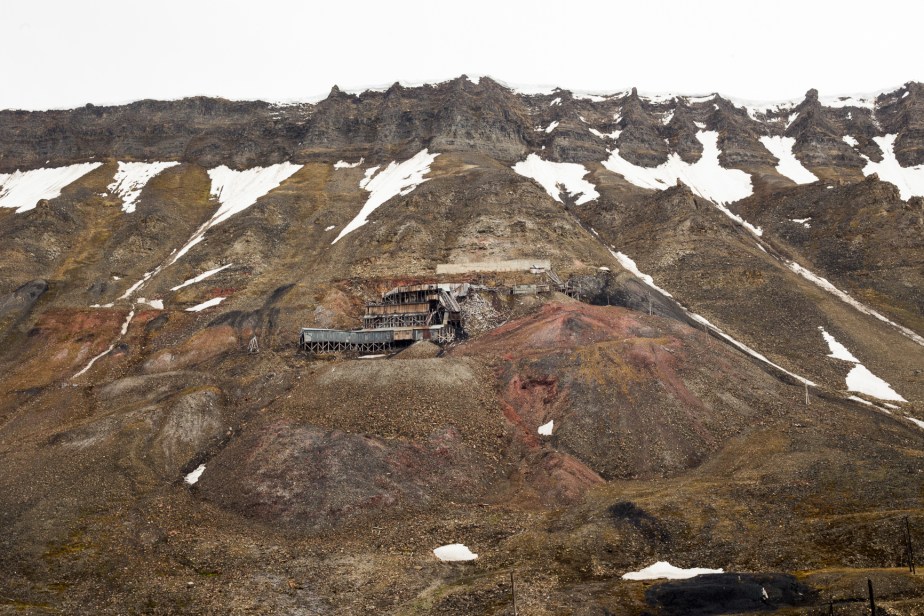
The remains of one of the first coal mines, unusually the strata is horizontal and each coal seam is around 2 metres in height. The town-scape is dominated by abandoned and decaying signs of its earlier coal industry.
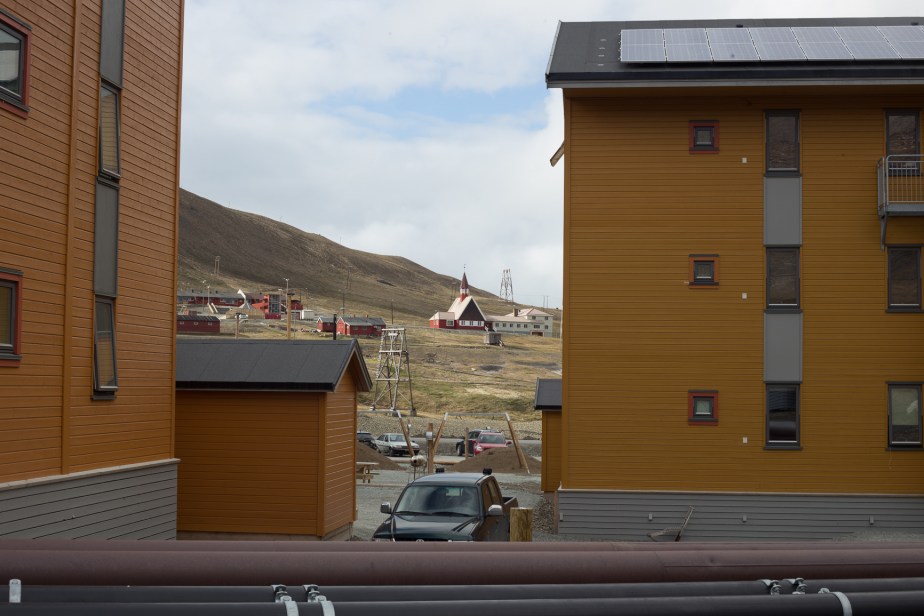
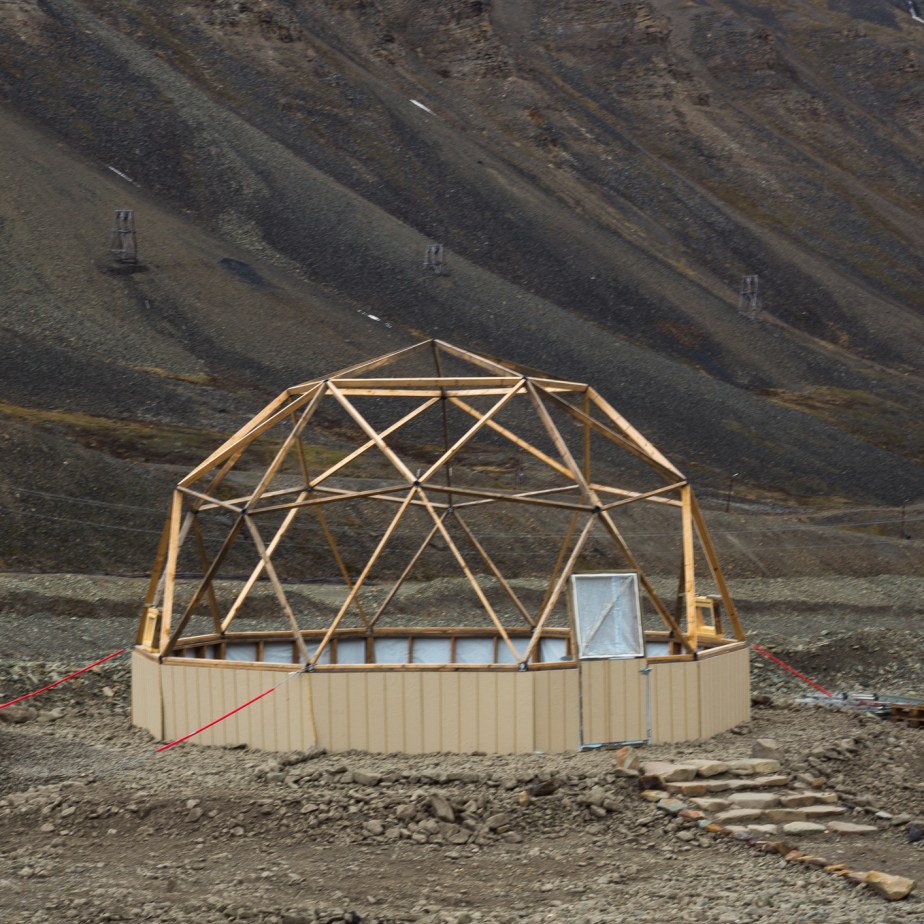
Low hanging cloud with the coal seam just visible below.The university brings a constant flow of geologists and researchers, plenty of fascinating conversations going on in the bars and restaurants.The church to the west of the centre seen between apartment blocks. All the housing is built to modern standards of insulation.Geodesic Greenhouse
Ben is an enterprising young man exploring solutions for growing fresh green foods in challenging conditions. He is building an enormous greenhouse to supplement the local diet. The structure is based on Buckminster Fuller’s Geodesic Dome. It will be covered with one of three types polythene . Whatever the angle of the sun there will be a panel perpendicular to it maximising the intake of heat and light. The local temperature rarely exceeds 7C even in summer. The structure available in various sizes from Arctic Dome Greenhouses also has extremely high wind resistance.
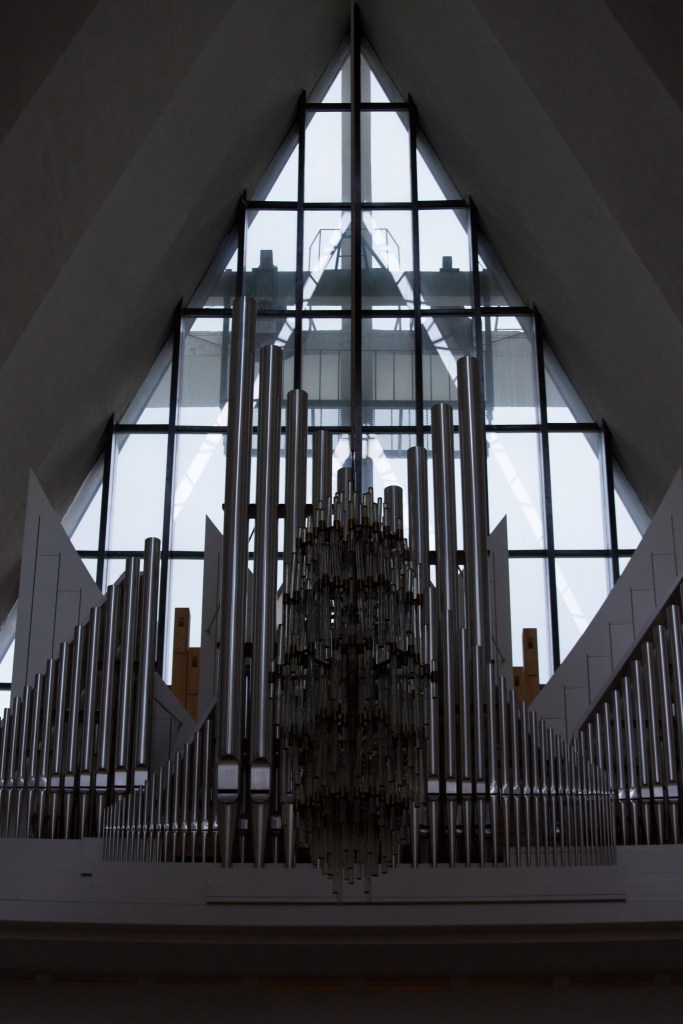
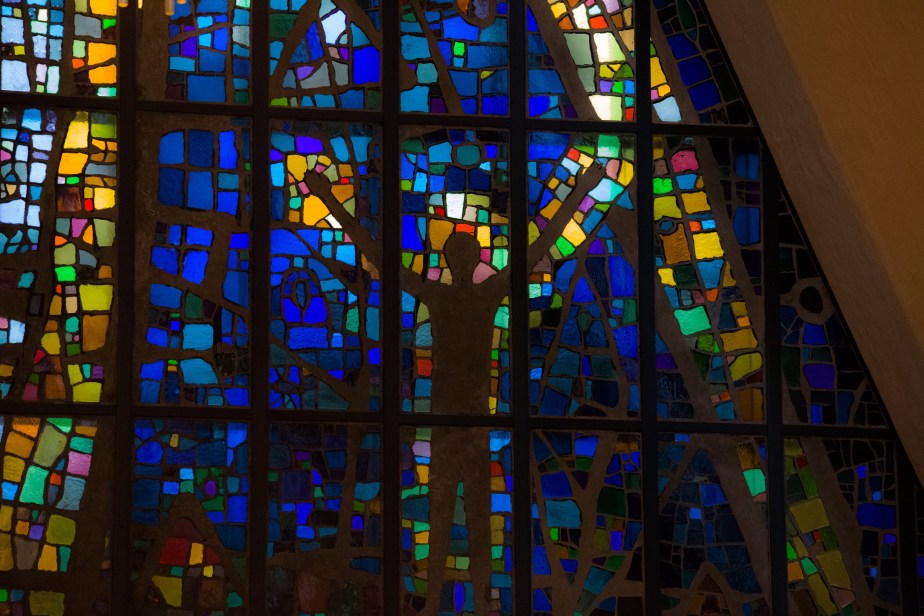
What a delightful town, we had a great time there, just for two days. In the Arctic Cathedral we attended a midnight concert of Norwegian folk songs to celebrate the summer solstice, sung by Harald Bakkeby Moe, accompanied by Hanne-Sofie Akselsen on flugelhorn and Robert Frantzen on piano.
Organ
Stained glass window
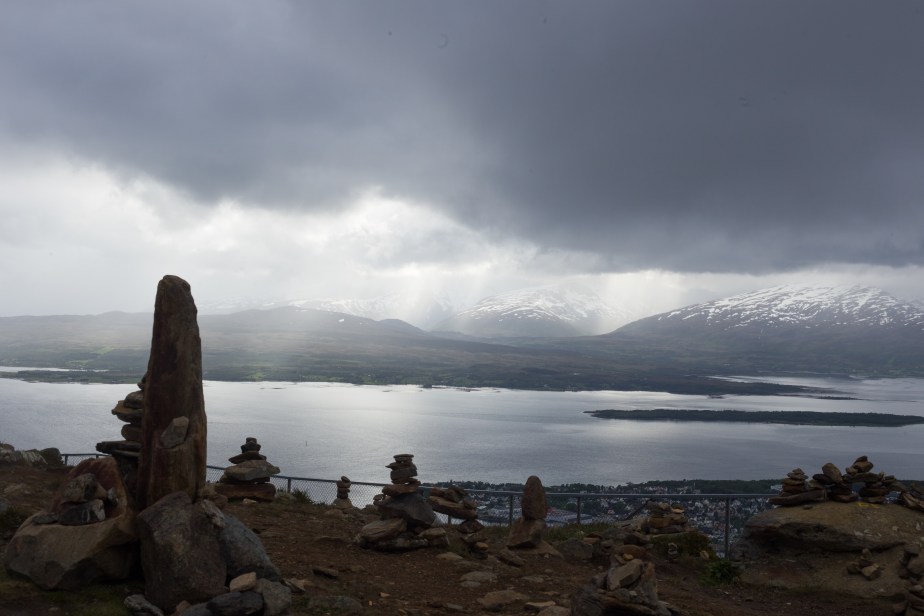
Despite the poor weather we took the cable car ride up to the hill behind the cathedral with spectacular views over the town and mountains beyond. We were lucky to have a short-lived break in the clouds.
View over Tromso
At the Polaris museum where we saw a great film about northern lights, all caused by gas escaping in bubbles from the sun and then interacting with magnetic force fields. Of course we didn’t see the lights as it was 24 hour daylight but the interaction still goes on, we just don’t see it.
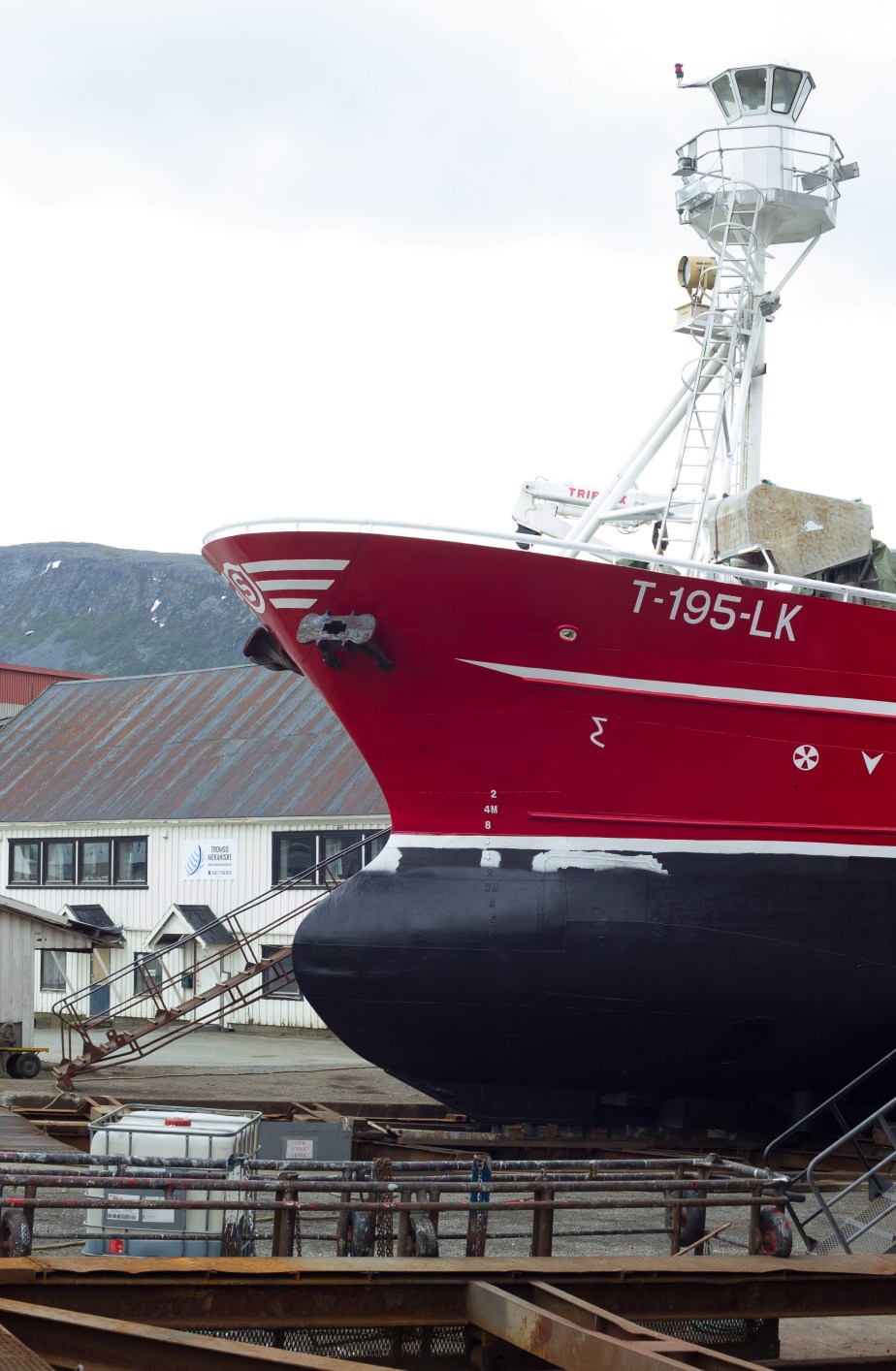
Ship being repaired in the shipyard, which is about to be closed for redevelopment.Waffles with Norwegian “fudge” cheese





 Sally Wakelin - Studies in Creativity
You must be logged in to post a comment.