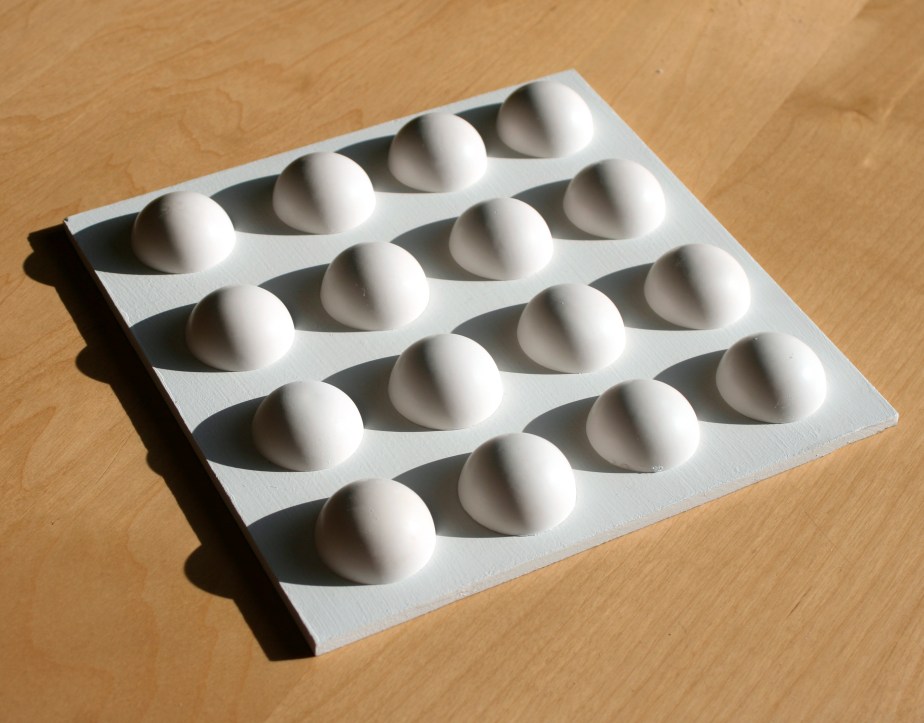
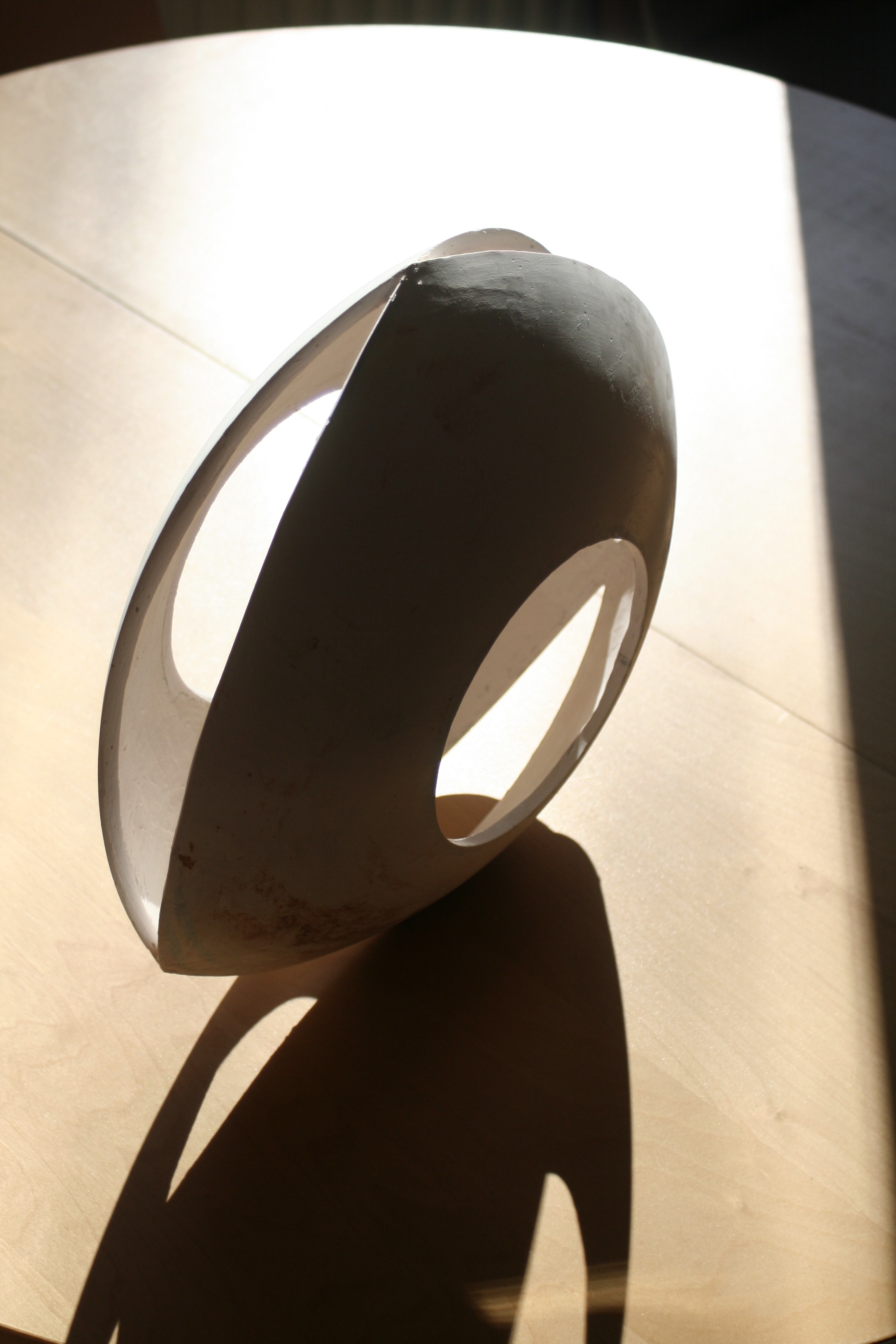
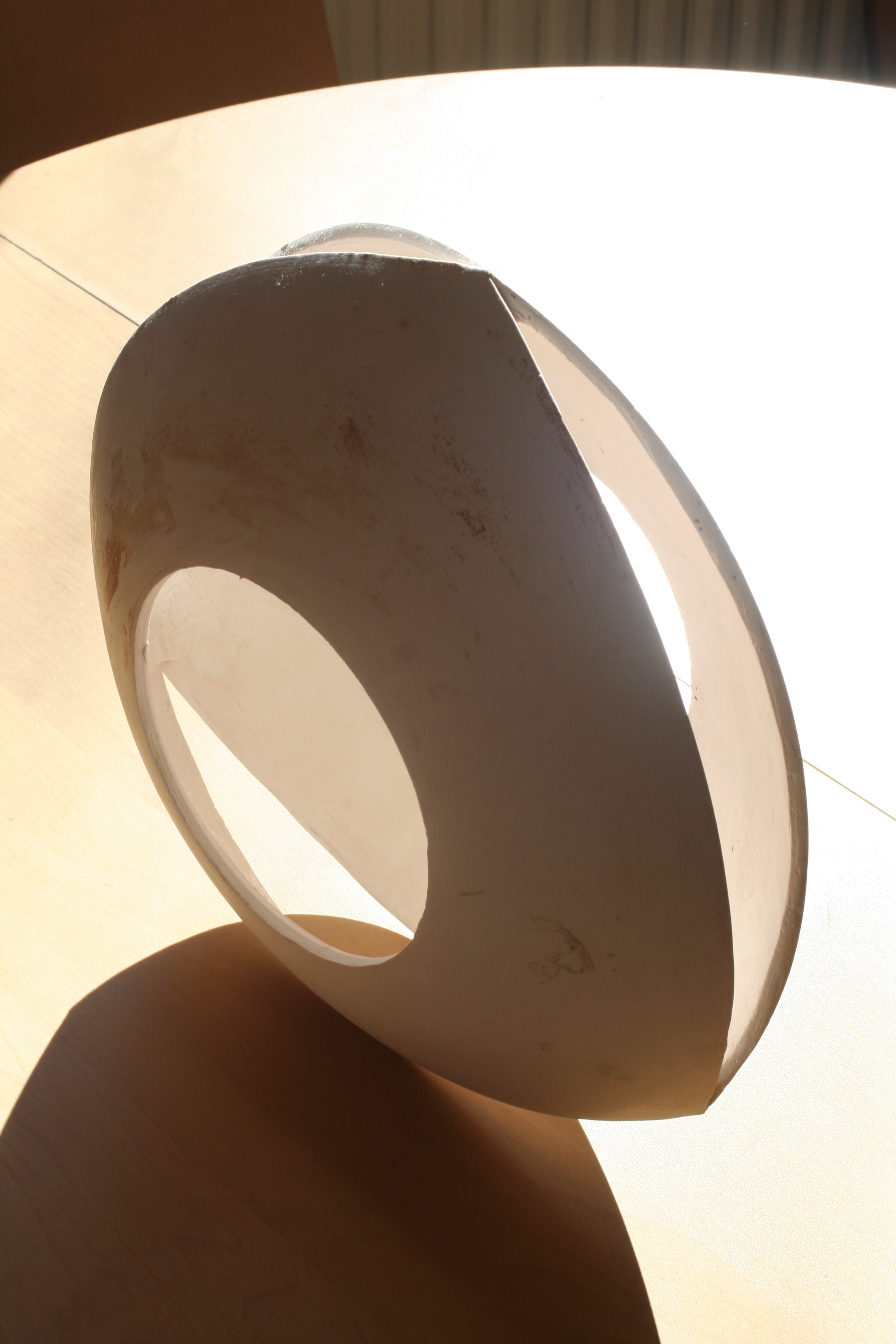
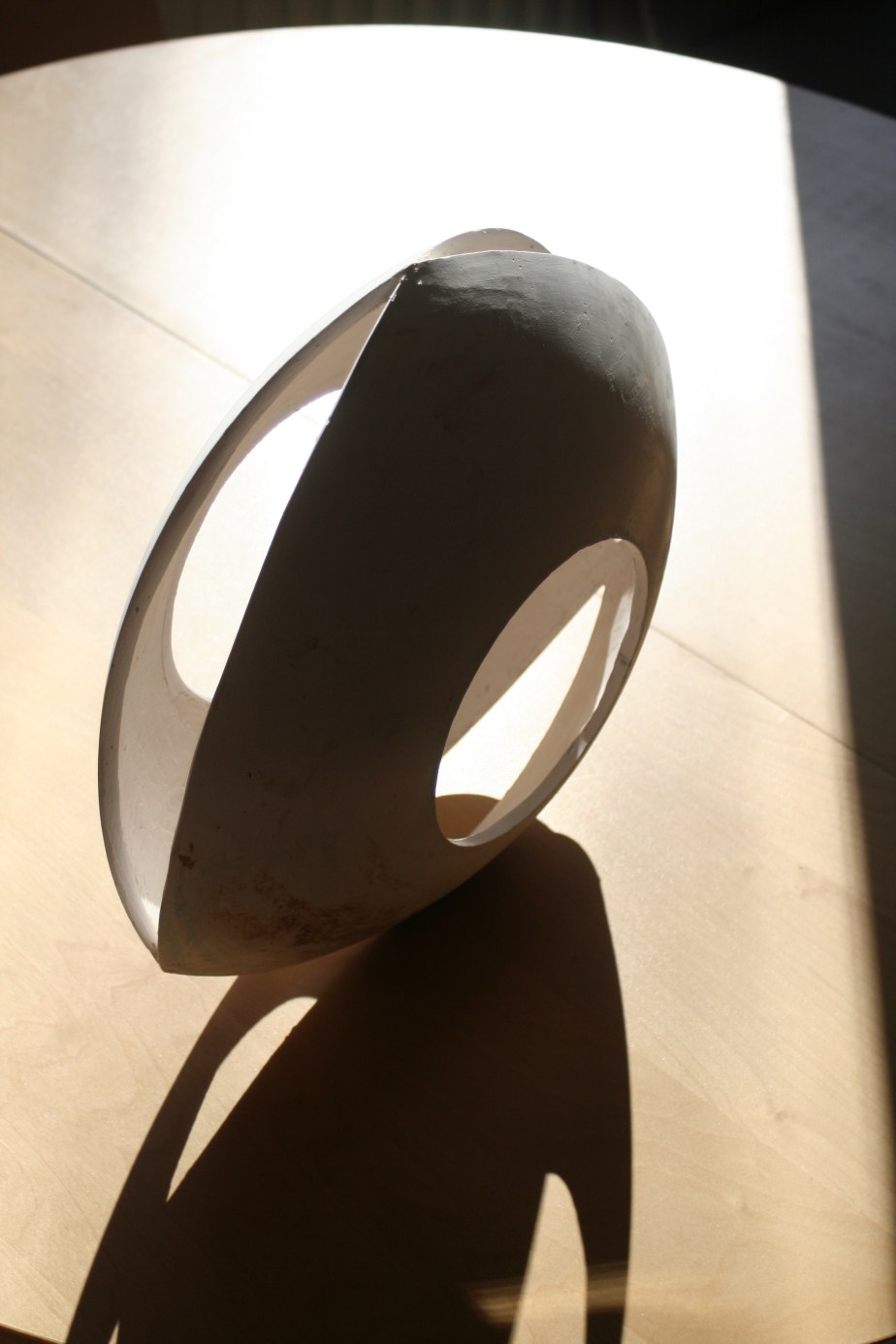
A simple arrangement of hemispherical castings on a white background produces a rich variety of grey tones.
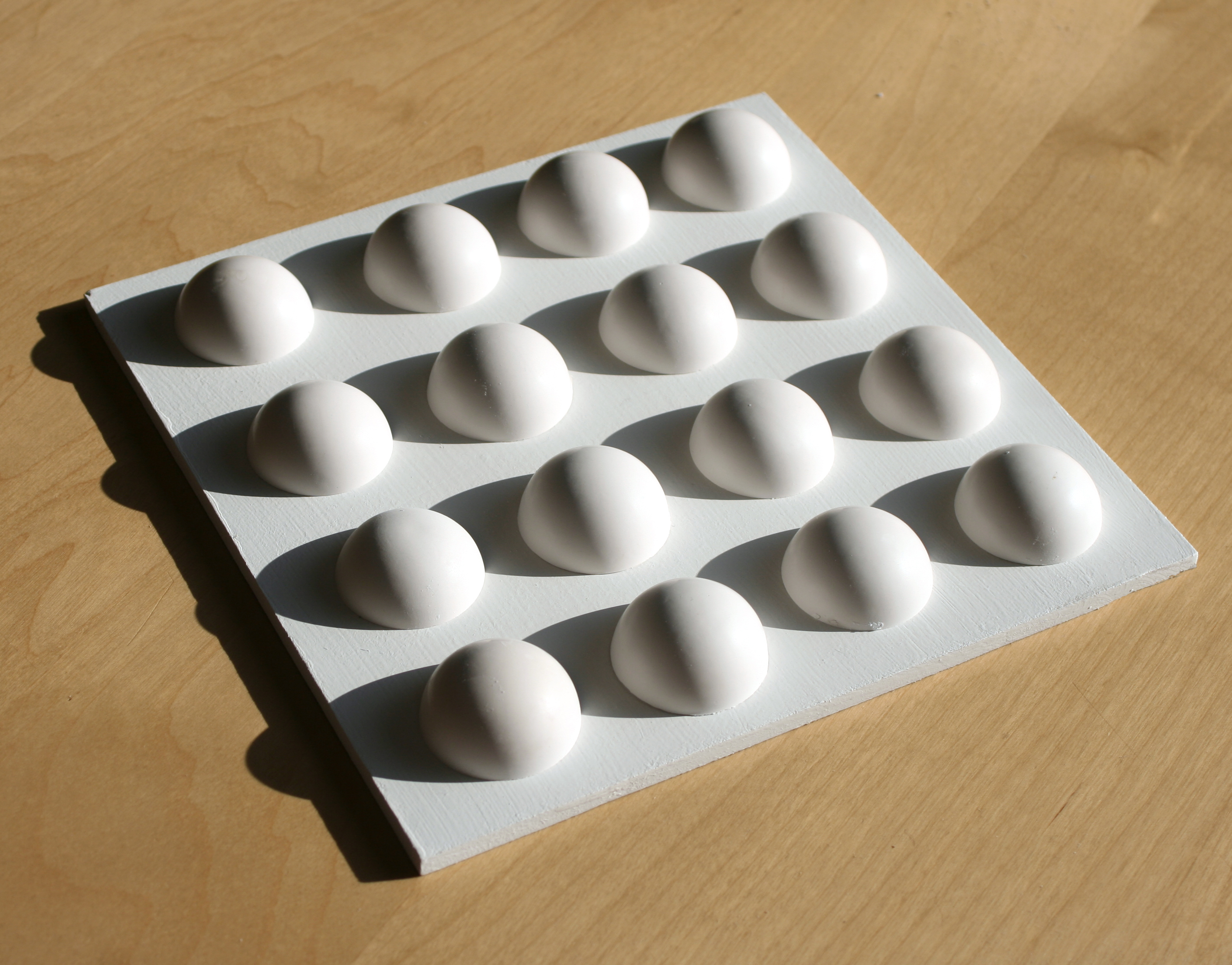
Later when the sun has moved around the shadows are much softer
Sally Wakelin – Studies in Creativity
Paintings, drawings, sculpture and writing
A simple arrangement of hemispherical castings on a white background produces a rich variety of grey tones.
Later when the sun has moved around the shadows are much softer
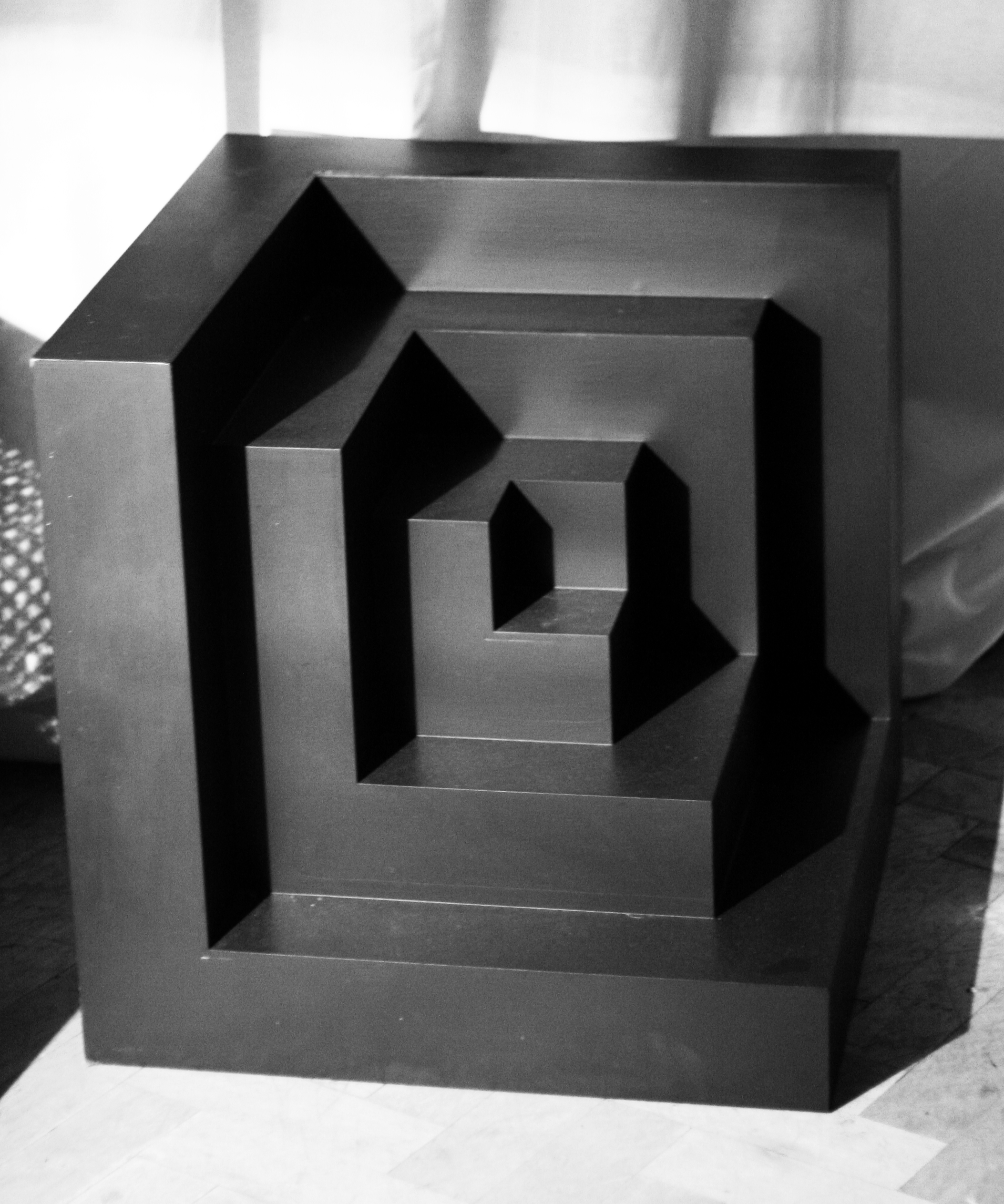
Light falling across a corrugated surface always intrigues me – inspired by my father Richard Wakelin’s sculptures from 20 years ago, I made this smaller copy of his Stepped Cube.
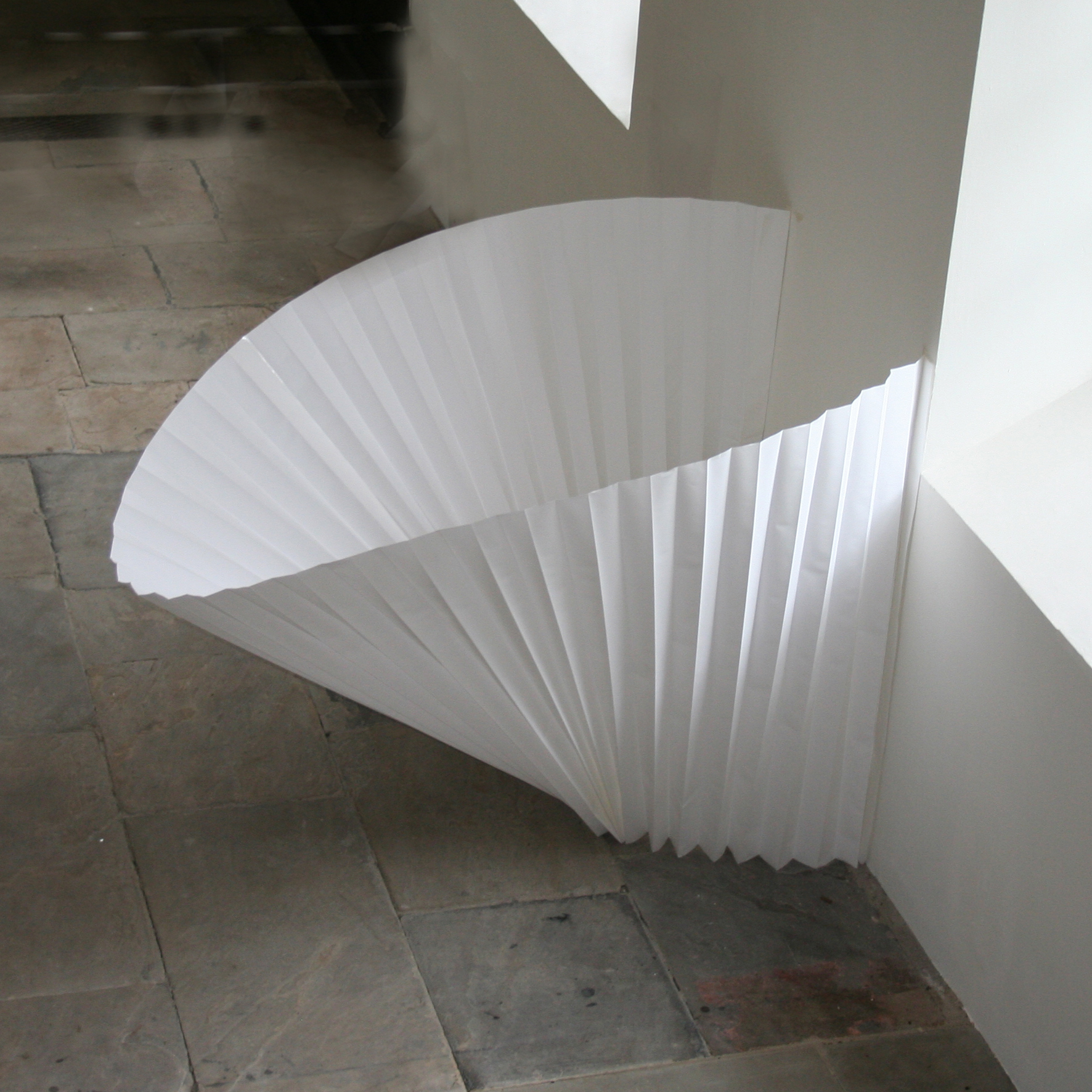
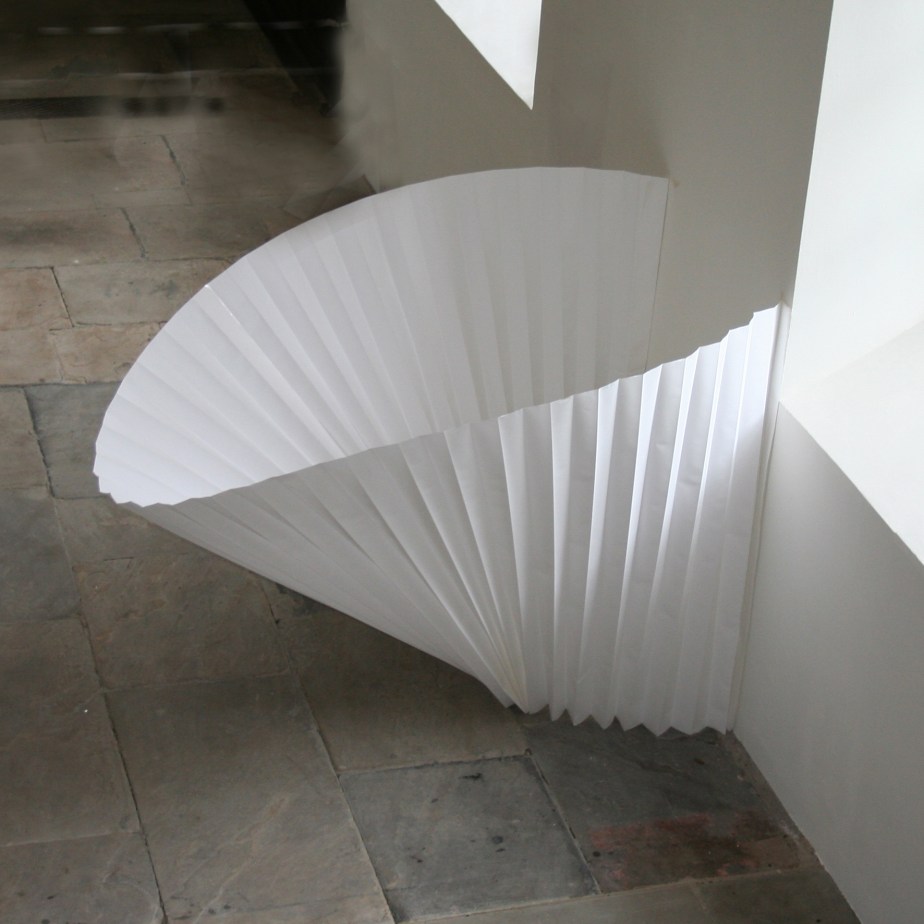
A few years ago, I made this pleated paper installation in the deconsecrated chapel, whilst attending a Drawing course at Yorkshire Sculpture Park with David Nash, amongst others. A length of drawing paper 5m x 1.5m repeatedly folded and set in front of one of the long windows, behaved like a bucket of light and has inspired me to make more pleated paper sculptures since.
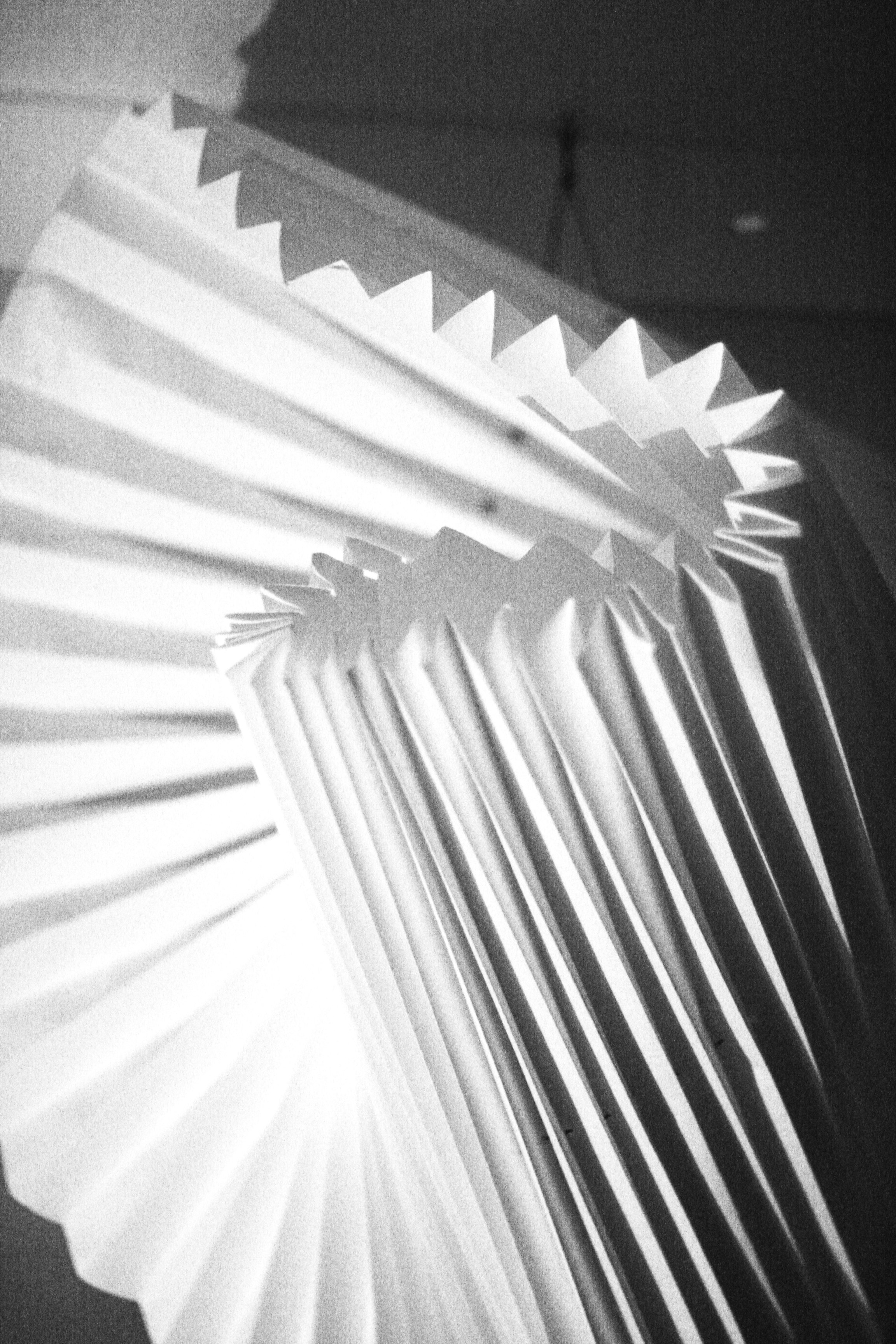
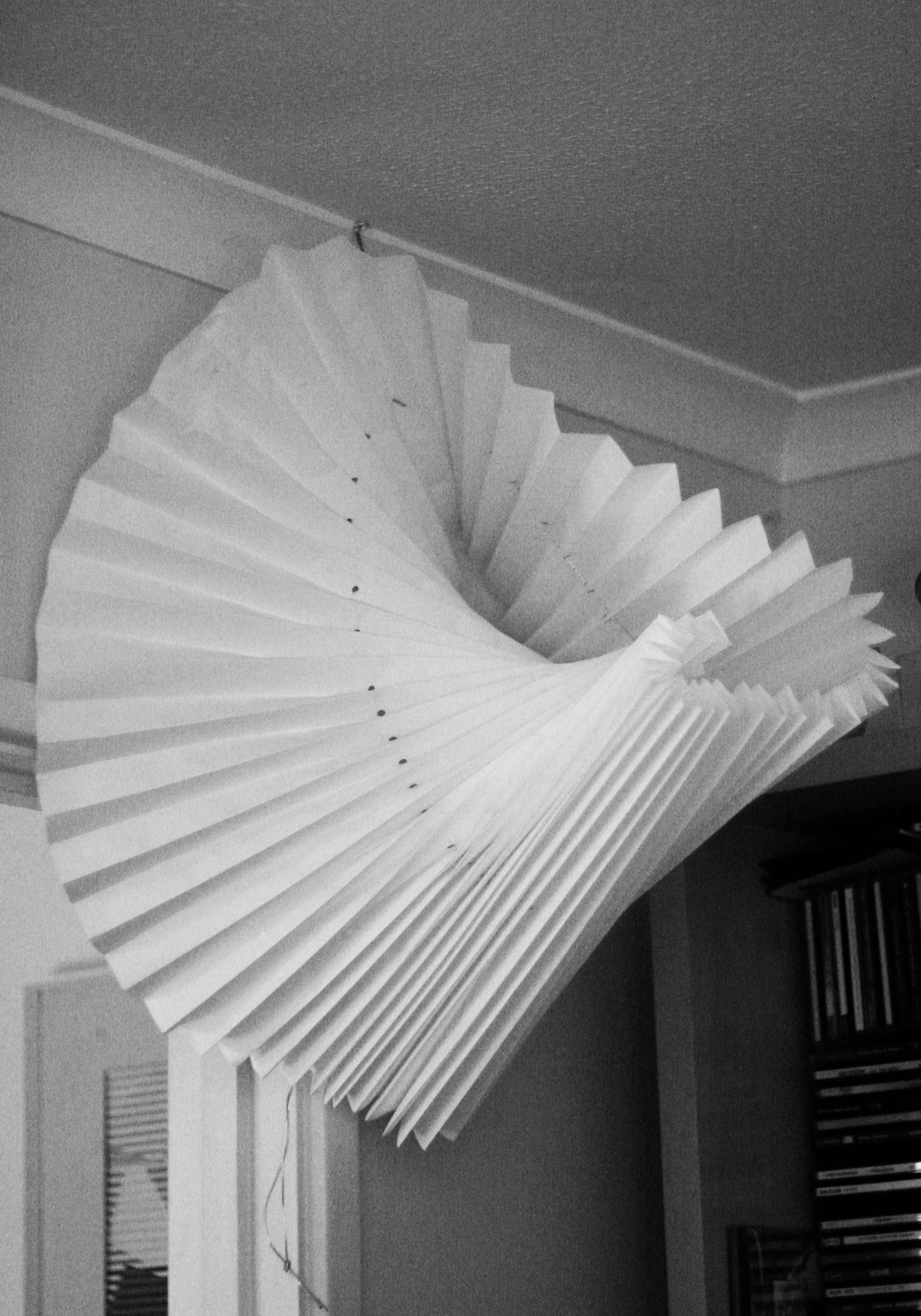
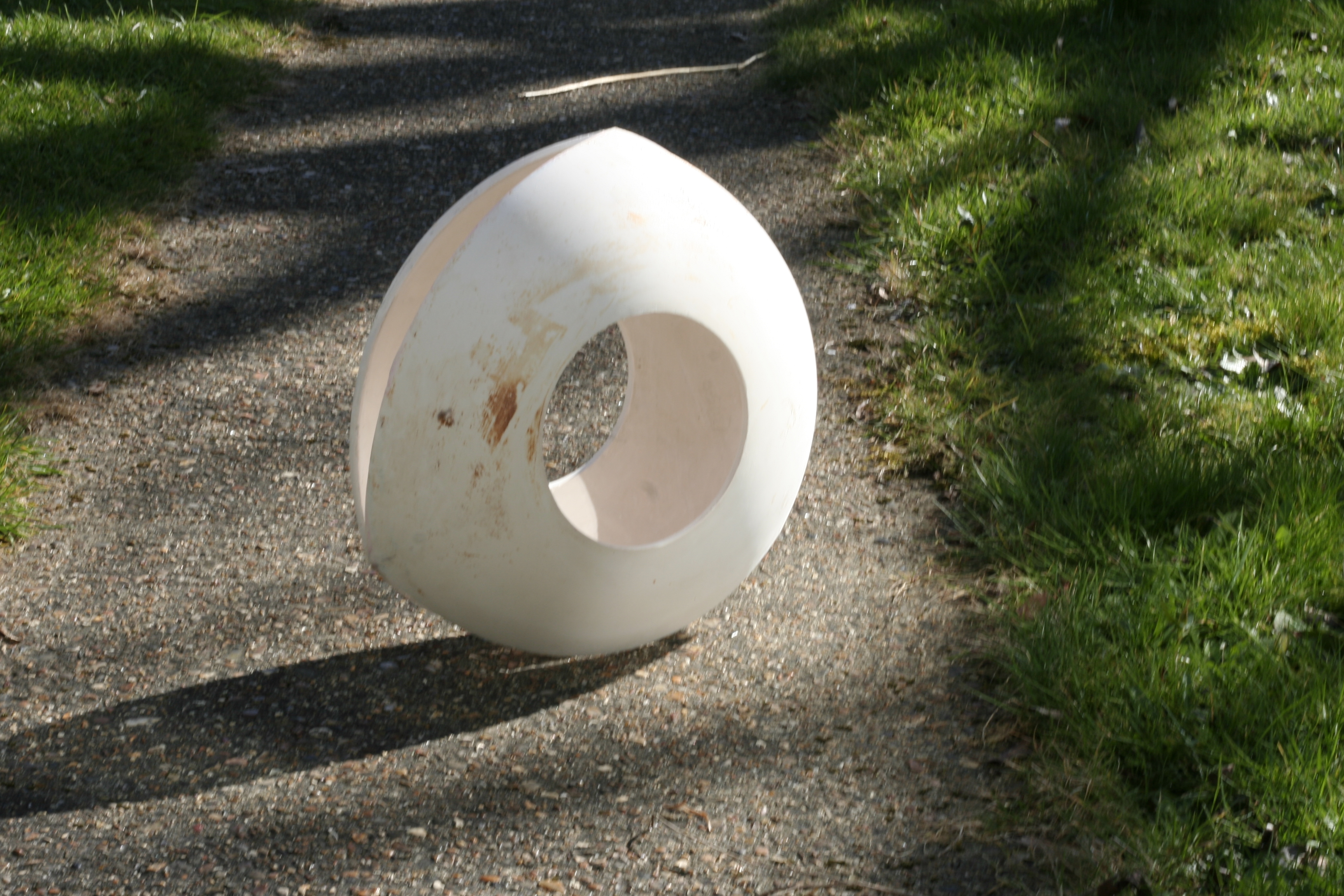
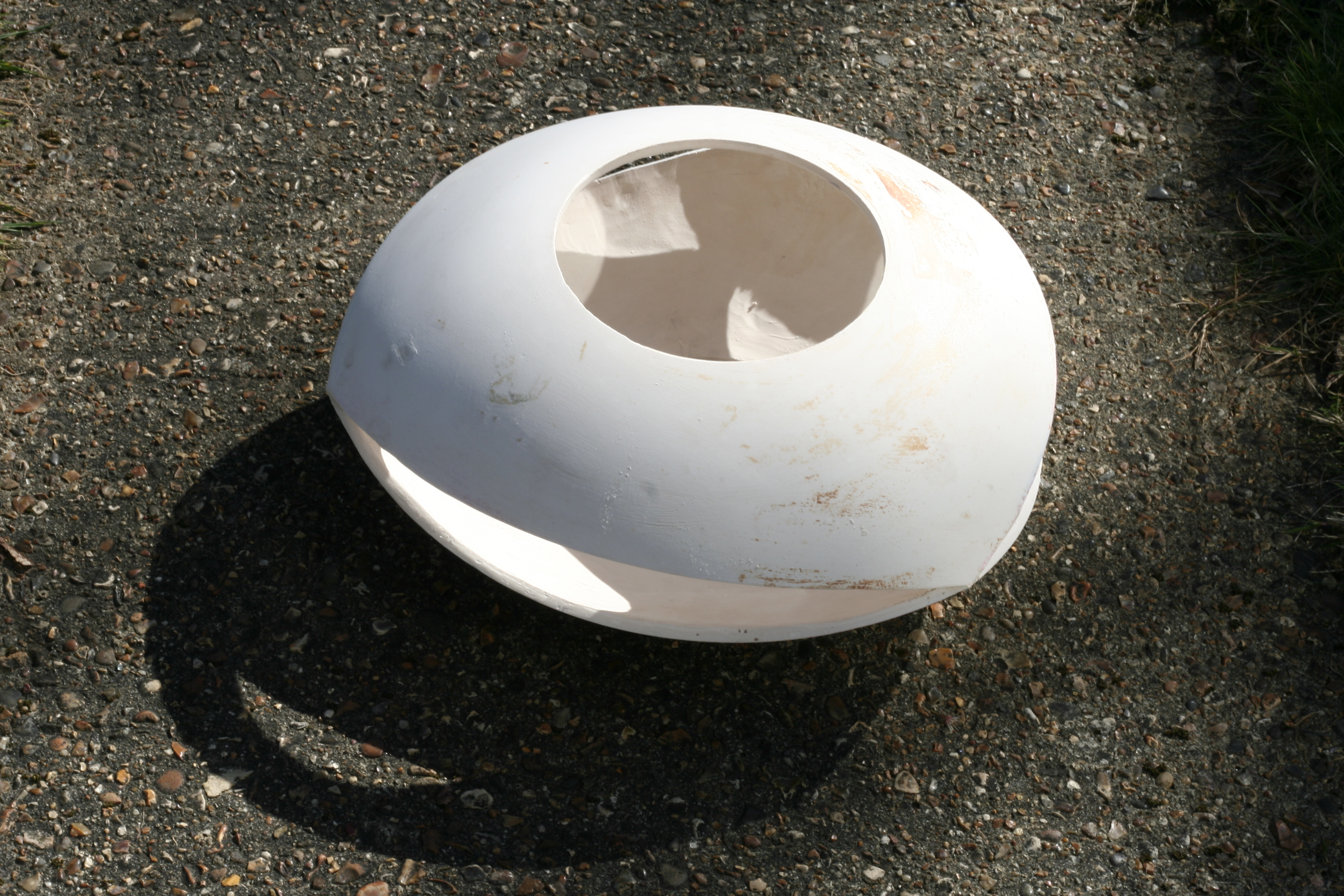
I have at last succeeded in making the piece I had planned, though this is very much a test piece, I think I have made all the required mistakes now, so when I make another, it will be of good quality.
Speeding up the drying process by putting the cast in the oven at less than 50°C leaving the door ajar so that moisture can escape, can prevent rust stains forming (seen here in the third image).
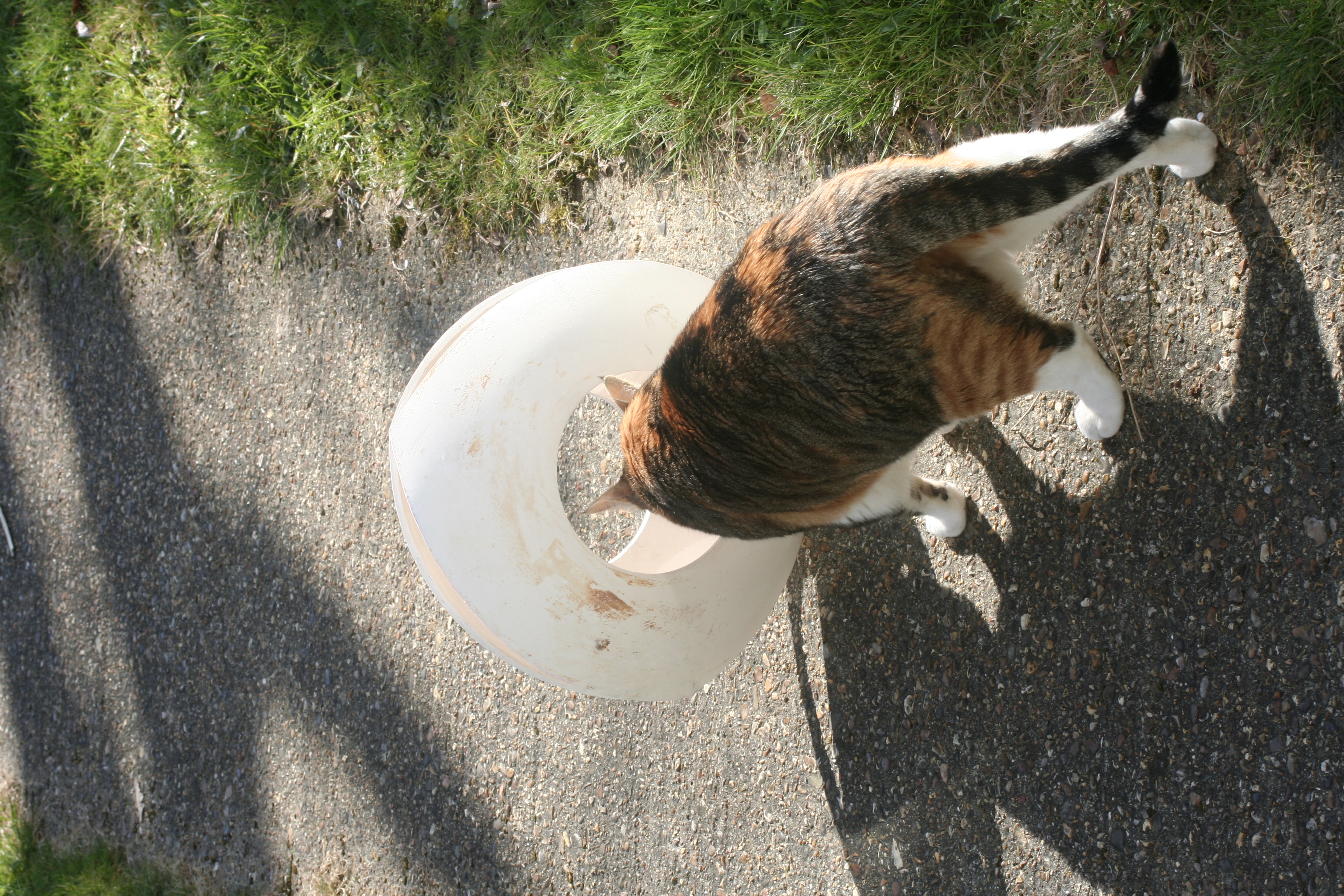
My first customer
Hopefully I have learned enough from the last two experiments to make a good casting this time.
I set up the wok again with Plasticine walls and a slightly larger saucepan lid and made up a much larger batch of plaster hoping to cast the whole thing in one go.
I poured the plaster into the wok and started swirling it genlty, hoping to make it stick to each part of the surface – impeded somewhat by the thick layer of petroleum jelly. During the next 10 minutes the plaster gradually thickened and began to build a smooth layer over the whole surface area. As I swirled the liquid it behaved like a tidal wave coming around and around in a regular sweep but as it began to set it grew thicker and was in danger of leaving a literal tide mark in an unsuitable way. I set the wok down to rest and watched as the excess plaster solidified in an almost even spare-tyre kind of shape in the centre.
I decided this time not to try to manipulate the surface in any way and I am pleased to say that it is smooth and even, though somewhat thicker towards the centre with a discernable swelling about 2 cms from the pan lid, it looks pink here but it dries white.

I suspect that the outer/upper edges are fairly thin and that I will need to make another pouring.
I wanted to make a “stone” version of a form I have made often as jewellery, the Reuleaux Triangle – the original form developed by the mechanical engineer Franz Reuleaux in the late 19th century.
 Sally Wakelin - Studies in Creativity
You must be logged in to post a comment.